By Calistack Team · Editorial standards: Calistack editorial team
Leg Raises: technique, recommended exercises and practice options
Floor, hanging and seated leg raises are different exercises, even when they share a name. Choose a version and range you can control without relying on swing. Record the setup, knee position and range so changes in your training log reflect real progress rather than a switch in technique.
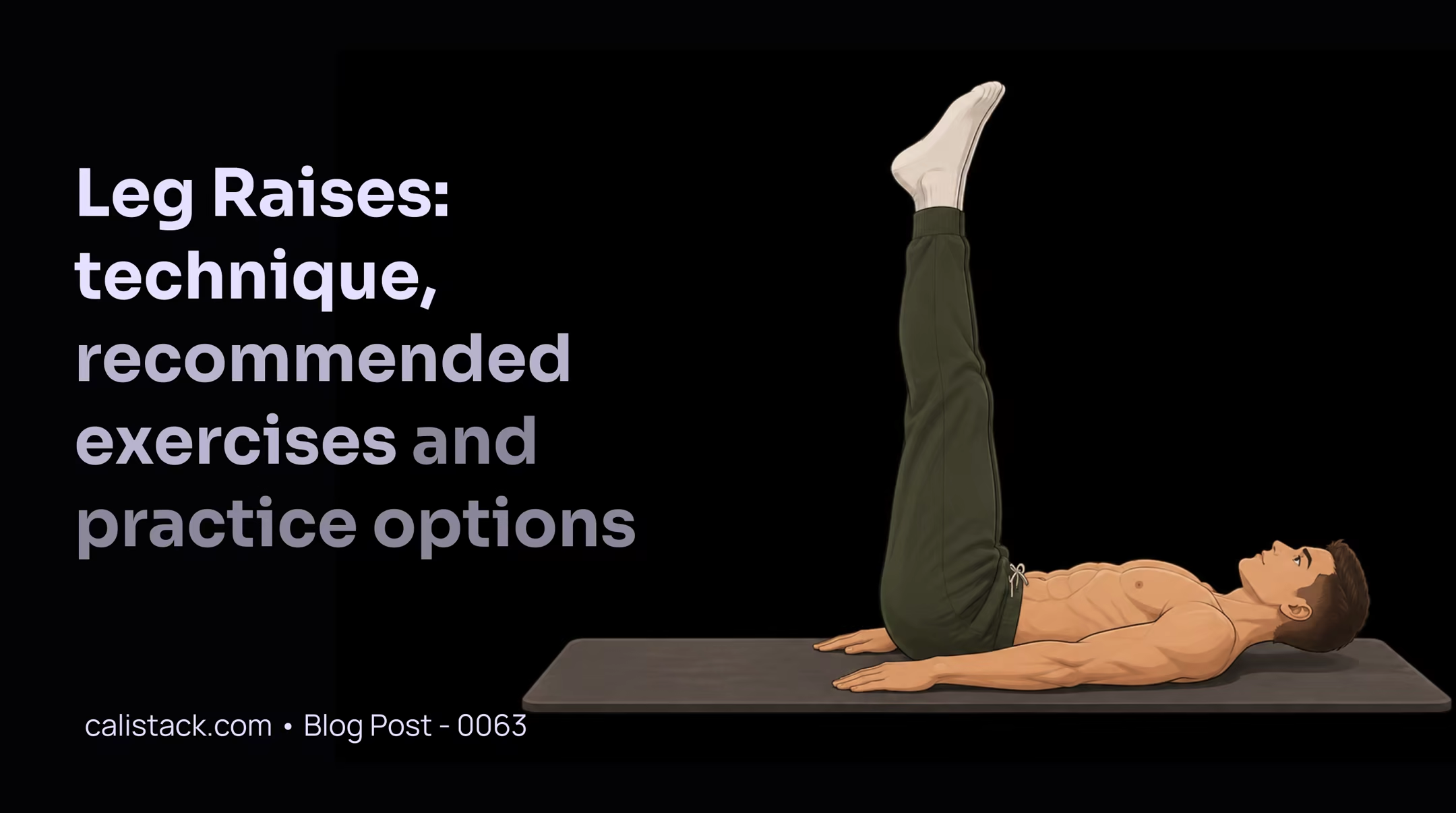
Leg Raises can mean several exercises. A person lying on the floor raises the legs against gravity; another hangs from a bar and lifts the legs while also managing grip and body swing. Seated compression raises use yet another setup. Those versions share a broad leg-lifting pattern, but they are not the same task, and the name alone does not tell you which one CaliStack demonstrates.
This guide explains a floor-based reference first, then compares hanging and seated options. Choose a version that matches your equipment and control. If you are following a specific app movement, check its video or ask a coach before assuming the title refers to floor, hanging or straight-leg repetitions.
Choose the variation before you count reps
For the floor reference, lie on your back on a clear, comfortable surface. Start with knees bent if straight legs make the movement hard to control. Lift the thighs toward the torso through a range you can repeat, then lower without letting the legs drop. Keep breathing. Your hips and trunk will move to some extent; the goal is not to force your lower back into a position that hurts. If the pelvis moves abruptly or the low back arches more than you can manage, shorten the range or bend the knees further.
A straight-leg floor raise lengthens the lever and can make the same range more demanding. You do not need to lower the legs close to the floor to make a repetition count. Stop the descent at the point you can still control, then use the same endpoint on the next repetition. If you cannot maintain that range, bend the knees or make the movement smaller.
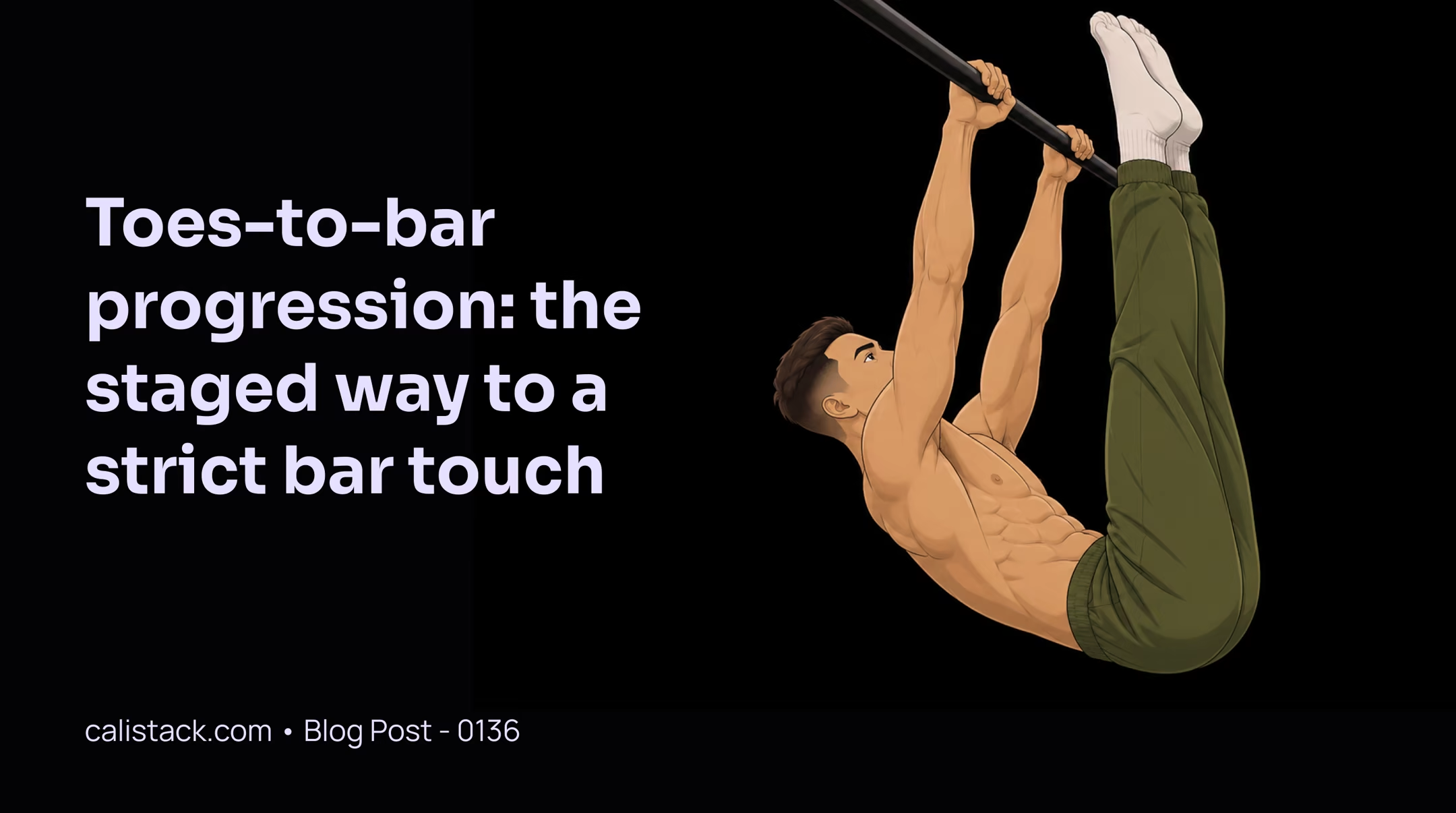
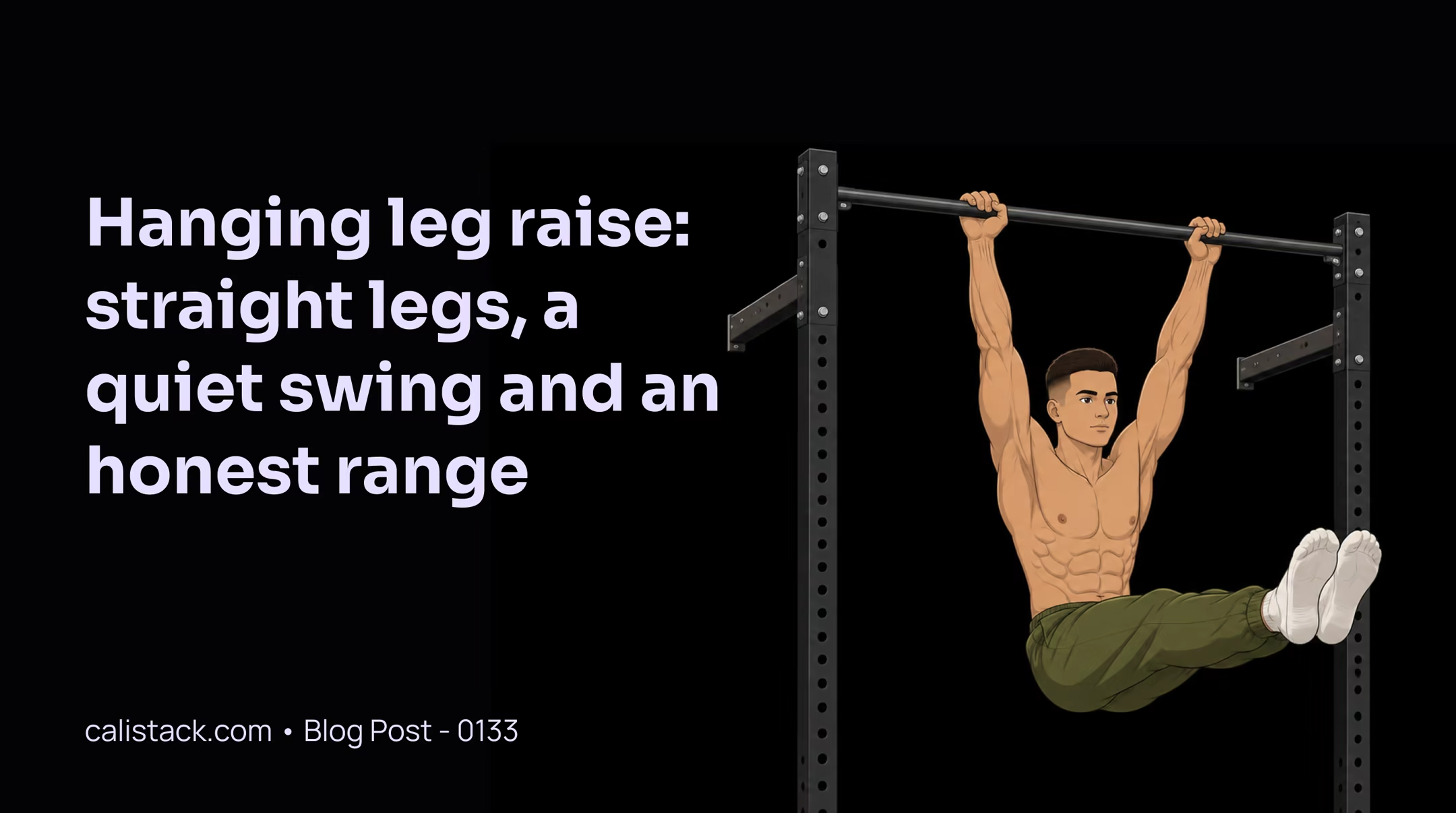
A hanging leg raise needs an overhead bar that is installed or designed for bodyweight use, with enough clearance for your legs. A secure grip and a steady start matter. If you are new to hanging, use an appropriate step or coach-selected setup to enter and exit rather than jumping repeatedly. Begin with bent knees and a small, quiet movement. Do not swing to lift higher or stay on the bar if your grip is failing.
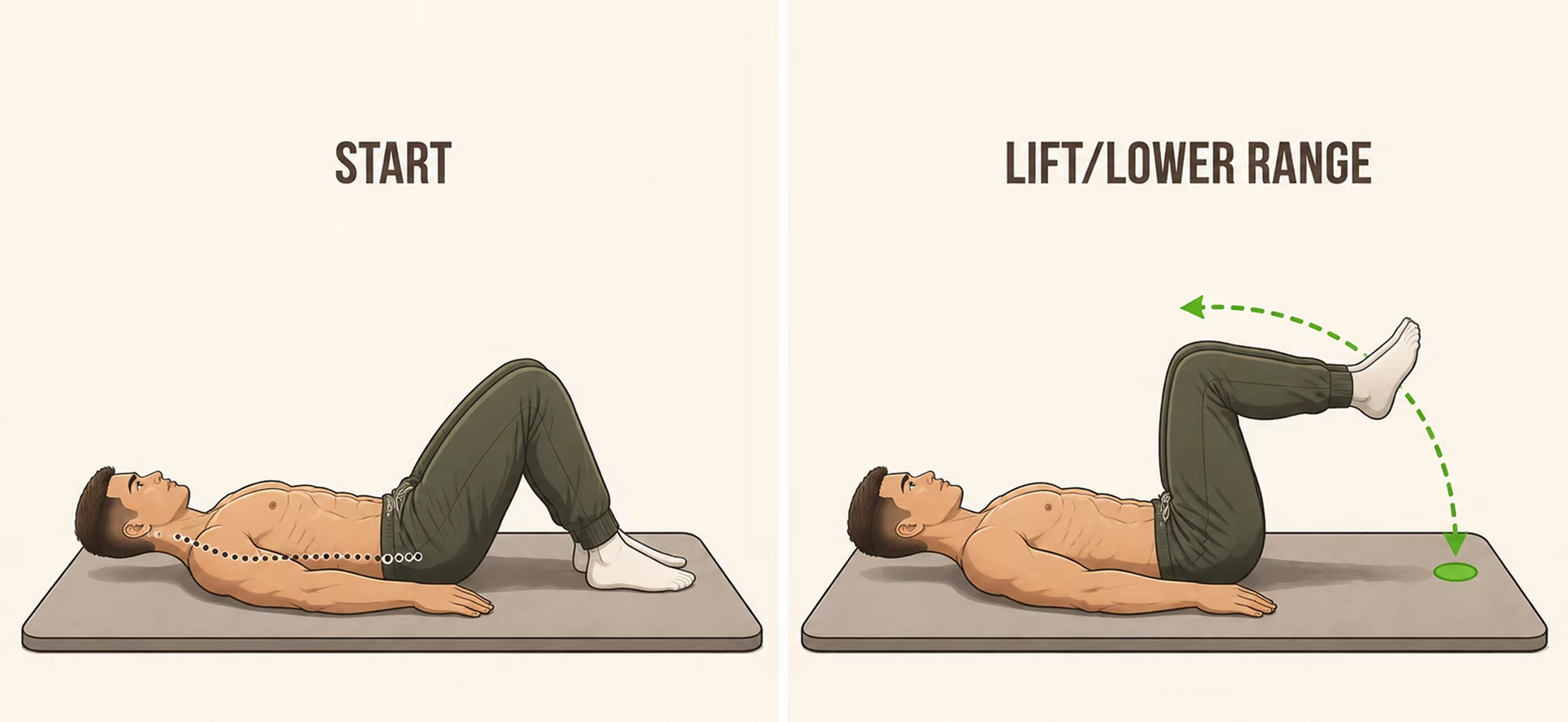
Floor, hanging and seated raises solve different problems
Floor versions reduce the equipment and grip demands. Hanging versions add a bar, overhead support and the need to keep the body from swinging. Seated L-sit raises ask you to support yourself through your hands or another stable support while lifting the legs in front. The best starting point is not necessarily the hardest one; it is the version that fits the question you want to practice.
| Version | Setup and main constraint | What to record |
|---|---|---|
| Floor, knees bent | Supine on a mat; shorter leg lever | Knee angle, range, pelvis control and repetitions |
| Floor, legs straighter | Supine on a mat; longer lever | Leg position, lower endpoint and whether the same range stays controlled |
| Hanging, knees bent | Secure overhead bar; grip and swing are part of the task | Bar, grip, knee position, swing and range |
| Seated L-sit raise | Stable hand support; shoulder support and leg compression matter | Support height, knee position, each side if alternating, and range |
Research on leg raising has measured muscle activity or movement in specific laboratory setups. Those studies do not show that one variation is best for every reader, establish a universal readiness count, or prove that a particular version prevents or treats pain. The results depend on the participants and exact task tested. Use them as narrow observations, not a shortcut around selecting a manageable exercise.
How the listed exercises relate to leg raises
The database lists three related movements for Leg Raises. These names come from the supplied exercise library. The recommendations do not specify that you must complete them before leg raises or perform them all in the same session.
Dead Bug: this floor-based option uses alternating arm or leg movement while you stay on your back. It lets you practice a smaller, easier-to-adjust limb range without needing a bar or supporting your weight through your hands. If your chosen leg raise is hanging, a dead bug does not reproduce the grip or overhead support demand. It can still be a separate trunk-control choice.
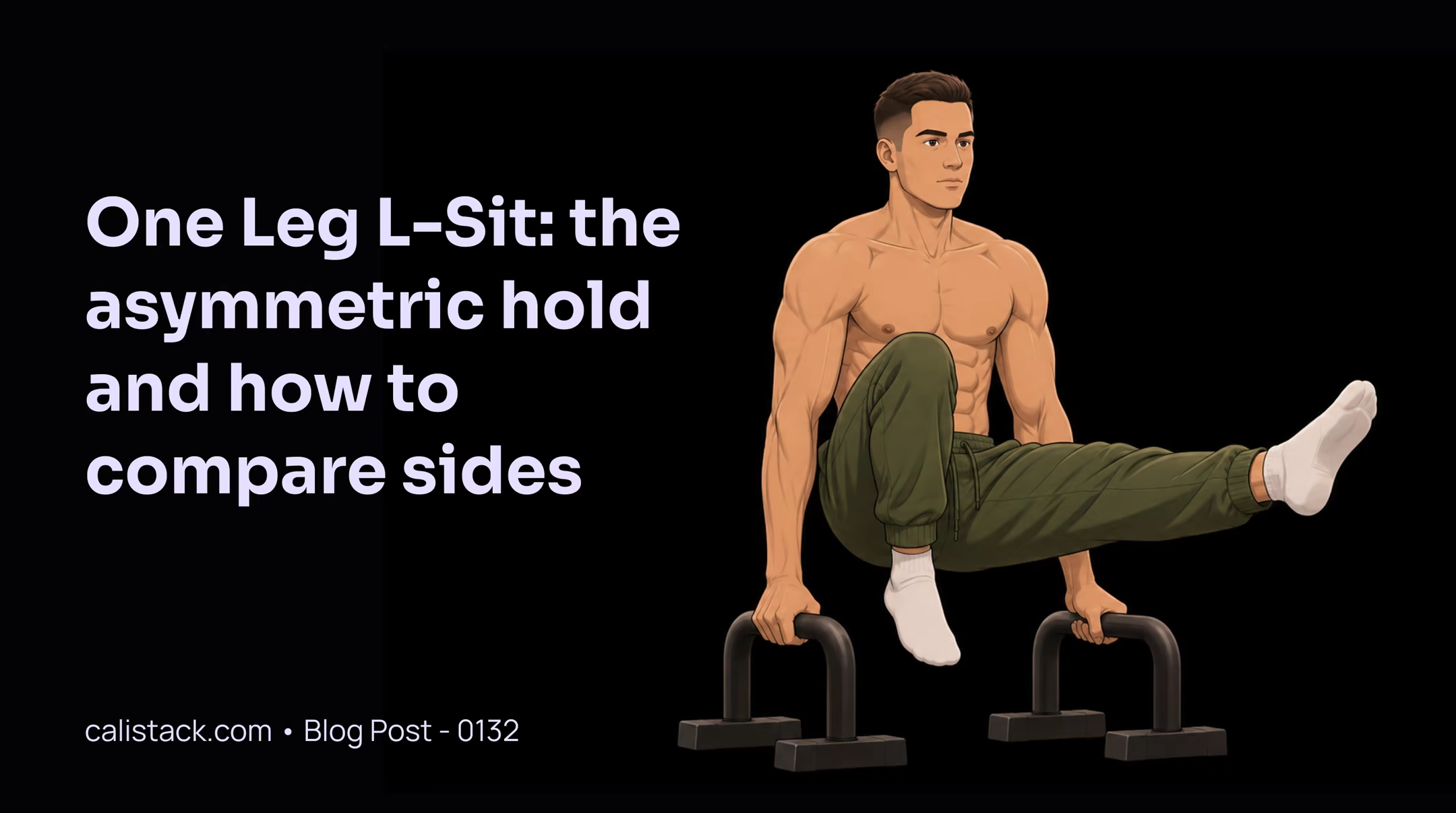
Seated L-Sit Leg Raise: this option raises one or both legs from a seated support position. It differs from lying leg raises because the arms and shoulders help hold the torso up while the legs move in front. Use a stable support and a version you can enter and leave comfortably. If wrist or shoulder support is not suitable, choose another exercise; the name does not make this a required next step.
Hollow Body Hold: this is a static floor position, not a repeated leg raise. It may be used as a separate bodyline practice choice. Keep it at a manageable lever and do not assume that being able to hold it proves readiness for hanging or seated raises. The positions and demands differ.
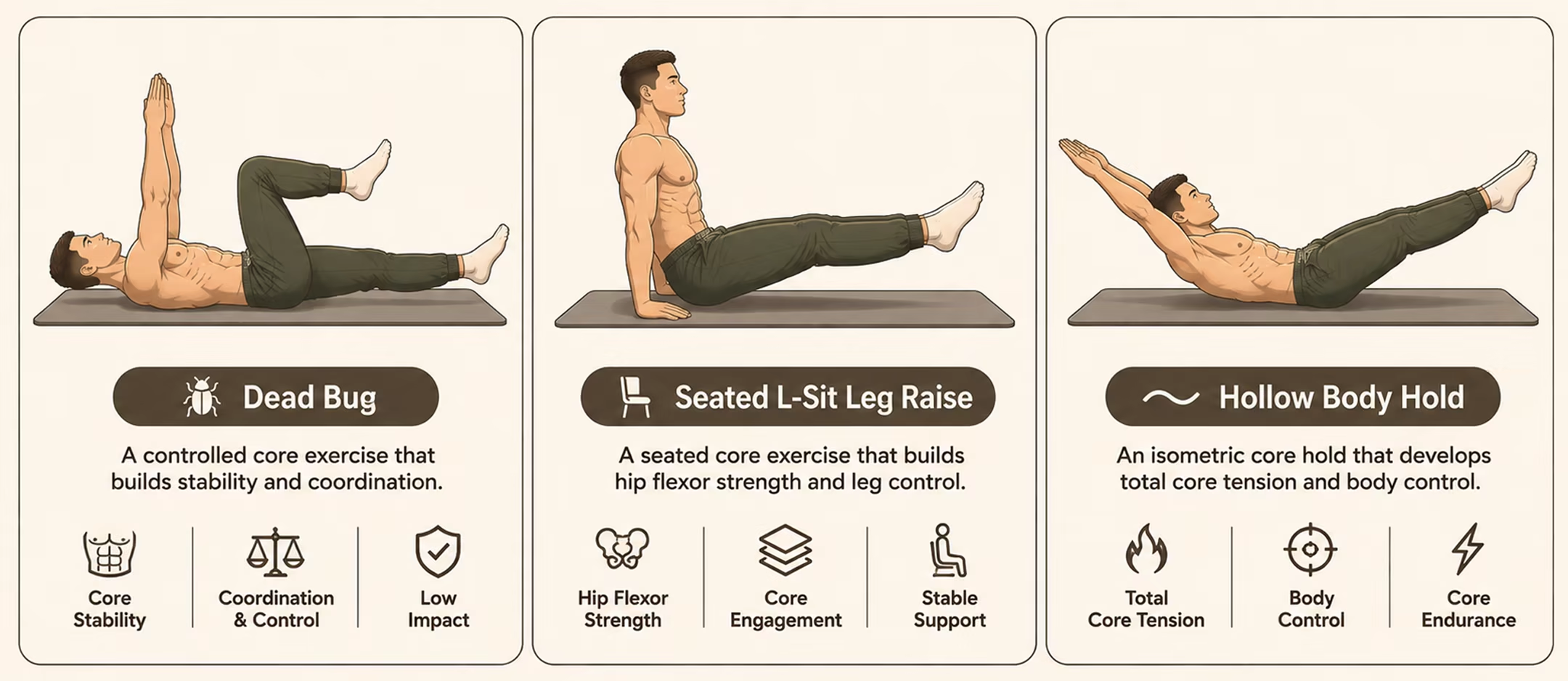
A simple practice block and what to record
The exercise export contains no set, repetition, rest or readiness prescription. Here is an editorial example for a generally healthy adult, not a validated CaliStack program. Start with one version and keep the setup stable long enough to judge whether it remains manageable. If you are new to exercise, have relevant health concerns or are unsure about a hanging setup, ask a qualified coach or health professional what is appropriate for you.
- Check the floor or bar. Choose a clear mat for floor practice or a securely installed training bar for hanging work. Do not use a loose table or doorway furniture as an anchor.
- Warm up with comfortable movement and one or two easy rehearsals of the chosen position. A warm-up does not make pain safe.
- Try one or two easy sets of roughly five controlled repetitions, or fewer if needed. Rest until you can repeat the same range and body position. This is a sample starting point, not a requirement or universal target.
- Write down the variation, support, knee position, range, repetitions and any discomfort. Change one feature at a time, such as bending the knees more or shortening the floor range.
If you can repeat the same range with smooth movement and comfortable breathing over several comparable sessions, you can discuss a small increase in range or a different variation. That is a practical coaching decision, not a proven threshold. If the harder choice changes your movement immediately, return to the previous setup. Better control at the same range is worth recording.
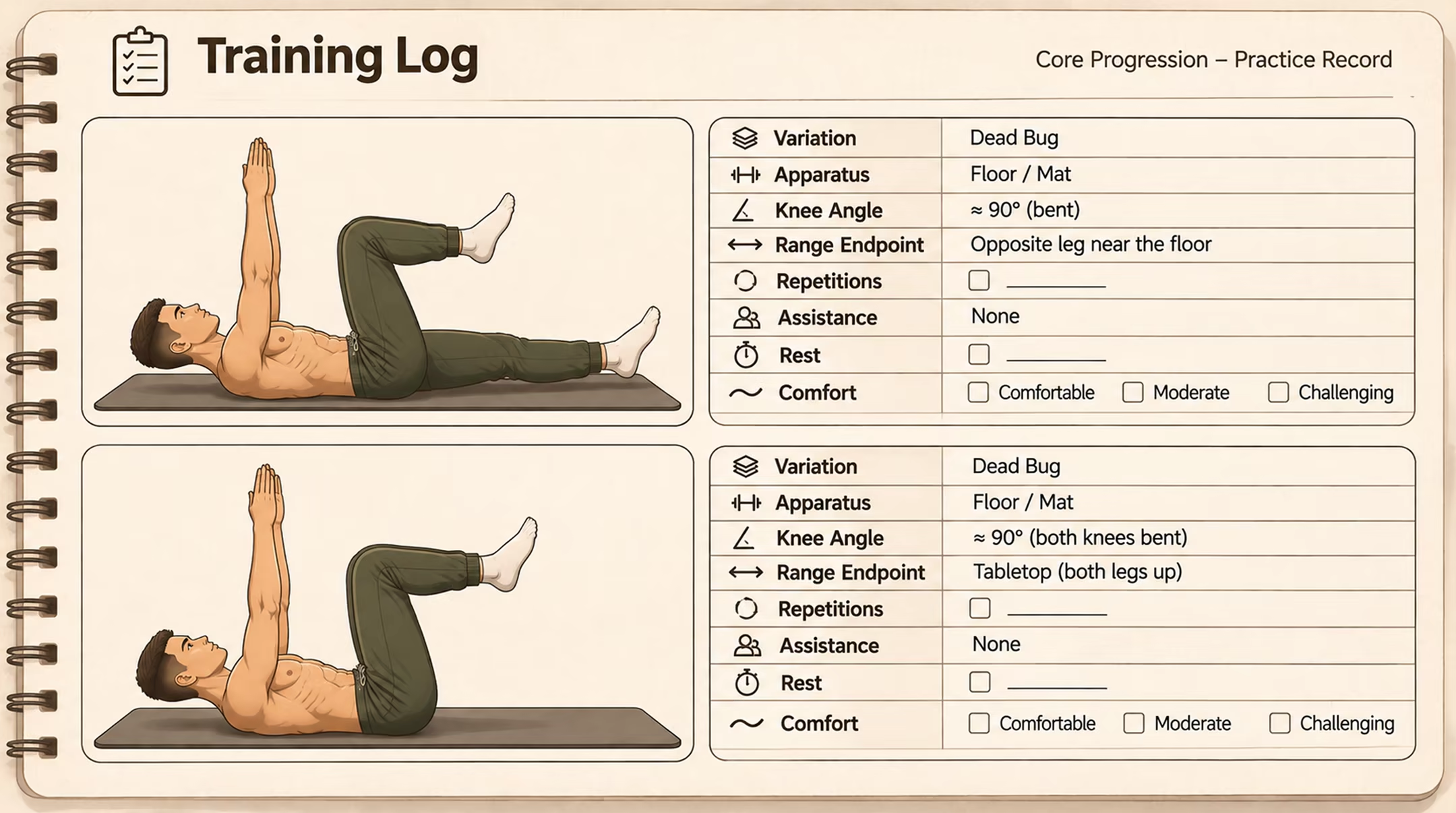
Troubleshoot control, not just the rep count
If your legs swing on the bar, pause and let the body settle before another repetition. Make the range smaller or switch to a floor option if you cannot stop the swing. If you cannot hold the bar securely, end the set and use a different exercise rather than hanging longer to prove grip strength.
If the floor version becomes a back-arching movement, shorten the lever or stop the descent higher. Keep the count honest: repetitions with a different range or more momentum are not directly comparable. If the seated version makes your shoulders shrug or wrists uncomfortable, select a different support or leave it out. No exercise has to stay in your plan just because it appears in a recommendation list.
Stop for pain, numbness, loss of grip or other concerning symptoms. Do not diagnose the cause from the movement. If discomfort persists or returns, seek advice from an appropriate health professional. A qualified trainer can review exercise setup and technique, but cannot replace medical assessment.
Leg raise questions
Are leg raises for the abs or the hip flexors?
The task involves lifting the legs at the hip and controlling the trunk. Studies measure different muscle activity in specific versions, but that does not reduce the exercise to one muscle or identify a best variation for everyone.
Should I start with straight legs?
Not necessarily. Bent knees shorten the lever and may make the movement easier to control. Choose the position that lets you repeat a comfortable range without swinging or losing your chosen body position.
Do I have to do hanging leg raises?
No. A floor version does not require an overhead bar. Hanging work adds grip and shoulder-support demands, so use it only with suitable equipment and a manageable entry and exit.
Are Dead Bug, Seated L-Sit Leg Raise and Hollow Body Hold prerequisites?
No. They are related options with different setups. Choose among them based on the task you want to practice and the support you can manage.
Your next step
Before your next session, decide whether you mean a floor, hanging or seated leg raise and write down the range you can control. Keep that setup consistent before changing one feature. Explore Leg Raises in CaliStack and compare its demonstration with your chosen setup. Dead Bug, Seated L-Sit Leg Raise and Hollow Body Hold are separate options, not required stages.
Sources and evidence limits
Source check: . Research context is separate from an individual technique assessment. Sample programs are editorial examples, not validated unlock tests.
Andersson and colleagues measured abdominal and hip-flexor activity across laboratory exercises including bilateral leg lifts. [14]
The measurements do not rank the floor, hanging and seated variations in this guide or establish a pain-treatment protocol.
Want a clear plan for your next skill?
We built Calistack to show you the exact steps from where you are right now to your first handstand, muscle-up, or lever.