Train with a map.Not a guess.
Calistack is a calisthenics training app for beginners and intermediate athletes who want to organize bodyweight strength and skill practice using an assessment and visual progression trees. Choose a manageable starting point, compare your practice over time, and use the app on iOS or Android to follow your training.


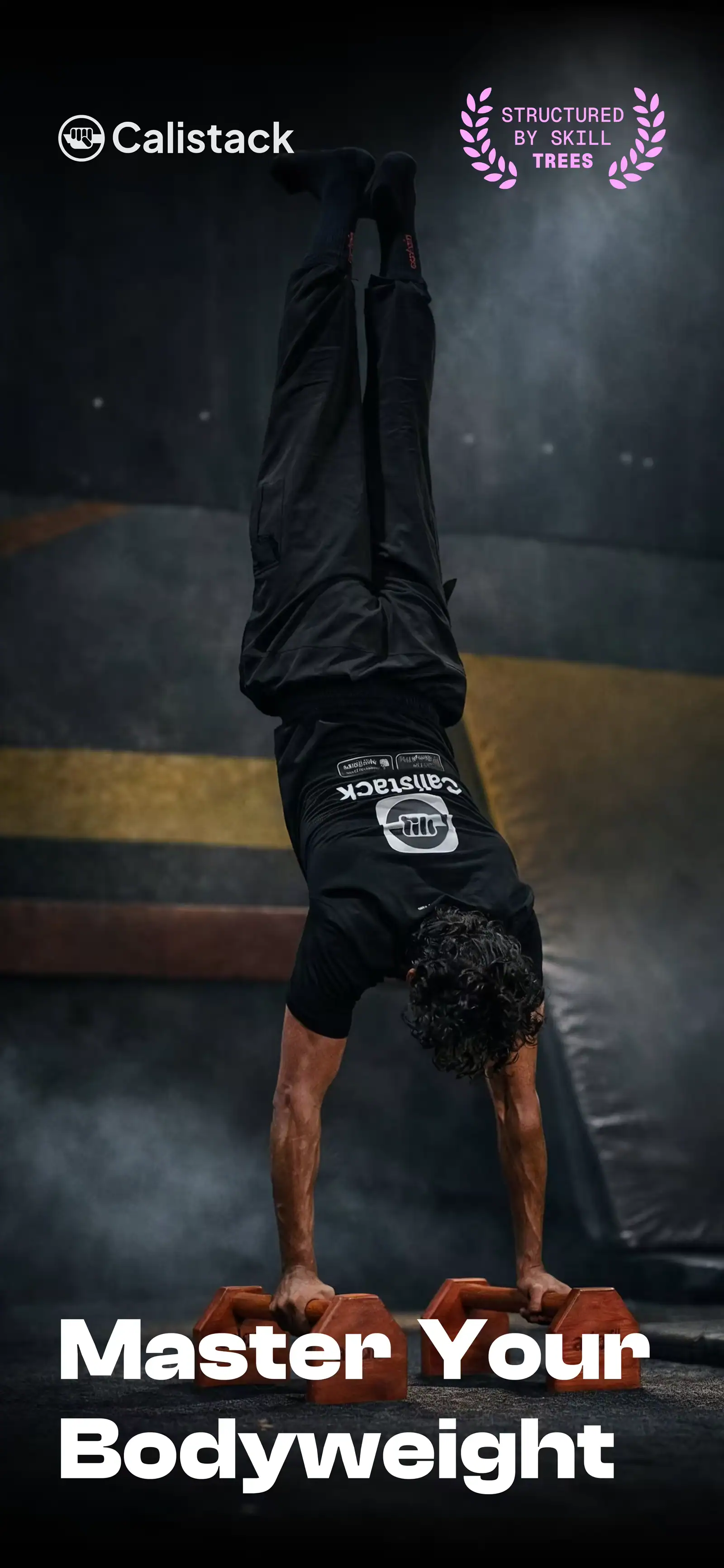
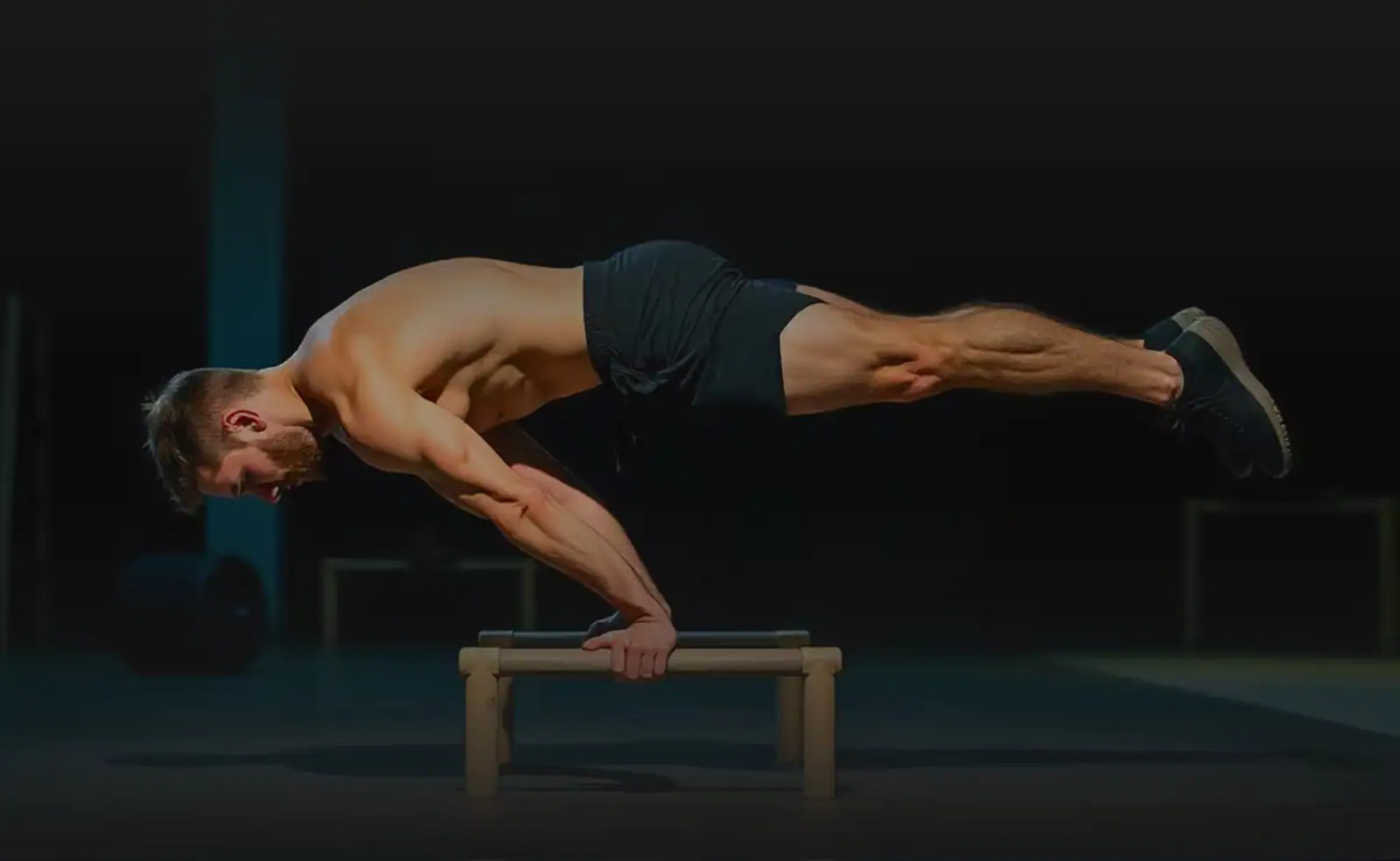
Form, Tempo & Prep
Built into every workout node
The Skill Tree
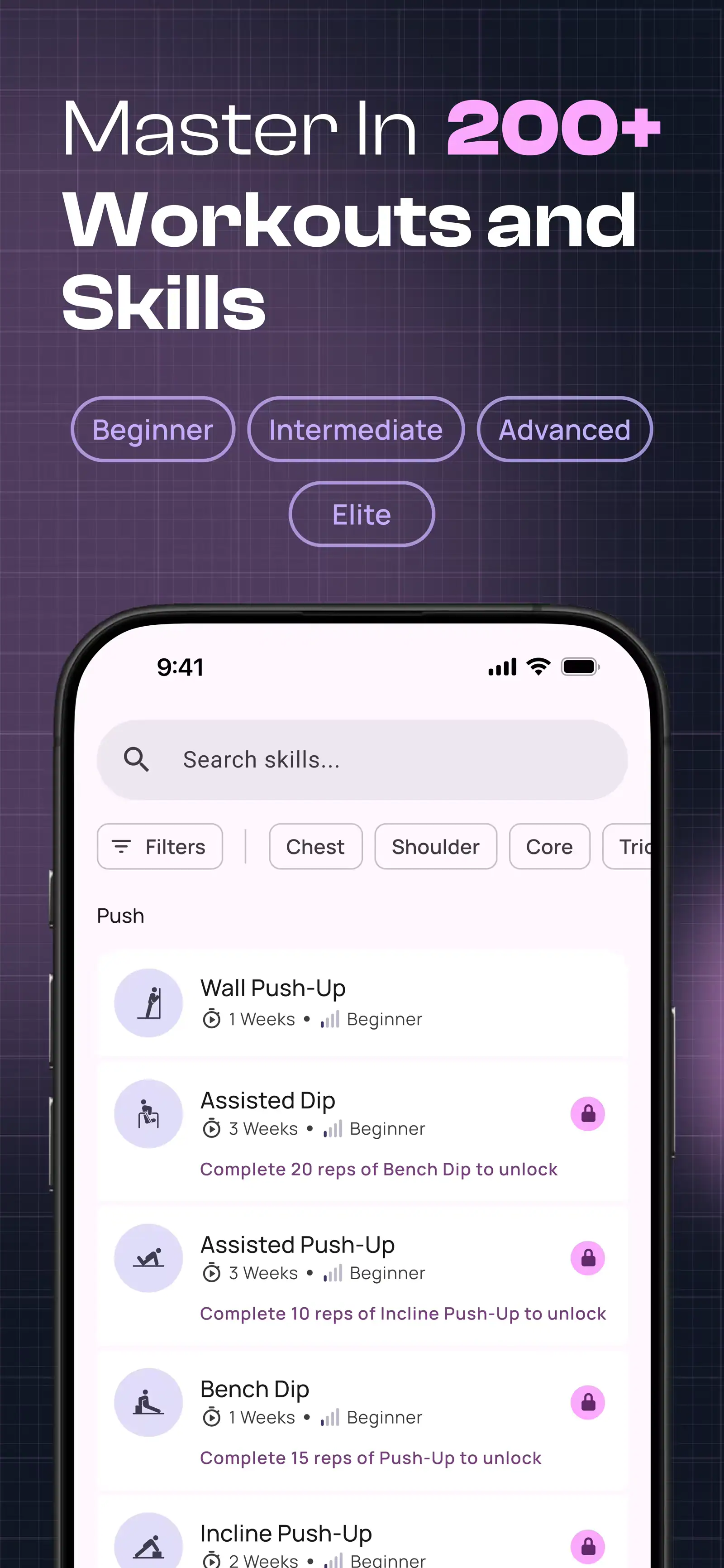
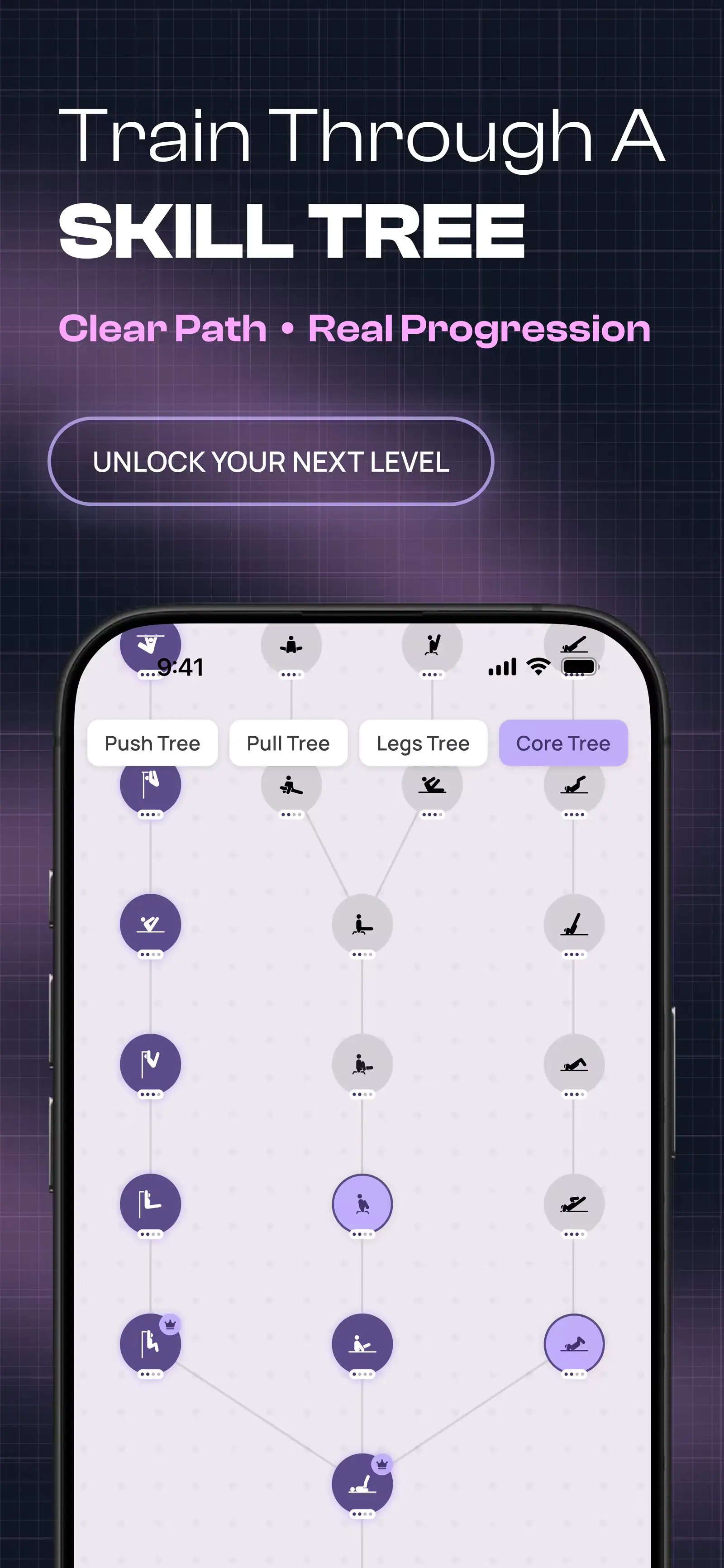
228 WORKOUT NODESEvery workout is a node on the map, connected by prerequisites and alternatives rather than a single linear playlist.
Smart Placement
ASSESSMENT
2-Min Test
SKILL TREES
4 CORE PATHS
Two questions about push-ups and pull-ups apply cumulative starter unlock groups at five and ten reps. No exact-node placement claim.
01 / Progression
AUTO-UNLOCKHit Target → Level Up
Log sets & holds to unlock the next node
No gym required—train on your floor, wall, or local park bar.
A handstand isn't one move. It's a skill tree.
Every workout in Calistack is a node on the map, and this preview runs on the real 228-node graph. Nodes are locked until their unlock rule is met, unlocked when it is, and mastered when you hit the node's benchmark. Tap a node, switch trees and watch the unlock signal travel to the next locked nodes.
Locked
The prerequisite rule is not met yet. The app shows the movement and the number, and still lets you start after a warning.
Unlocked
The rule is met, or the baseline assessment opened the node as a starter group. Train it now.
Mastered
Best-set benchmark and lifetime volume are met. This step is done, so you can move on.
Skill node · Unlocked · unlocks 6 next nodes
Open the full interactive treePreview states are illustrative · drag to pan · pinch or ⌘/Ctrl + scroll to zoom
Every feature, not just a workout list.
Four skill trees, a two-question assessment, a guided workout player, a rest timer, progress tracking, weekly planning and offline training. Browse the full product tour.
Four-path skill tree
Push, pull, legs and core trees show what is locked, unlocked and mastered.
Baseline assessment
Two questions about your push-ups and pull-ups open starter unlock groups.
Guided workout player
Three-page exercise cards, a stopwatch and one-tap set logging for reps or holds.
Weekly session planner
Name a plan, assign workouts to Monday through Sunday, and start each day from it.
Offline training and cloud sync
Train without a connection; progress uploads when you reconnect and follows your account.
Why random workouts stop working.
High-rep push-up circuits get you tired, but they never teach you a freestanding handstand or a strict bar muscle-up. Every advanced skill in calisthenics is a chain of smaller workout nodes, and some links in that chain take months of joint and tendon preparation.
Workout Architecture
Random daily circuits ("Chest Blast", "Fat Burner") that leave you exhausted without building toward a real skill.
A connected skill tree where every node shows the prerequisite movement and the number that opens the next step, instead of leaving the order to guesswork.
Starting Point
One-size-fits-all plans that are either far too easy or impossible to complete safely.
Push-up and pull-up counts apply onboarding unlock groups at 5 and 10 repetitions; the tree then lets you choose suitable practice.
Joint & Tendon Prep
Throws you straight into wall handstands or muscle-ups without conditioning your wrists, elbows, or shoulders.
A warm-up guide before training, areas-to-watch notes on skill pages, and progressive pressing nodes before harder inversions.
In-App Video Coaching
Bare rep counters with zero form guidance, or conflicting 15-second clips scattered across social media.
A demonstration video, written steps, good and bad form cues, and a 60-second rest timer inside the workout player.
Precision form cues inside every workout node.
Skill pages include demonstration video, step-by-step guidance, good and bad form cues, areas to watch, targeted muscles and recommended supporting exercises.
Stacked Alignment, Scapular Elevation & Finger Brakes
FORM CHECKLIST INCLUDED IN THIS WORKOUT NODE:
Lock elbows 100% and elevate shoulders toward your ears to eliminate slack
Grip the floor with active fingertips to brake forward over-balance
Tuck lower ribs toward your pelvis to maintain a rigid hollow-body line
Instead of piecing together conflicting 15-second clips, open the node and check the demonstration video, written steps and form cues before your set. Each node also shows its own rep or hold benchmark.
Built-In Timers & Form Cues
Log sets and unlock the next skill node
How the system runs day to day.
Step through the four phases below to see how Calistack guides your training from baseline test to skill mastery.
Calibrate your starting point.
Open Calistack and enter your current push-up and pull-up counts. The app applies cumulative starter unlock groups at the five- and ten-repetition gates, so you begin with a manageable set of nodes rather than a guessed starting point.
- Two inputs only: push-ups and pull-ups
- Cumulative groups at five and ten reps on each path
- Completed in two minutes at home with zero equipment
A personal setback. A team-built solution.
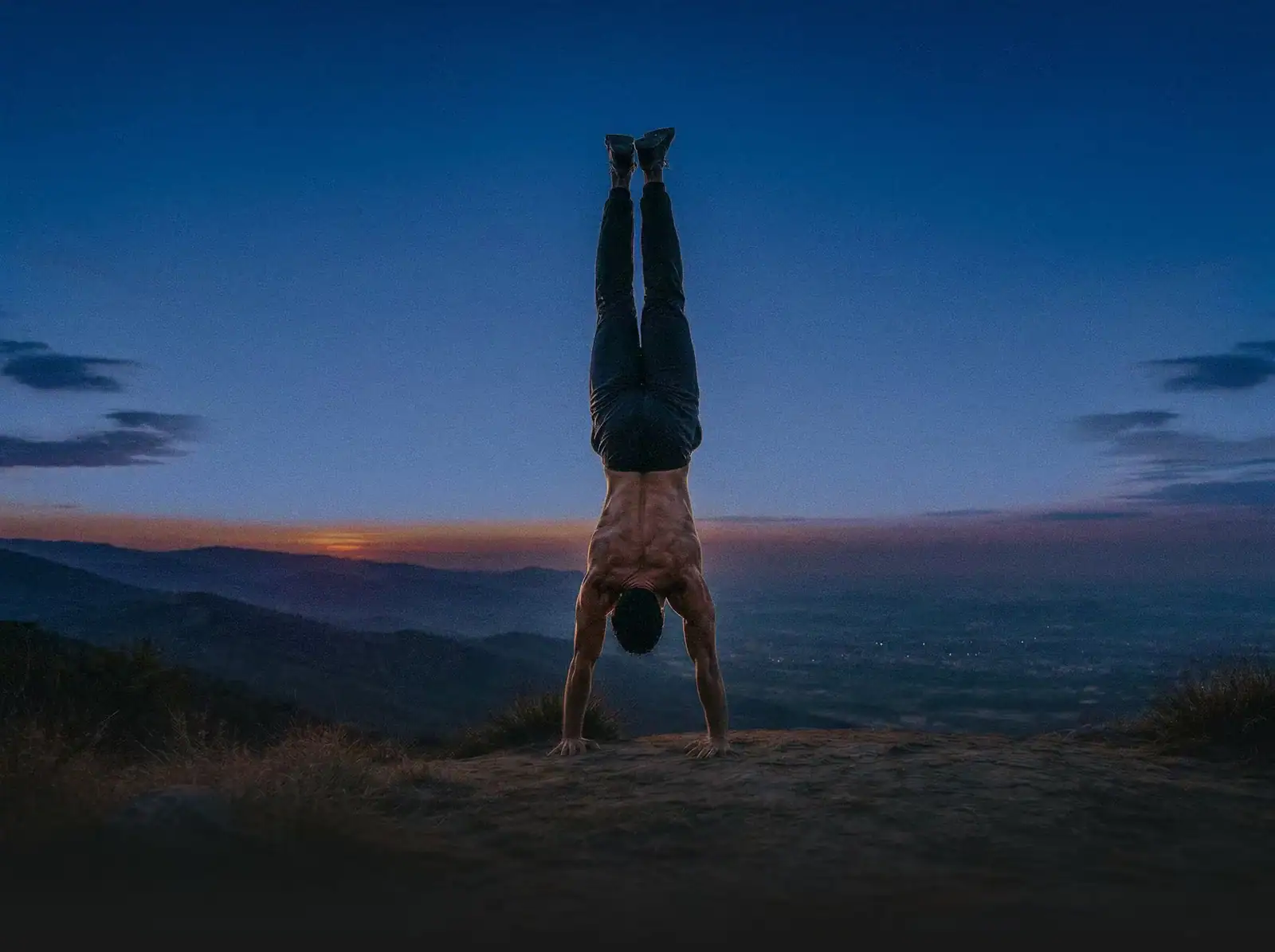
Rishad's first handstand attempt lasted less than a second. Conflicting videos left him unsure of the next step. That personal experience sparked an idea the Calistack Team developed together, combining app development, design, coaching, tutorials and production.
We built Calistack to turn scattered calisthenics knowledge into a structured progression engine—mapping over 228 workout nodes with dedicated video tutorials, joint conditioning, and objective rep targets. While building the app, Rishad's training milestones included:
Built For Every Stage
- 01Beginners starting at home who want their first strict push-ups, pull-ups, and frog stand safely.
- 02Intermediate athletes who own the basics but keep plateauing on handstands, muscle-ups, or levers.
- 03Self-coached lifters who want a measurable skill roadmap instead of random social media routines.
Calisthenics Guides
Deep-dive articles on handstand balance, muscle-up mechanics, and progressive bodyweight training.
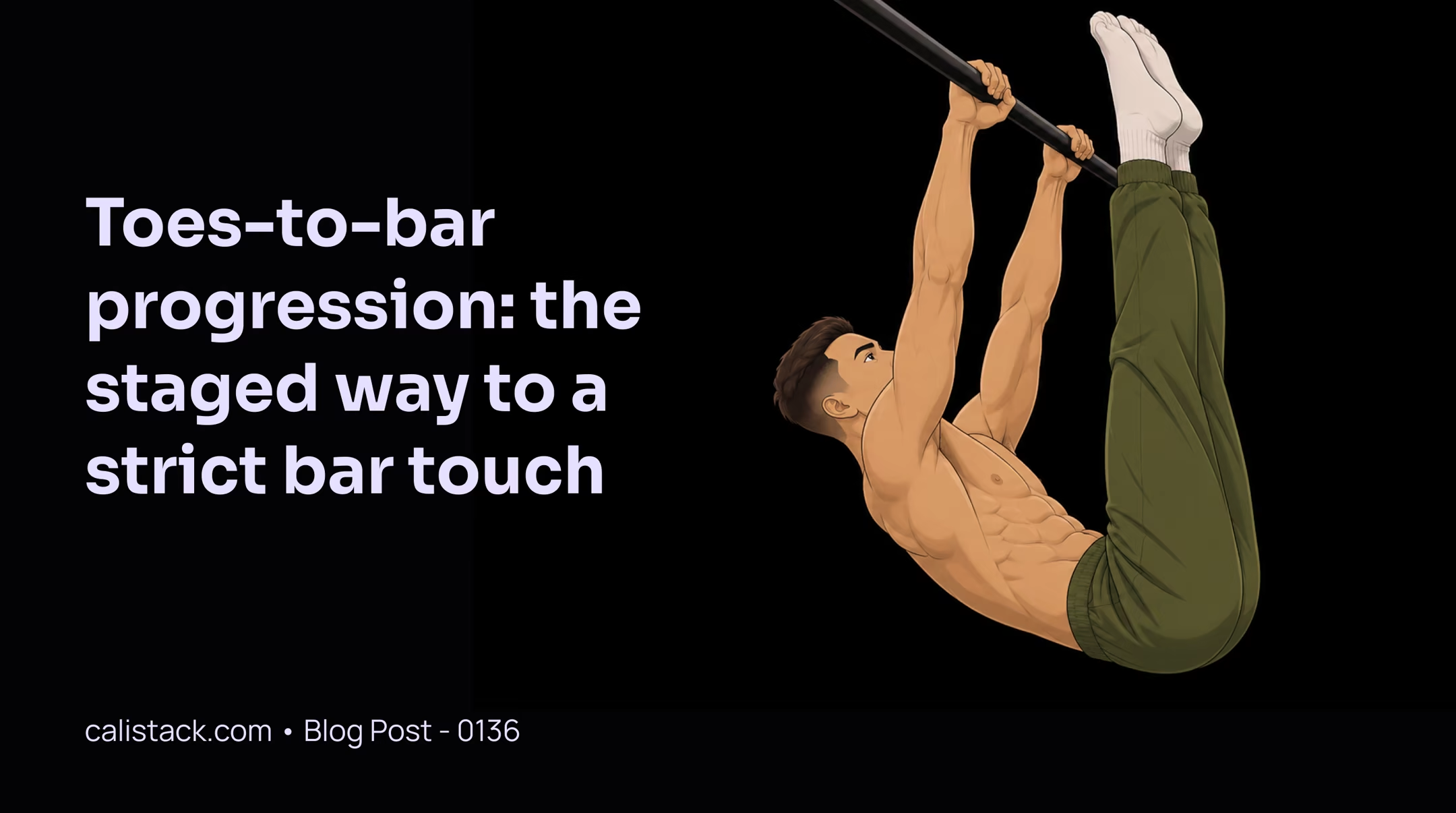
Toes-to-bar progression: the staged way to a strict bar touch
A toes-to-bar progression is a method, not the finished skill. Build the foot path in stages, keep the swing out of it, and record the height you can stop at.
Read Guide →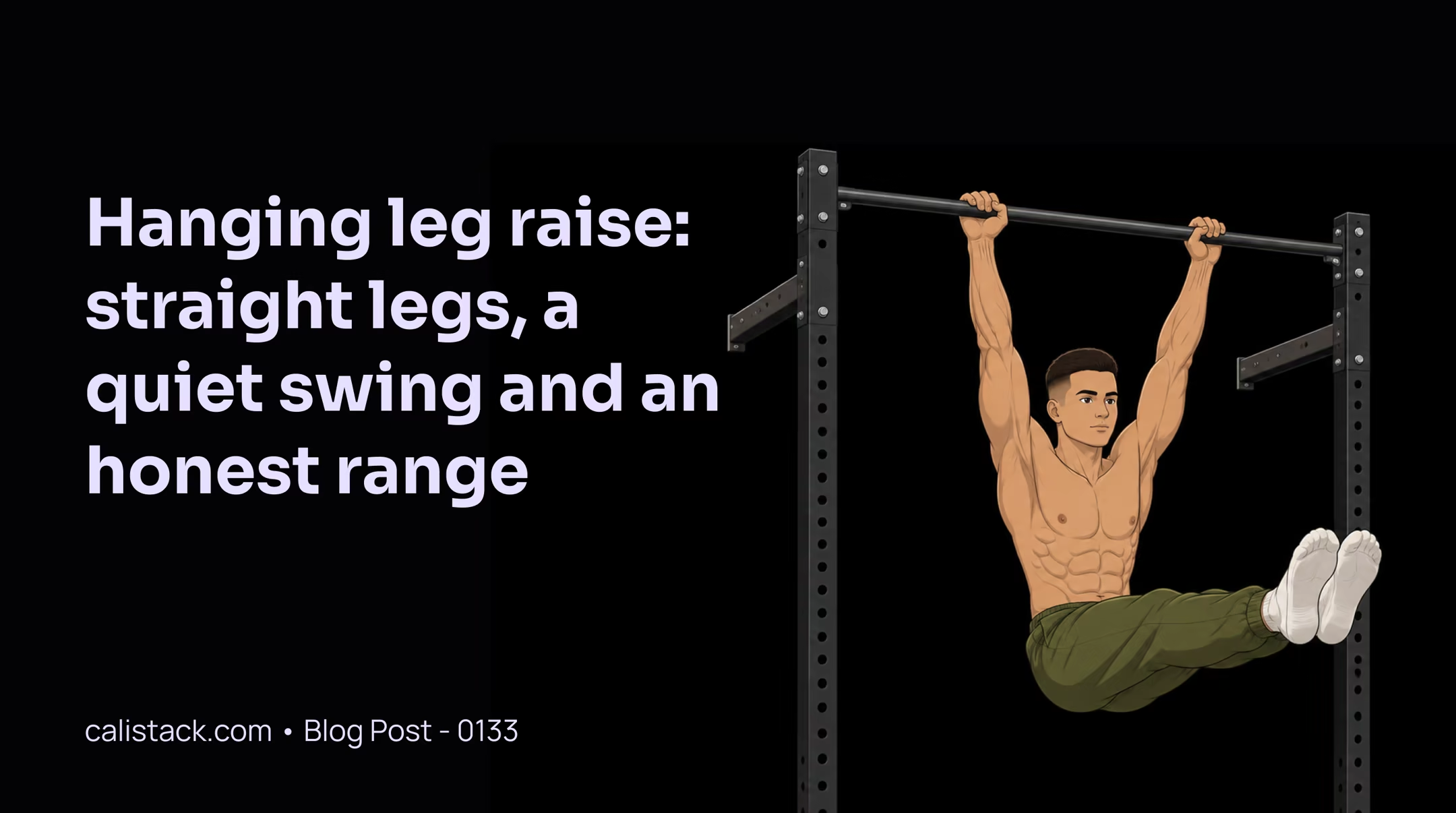
Hanging leg raise: straight legs, a quiet swing and an honest range
A hanging leg raise is a straight-leg lift from a bar, so grip and swing often set the limit before the trunk does. Set the hang, choose a range you can stop, and record the endpoint.
Read Guide →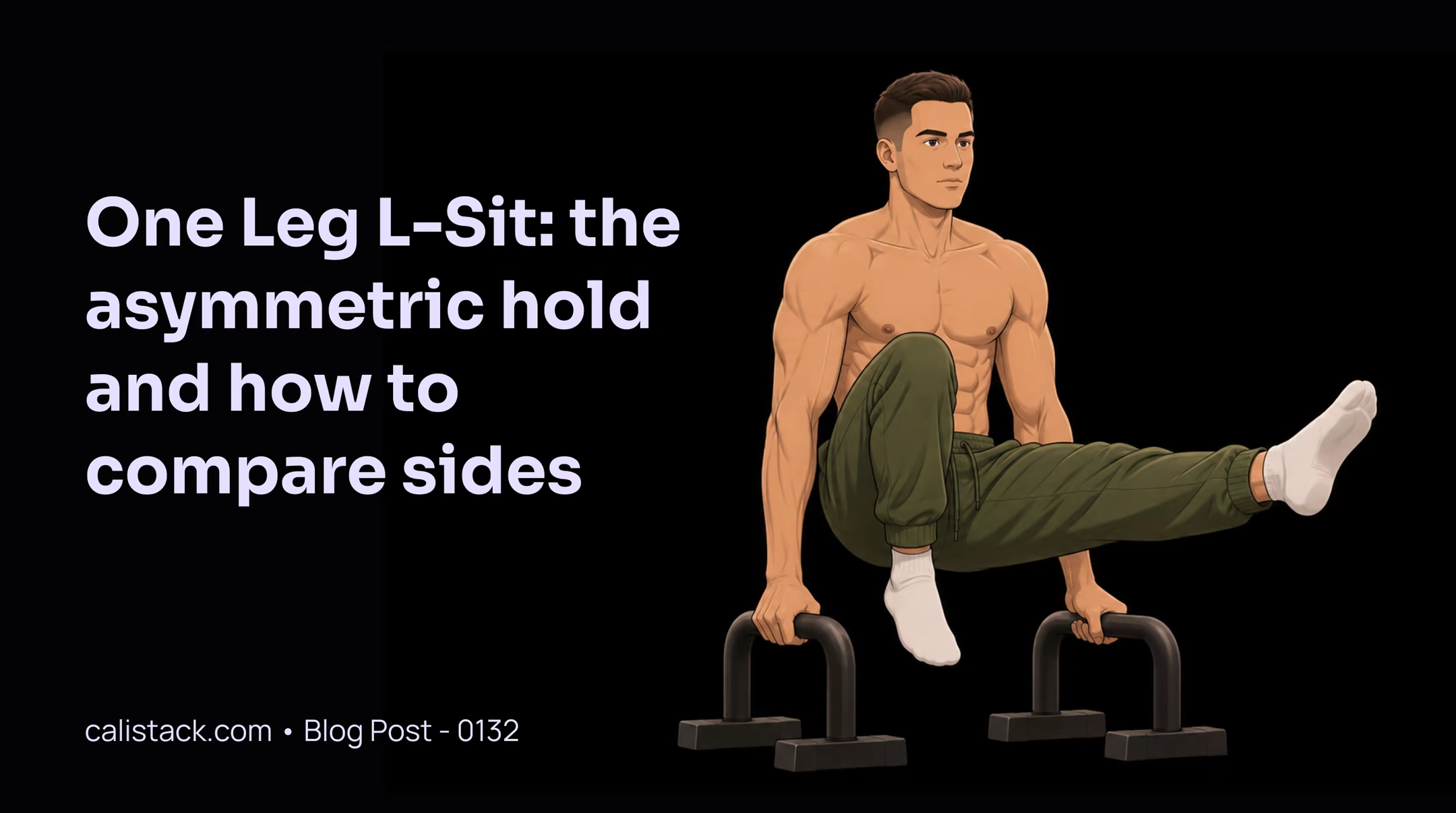
One Leg L-Sit: the asymmetric hold and how to compare sides
The one leg L-sit extends one leg and tucks the other. Learn which leg to extend, why one side often feels harder, and how to log each side as its own skill.
Read Guide →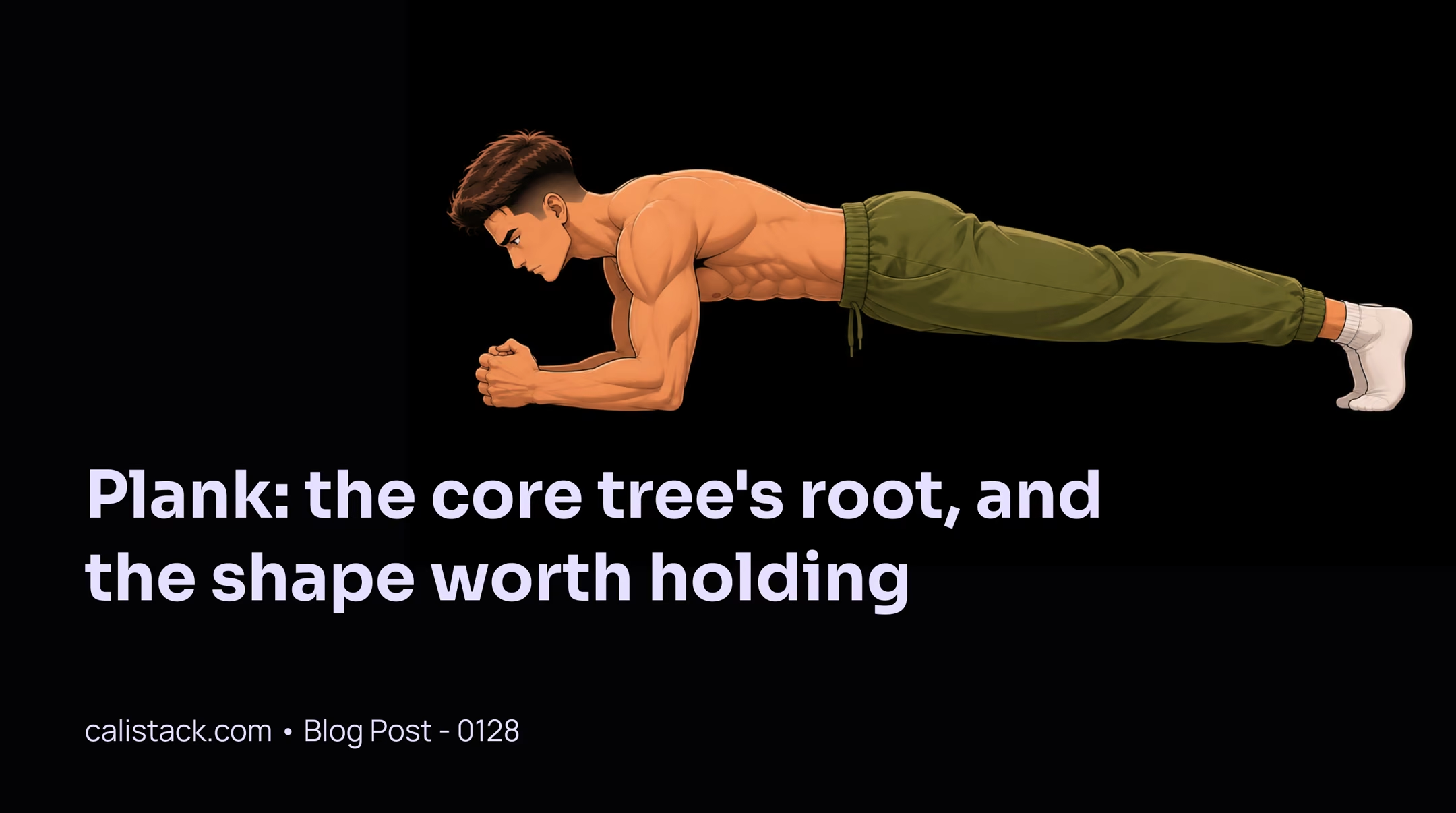
Plank: the core tree's root, and the shape worth holding
A plank is an anti-extension drill, not a timed contest. Learn the position, the knee and incline versions, and what to write down instead of a personal best.
Read Guide →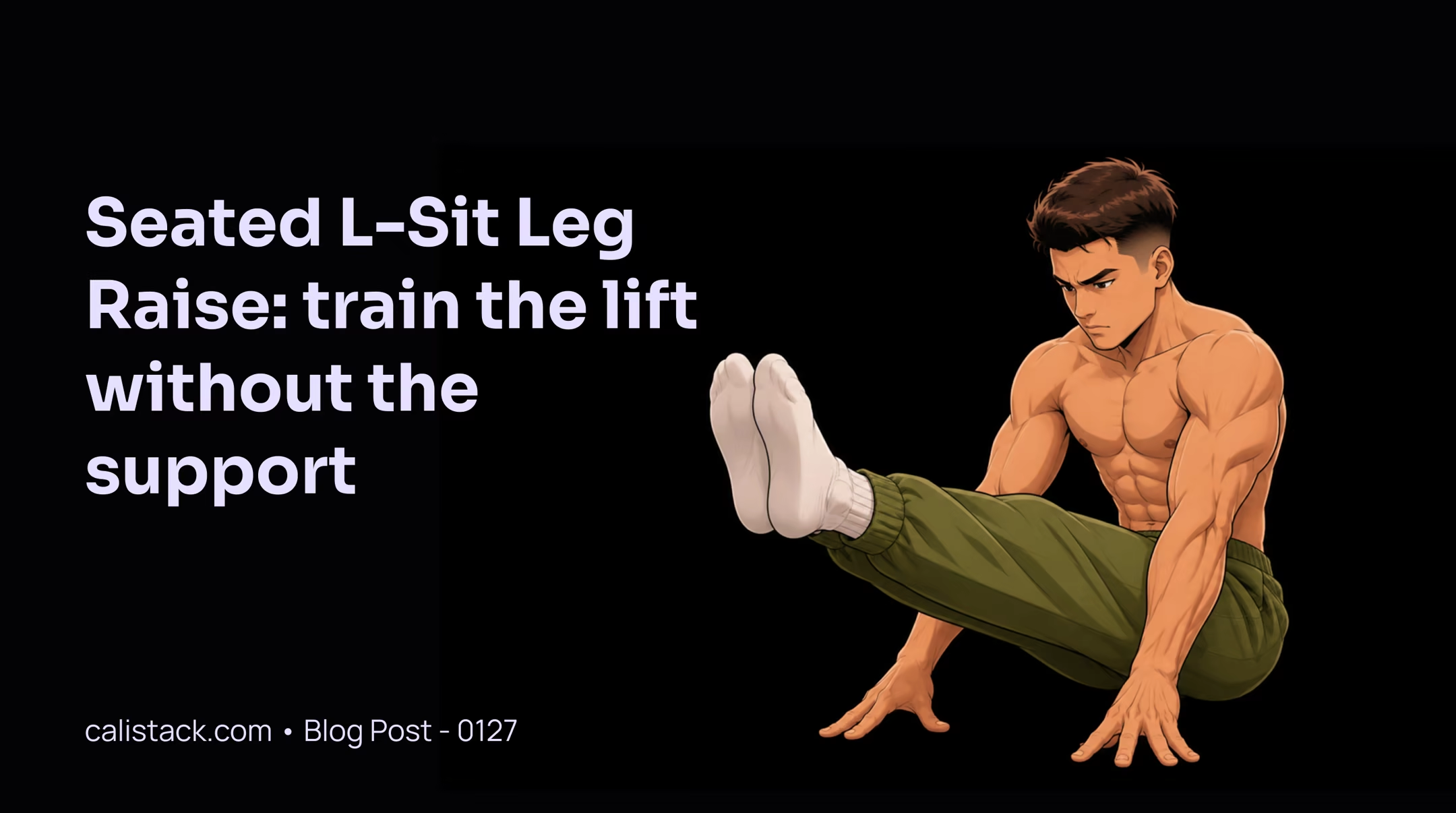
Seated L-Sit Leg Raise: train the lift without the support
The seated L-sit leg raise is a floor drill for hip flexion with no bodyweight on your hands. Learn the position, a controllable range, easier versions and what to record.
Read Guide →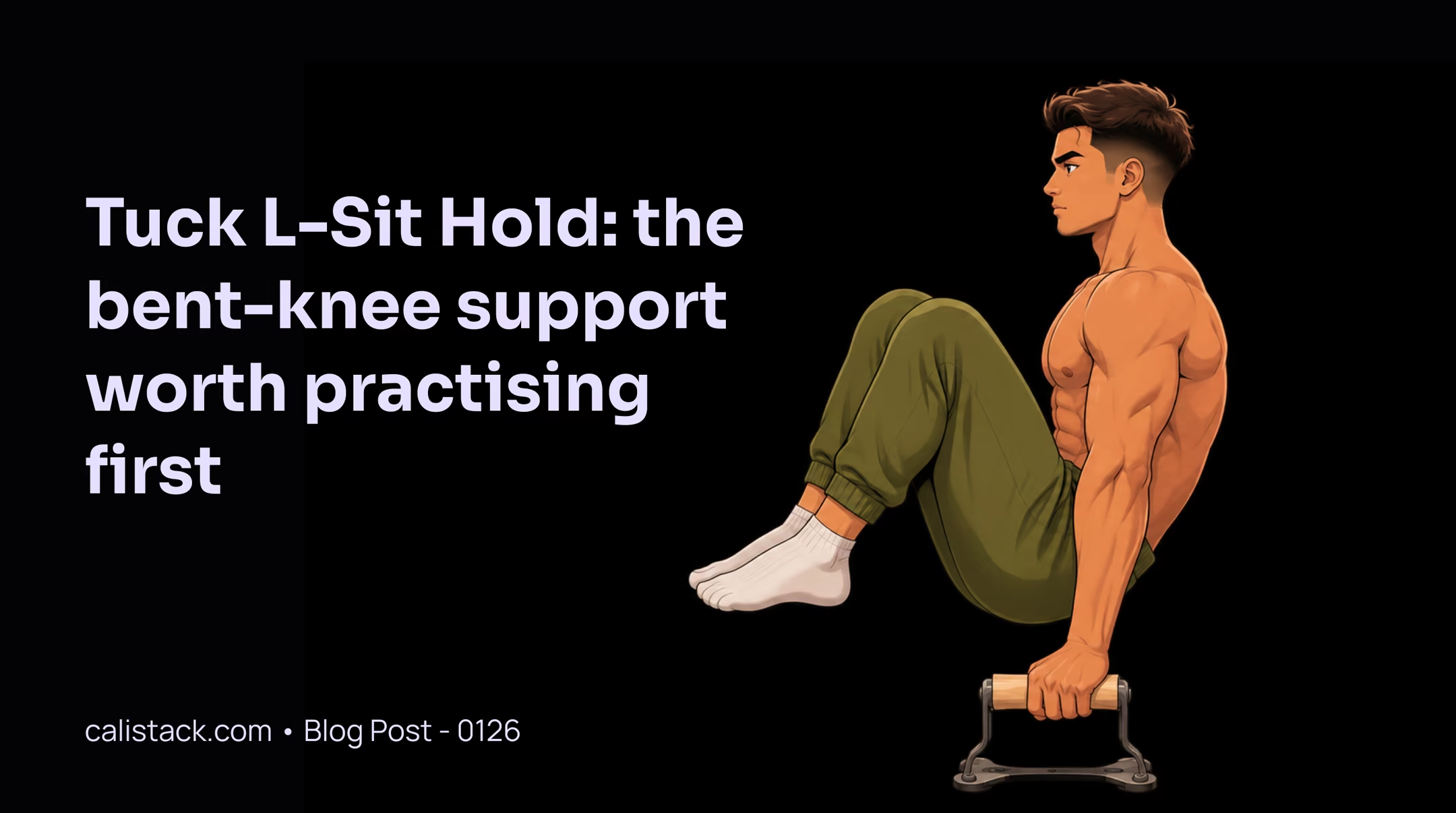
Tuck L-Sit Hold: the bent-knee support worth practising first
Learn the tuck L-sit hold as a support skill: how the hands and shoulders carry the load, how to set the tuck, and how to record it without chasing a hold time.
Read Guide →Common Questions
Yes. You can download Calistack for free on the App Store and Google Play, take the initial baseline assessment and open the four skill trees plus your starter unlock groups right away. Some nodes stay locked until you meet their prerequisite benchmark, and some are part of Calistack Pro. Optional premium training features are available inside the app.
See where you stand on the skill tree.
Download Calistack free on iOS or Android, answer the two baseline questions, and open your starter unlock groups right away.