By Calistack Team · Editorial standards: Calistack editorial team
Dip: technique, recommended exercises and practice options
A parallel-bar dip uses arm support to lower and press your body between fixed bars. Confirm the apparatus, use a comfortable controlled range, and choose appropriate assistance with qualified guidance. Bench, ring, and straight-bar dips are different tasks; related exercises are options rather than mandatory prerequisites.
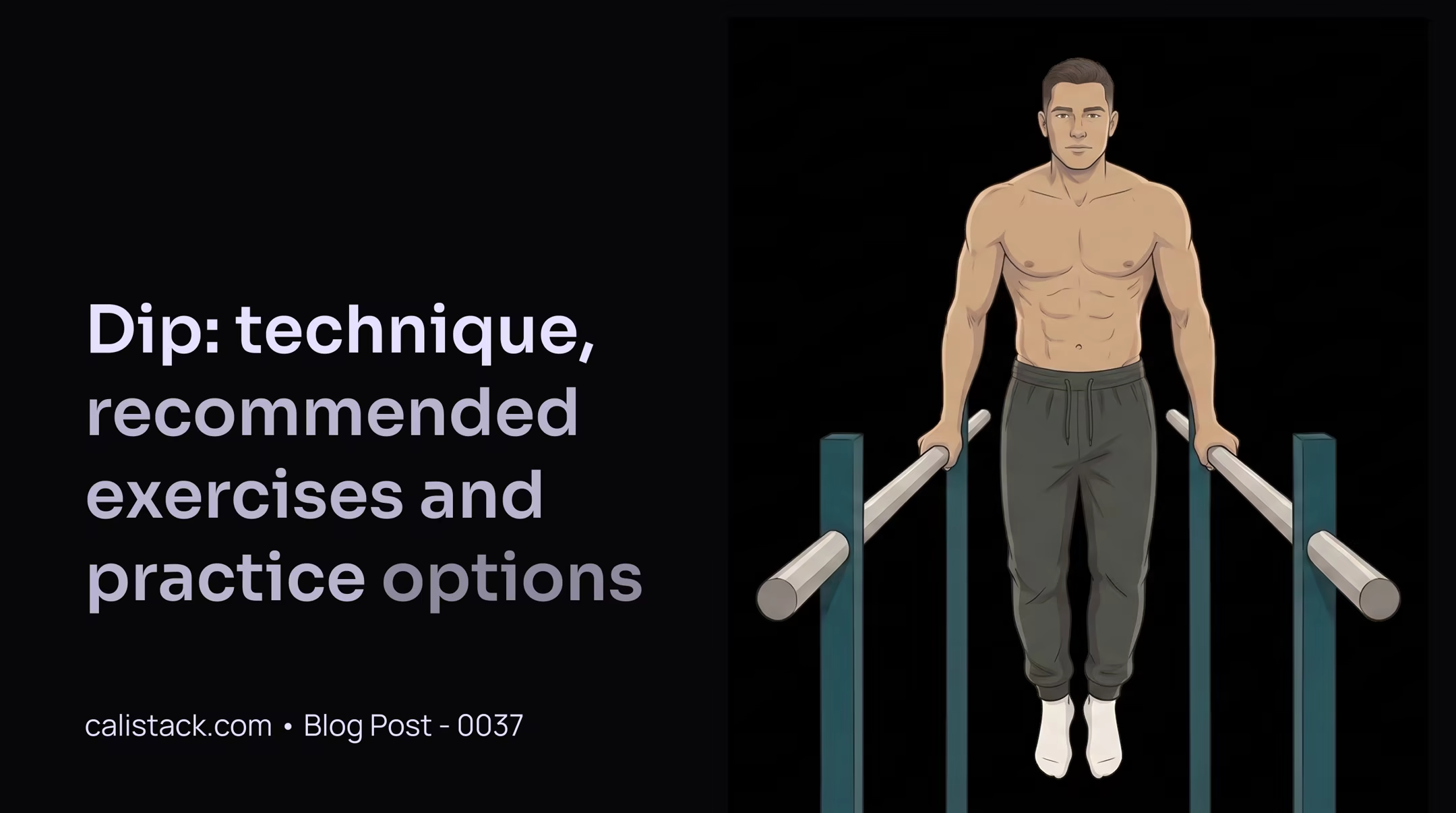
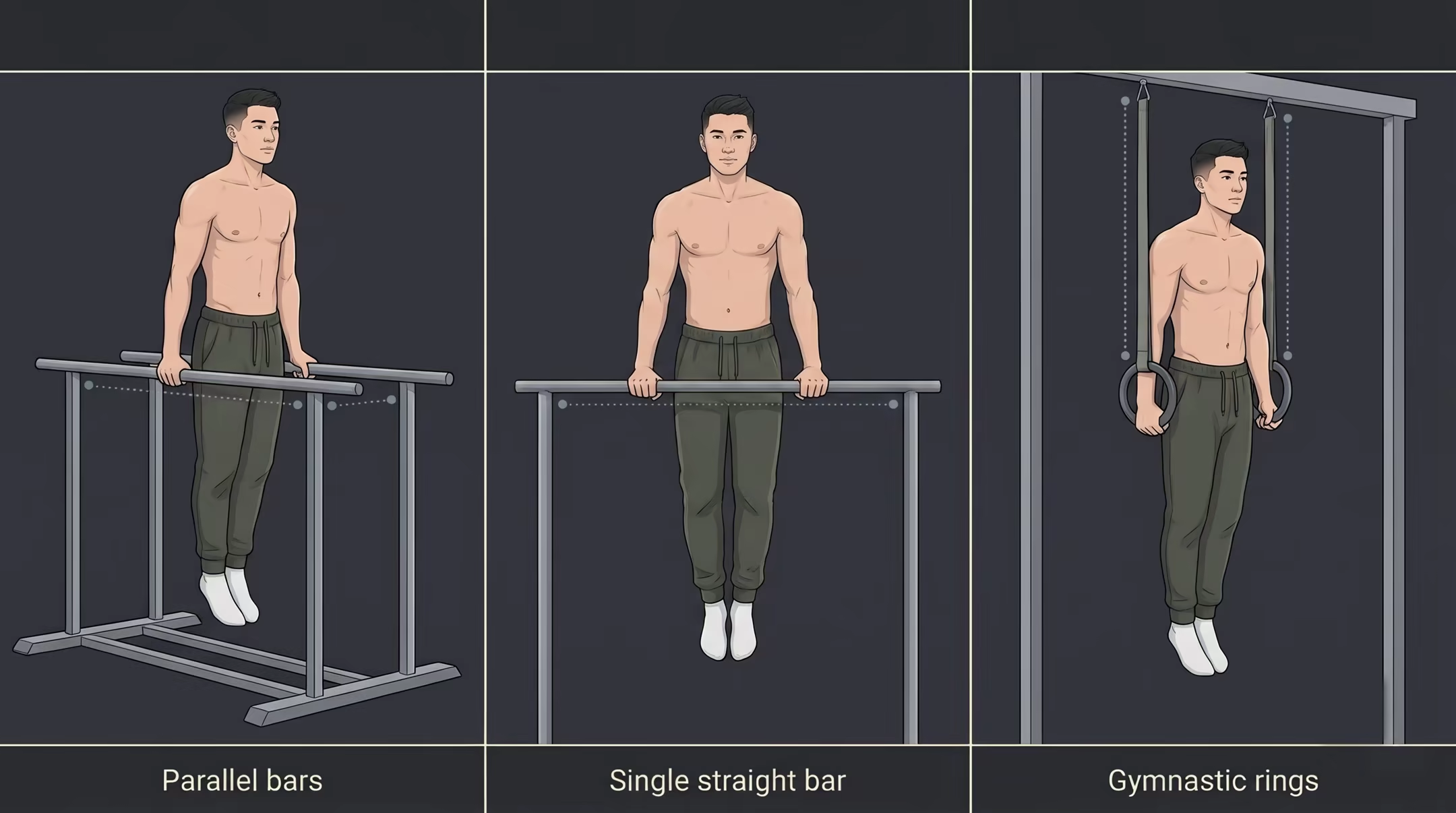
Dips are a bodyweight push, but the name can refer to different equipment and movement standards. This guide uses a controlled parallel-bar dip as a working example. CaliStack's Dip demonstration may use a different apparatus, so compare the video with this example and ask a qualified trainer to confirm the intended version. If the intended movement is a straight-bar dip, bench dip, or ring dip, the setup and demands differ.
What a parallel-bar dip involves
A parallel-bar dip begins with your hands supporting you on two fixed bars and your feet clear of the floor. Bend your elbows to lower your body, then press through your hands to return to the supported top position. Keep the movement controlled and use a range you can manage without forcing the shoulders down past what feels comfortable. Your chosen depth should stay consistent enough that you can compare sessions.
Dips involve the shoulders and elbows while the arms support bodyweight. Some people lean slightly forward; others use a more upright torso. Bar spacing, arm length, strength, and comfortable shoulder motion differ. Start with a stable grip and a small range if you are learning the movement. Do not chase a universal elbow angle, shoulder depth, or chest position when it changes your control or causes pain.
Check whether the setup is suitable
Use a fixed dip station designed for exercise and check that it does not rock or shift under load. Make sure you have a safe way to enter and exit the top position; a stable step can help. Keep the area below and around the bars clear. Rings move more than fixed bars, while a straight bar changes hand and body positioning. A bench dip places the hands behind the body and is not the same exercise as supporting yourself between parallel bars.
A study comparing bench, bar, and ring dips measured different joint positions and muscle activity in thirteen experienced men. It reported greater shoulder extension during the bench dip than during the bar and ring versions. That small laboratory study does not tell us which option is best for every person or establish injury risk, but it is a reason not to assume that a bench dip is automatically a gentler substitute. If you have a history of shoulder symptoms or are unsure about the range, seek individual guidance before adding loaded dips.
Choose a starting option without a fixed ladder
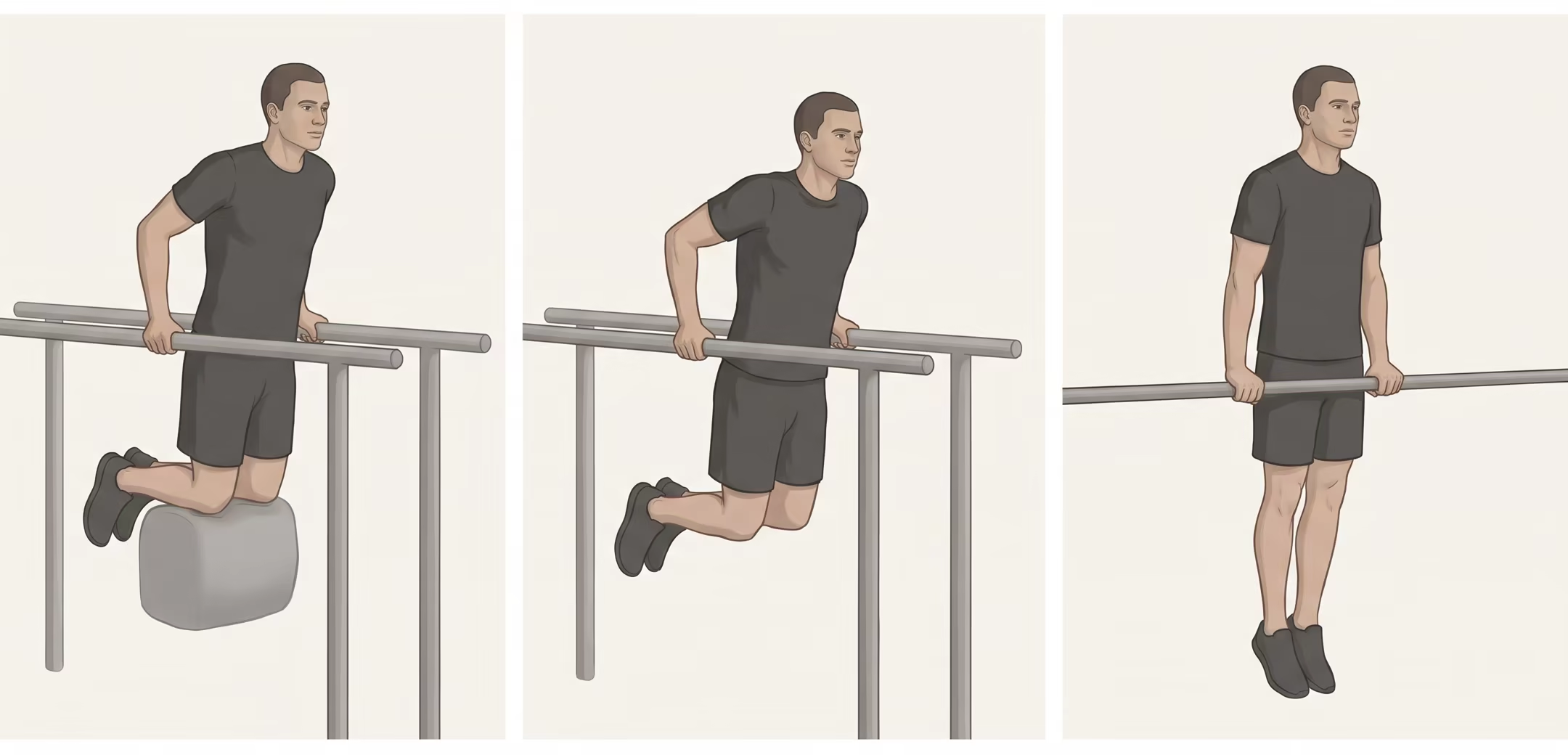
If you cannot support yourself on the bars comfortably, do not jump into repeated full dips. Ask a qualified trainer to check the station and choose a lower-load alternative. A stable push-up variation can train pressing while you arrange appropriate assistance. If you can support the top position and control a short descent, a trainer may help you adjust the range or amount of assistance. These choices are practical options, not automatic stages everyone must pass.
The assigned library record includes a self-link for Dip, which is not a supporting exercise and is excluded from the instructional list. Its other exact recommendations are Assisted Dip, Negative Dip, and Straight Bar Support Hold. The export gives no apparatus definition, technique, sets, repetitions, or readiness rules for those entries. Use the generic descriptions below only after checking the current exercise demonstrations.
| Library recommendation | Possible role | Check before using it |
|---|---|---|
| Assisted Dip | A way to reduce the amount of bodyweight you press | The app’s assistance method is unconfirmed; check equipment, setup, and how help is applied |
| Negative Dip | A practice option focused on the lowering phase | Use stable access to the top and stop if you cannot control the descent |
| Straight Bar Support Hold | A static support on one bar | This is not a parallel-bar dip and does not rehearse the same lowering movement |
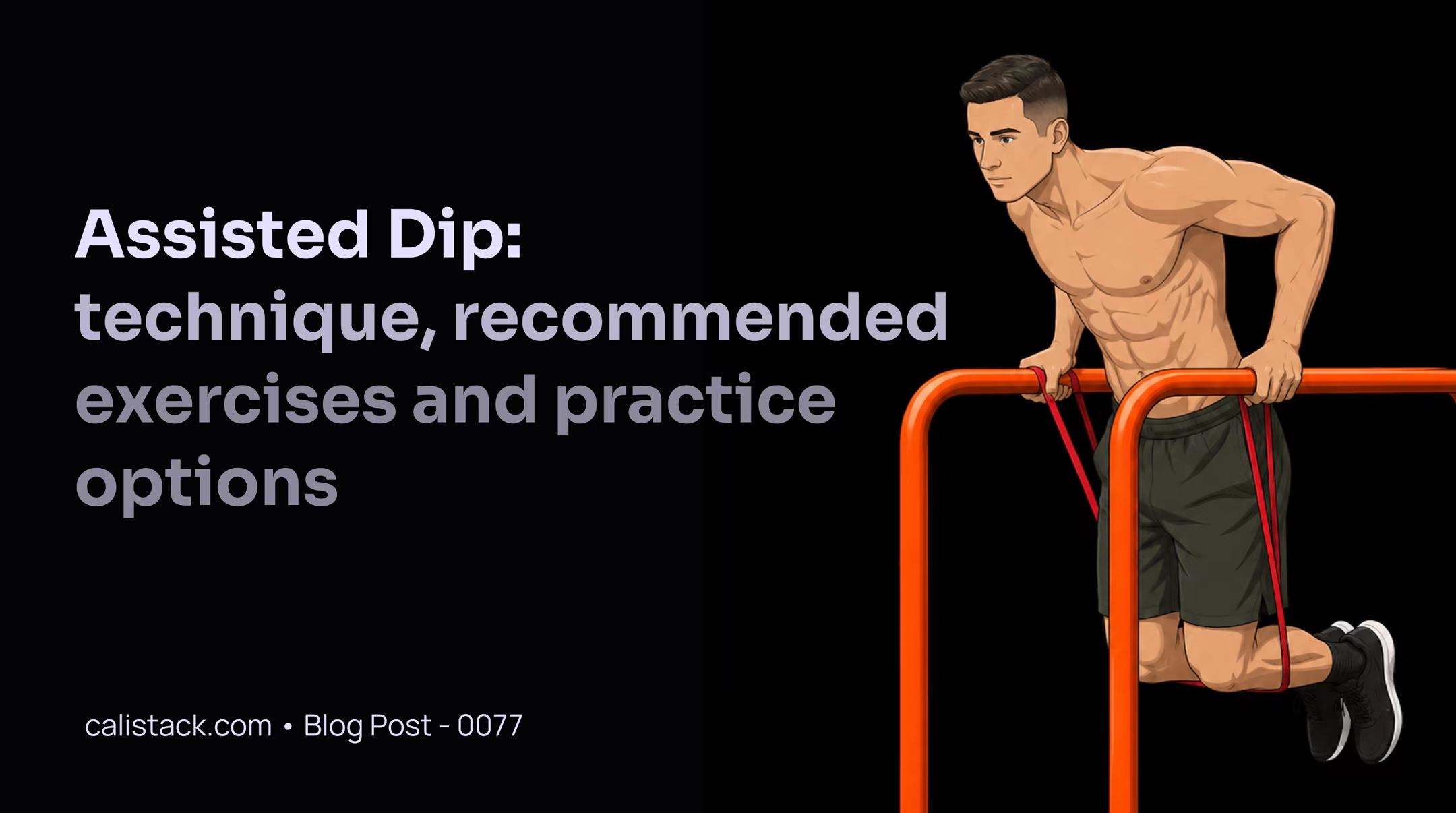
Assisted Dip can mean a machine, band, or another method. The name alone does not identify the assistance method, so check the current demonstration and follow the setup it shows; ask a qualified trainer if it is unclear. A negative dip still loads the arms and shoulders while lowering, so it is not automatically appropriate just because it omits the press back up. A straight-bar support hold is a separate static task; it may be useful to someone who wants to practice that support, but it is not a mandatory preparation for every dip.
An example practice block
Only use the following example after a qualified trainer has confirmed the apparatus and shown you a suitable way to get on and off the bars. For a generally healthy adult, one conservative example to discuss with a coach is two nonconsecutive practice days in a week, with two sets of three to five assisted repetitions in a short, comfortable range. Rest until you can repeat the same setup. Stop a set before your shoulders or elbows lose control. These numbers are discussion examples, not research-validated dip readiness criteria or instructions from CaliStack.
If an appropriate assisted setup is not available, use a push-up variation you can perform with control while you arrange coaching or equipment. Do not substitute improvised furniture or assume that bench dips suit everyone. If the chosen dip produces pain, stop it rather than reducing the range and continuing without advice. A coach can help decide whether another pressing movement is appropriate for your goal.
Track the version you actually performed
Record the apparatus, bar spacing if known, assistance method, range, number of sets and repetitions, and how you entered and exited. Describe the bottom point in simple terms, such as a small controlled bend or the same comfortable depth as last time. Write whether the descent stayed steady and whether you noticed discomfort during or after practice. A total repetition count without that context can hide a large change in the exercise.
When the same assisted version remains controlled over multiple sessions and recovery is comfortable, discuss one modest adjustment with a trainer: slightly less help, a little more range, or another carefully chosen variation. Change only one variable at a time. Do not use a set of repetitions as a universal clearance test for deeper dips, straight-bar transitions, or ring work. Those are different tasks and may need separate instruction.
Common problems and a better response
- You cannot get to the top safely: use a station or step that gives you a controlled entry, or choose another press until a trainer can help.
- Your shoulders roll forward or you drop through the descent: end the set, use more assistance, or choose a smaller range under guidance.
- You are unsure whether the movement is a bar dip or a straight-bar dip: pause and confirm the video and equipment before practicing.
- The repetition causes pain: stop that exercise. Do not treat a warm-up, shorter range, or extra effort as a fix for pain.
- A training log shows no change: check whether the apparatus, assistance, range, or rest changed before adding more repetitions.
Dip exercise questions
Are parallel-bar dips and straight-bar dips the same?
No. The support apparatus and movement differ. This guide's example uses parallel bars, but do not assume the app entry uses the same setup. Compare its demonstration and ask a qualified trainer if the version is unclear.
Is a bench dip the easiest or safest way to start?
Do not assume that. Bench, bar, and ring dips differ, and one small study found different movement profiles, including greater shoulder extension during bench dips in its sample. A trainer can help you choose an option that fits your situation.
Do I need a straight-bar support hold before a dip?
No universal prerequisite is established by the recommendation list. A straight-bar hold is a different static exercise. Use it only if that task fits your goal and you can perform it with appropriate instruction.
Can I train dips if the bottom position feels uncomfortable?
Do not force the range or train through pain. Stop and seek appropriate guidance. A comfortable push-up variation may be a temporary pressing option, but it is not a substitute diagnosis or individualized treatment.
Confirm the movement before progressing
First identify the apparatus shown in the Dip entry, then have a qualified trainer review the start, chosen range, and safe exit. If you use CaliStack, compare its Dip, Assisted Dip, Negative Dip, and Straight Bar Support Hold demonstrations rather than assuming the recommendation order is a training plan. Keep the practice that you can control, record its setup, and make any next change with appropriate guidance.
Sources and evidence limits
Source check: . Research context is separate from an individual technique assessment. Sample programs are editorial examples, not validated unlock tests.
McKenzie and colleagues compared bench, bar and ring dips in thirteen experienced men and found greater shoulder extension in the bench variation. [8]
The study measured acute kinematics and muscle activity, not injury rates or the safest exercise for an individual. It does not validate a universal beginner progression.
- [8] Alec McKenzie and colleagues. Bench, Bar, and Ring Dips: Do Kinematics and Muscle Activity Differ? (2022-10-14).
Full article retrieved from PubMed Central on 2026-11-10; the sample was thirteen experienced males, not a beginner safety trial.
Want a clear plan for your next skill?
We built Calistack to show you the exact steps from where you are right now to your first handstand, muscle-up, or lever.