By Calistack Team · Editorial standards: Calistack editorial team · Last updated
How to learn your first chin-up: starting exercises and practice choices
A chin-up is a vertical pull with your palms facing you. Begin with a secure bar and a comfortable grip, using assistance when needed to control both directions. Keep the setup consistent in your log. Holds, negatives, and rows serve different purposes rather than forming a required ladder.
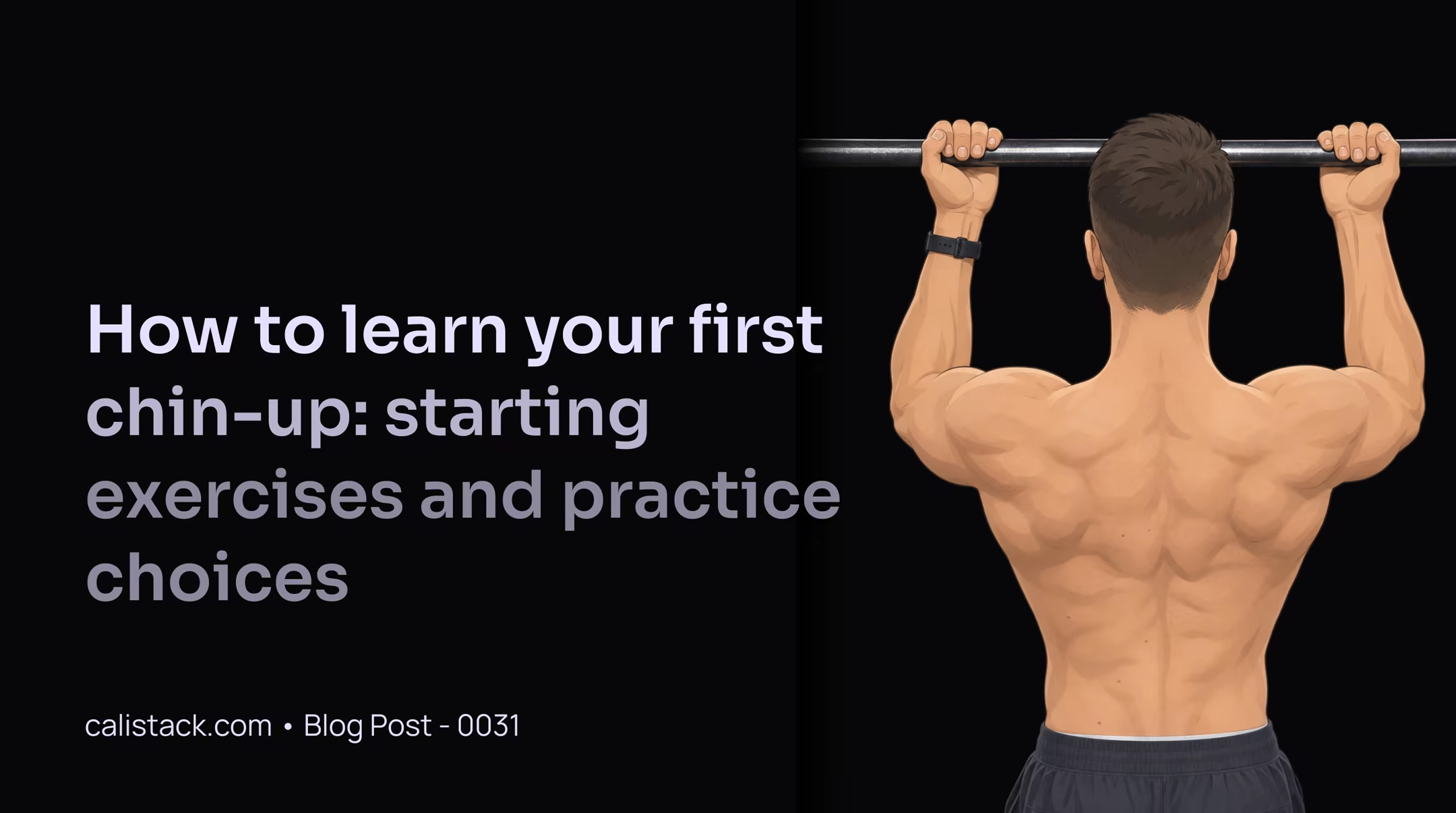
A chin-up is a vertical pull with the palms facing you. If you cannot lift your bodyweight yet, start with a form of assistance that lets you practice a controlled pull and return. You can also choose a related hold or row for a specific purpose. These options do not form a universal ladder: select the practice that matches your equipment, comfort, and current ability.
Set a clear standard for your first chin-up
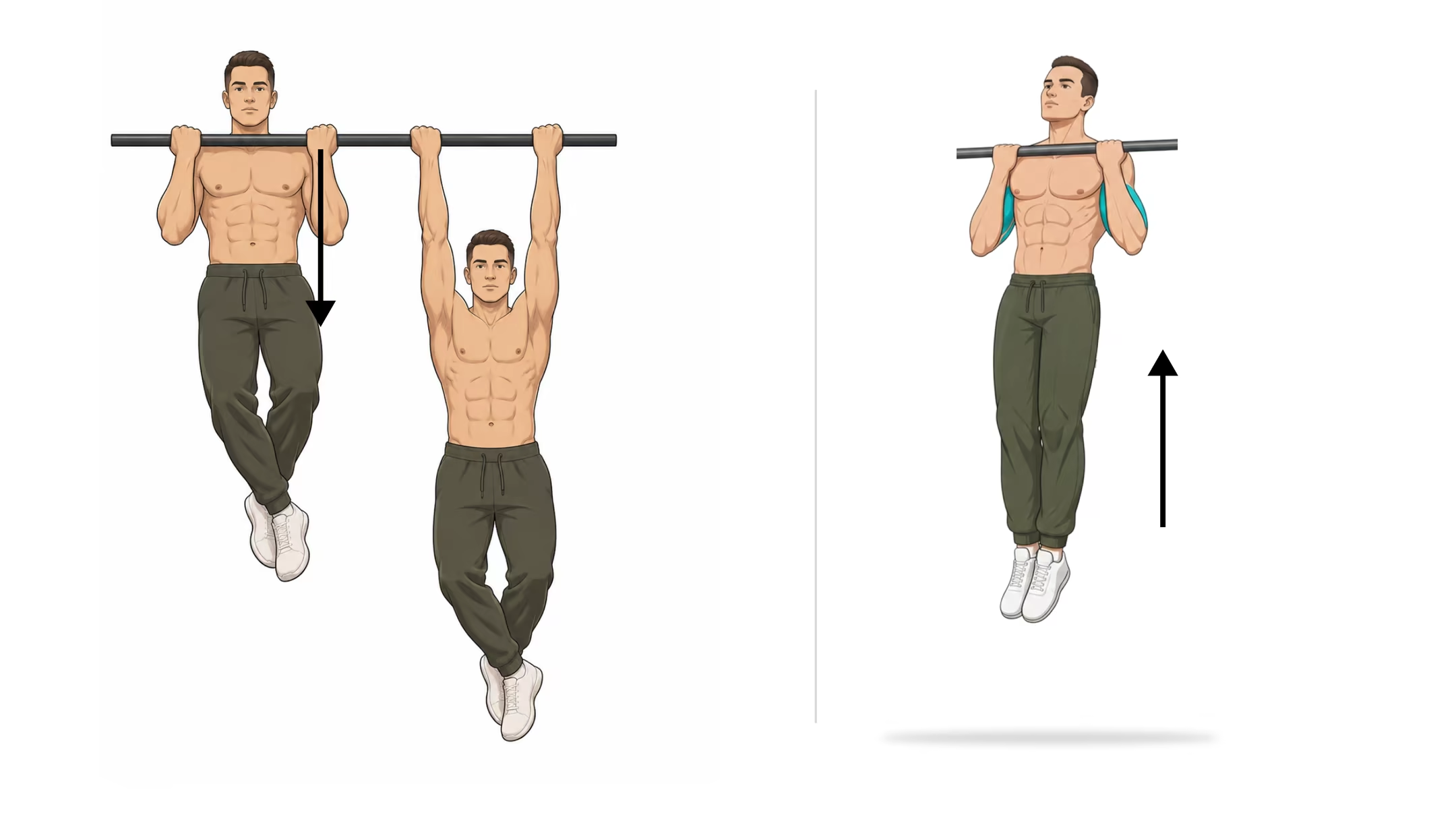
This guide uses chin-up to mean a strict bodyweight repetition on a secure overhead bar, with the palms facing you. Begin with elbows comfortably extended and feet clear of the floor. Pull until your chin passes the bar without stretching your neck to manufacture extra height, then lower under control to the same start. Avoid kicking or swinging during the repetition so your record reflects the pull itself.
Coaches and sports may use different end positions or grip widths, and CaliStack may define the movement differently. Compare the demonstration with the standard above; if the difference is unclear, ask a qualified trainer. Use a grip width that feels comfortable; do not force an extreme narrow or wide position. If the overhead start bothers your shoulder or elbow, do not hang through discomfort to satisfy this definition.
Check your equipment before practicing
Use a pull-up bar designed and installed for exercise, following the manufacturer’s instructions. Check that the bar is stable and your hands have a secure grip. Keep the area beneath it clear and use a fixed step to reach the top position when needed. Do not jump from a rolling chair or use a loose doorway object as an improvised bar. For a band-assisted version, inspect the band and follow its setup instructions so it cannot slip unexpectedly.
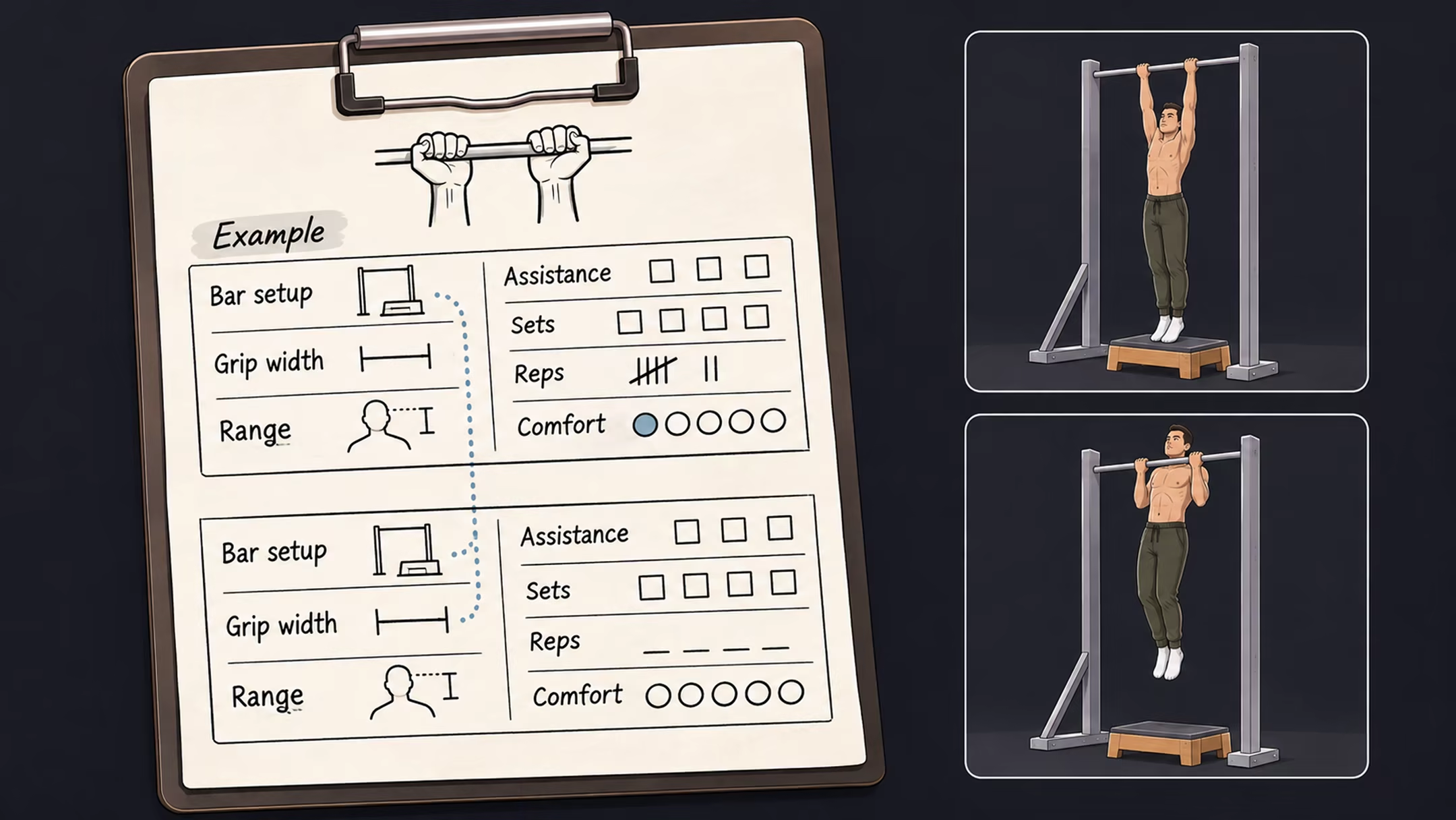
Before a full repetition, stand on a stable support and hold the bar with your palms facing you. Check whether the position feels comfortable and whether you can bend and extend your elbows under control while some weight stays through your feet. If the position is comfortable, try a small assisted pull. You do not need to prove a certain hang time before choosing a suitable assisted variation.
Choose practice by the part you can control
When you cannot pull upward without help, assistance can let you rehearse more of the movement than a top hold alone. A band, machine, partner, or your feet may change how much help you receive at different points. These methods are not interchangeable. Choose one that you can set up reliably and describe honestly in your training notes.
| Option | What it practices | What it does not establish |
|---|---|---|
| Assisted Chin-Up | A supported version of the full vertical pull | The exact assistance method in the app has not been verified |
| Negative Chin-Up | A controlled lowering phase after reaching the top safely | It does not prove you can pull upward through the full range |
| Chin Over Bar Hold | A stationary top position | A hold is not a repetition through the whole range |
| Jumping Chin-Up | A possible leg-assisted way to reach the upper part before lowering | Jump height and technique do not measure an unassisted chin-up |
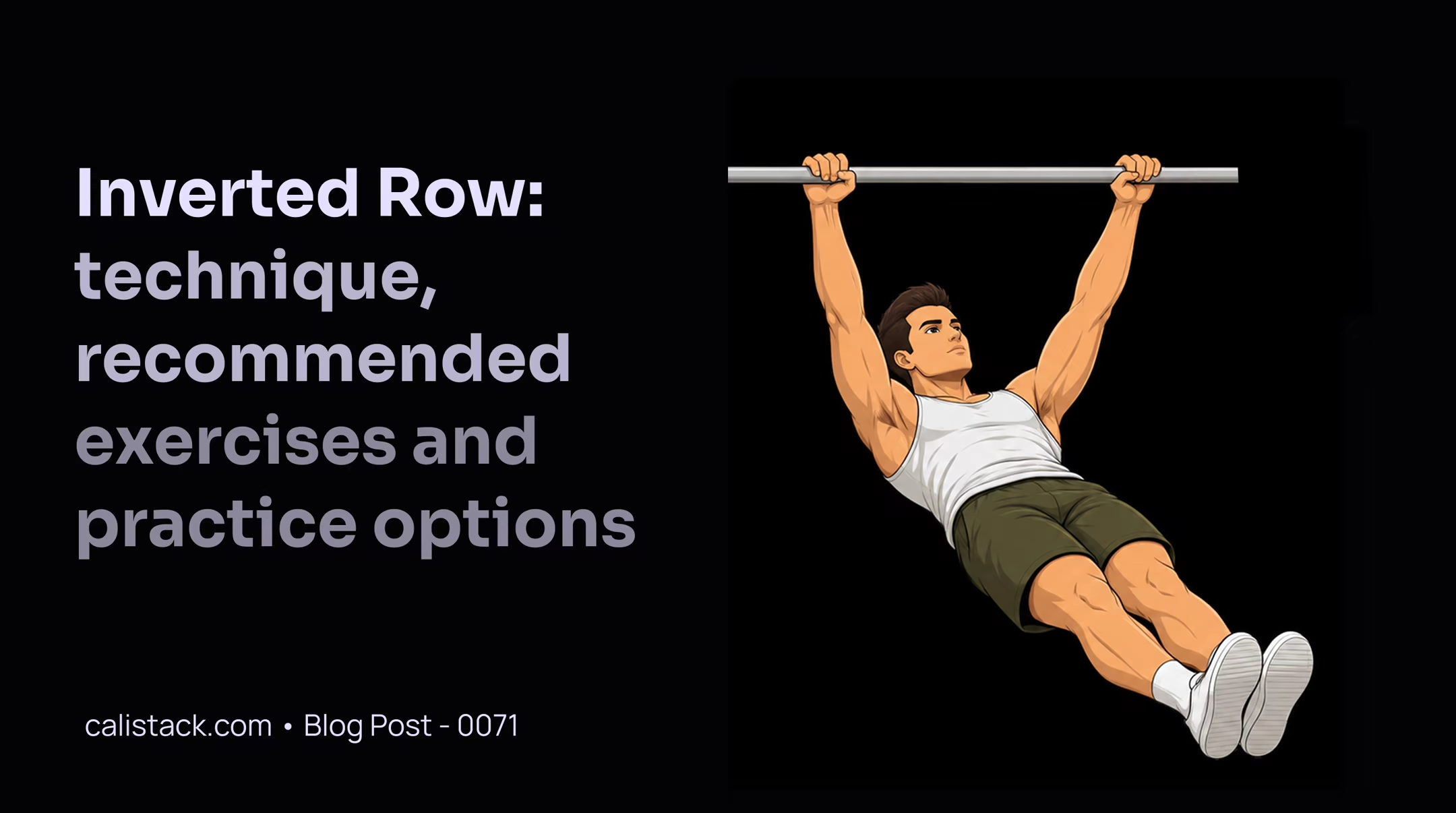
| Australian Chin-Up | A horizontal row variation, often performed with an underhand grip | A row does not reproduce a vertical chin-up exactly |
The CaliStack recommendation list names Negative Chin-Up, Chin Over Bar Hold, Jumping Chin-Up, and Australian Chin-Up. The export supplies no training order or dose. The exact app demonstrations for these entries are not confirmed here, so use the descriptions above as common movement categories, not as a claim about the app video. Check the demonstration before treating a row’s grip or a jump’s setup as fixed.
- Negative Chin-Up: use it only when you can reach the top securely and lower without dropping.
- Chin Over Bar Hold: use it to practice one position, not as a substitute for a full repetition.
- Jumping Chin-Up: use leg assistance only with a safe start and controlled return; it is not an unassisted rep.
- Australian Chin-Up: choose it as a horizontal row when a secure low-bar setup is available; it does not replace vertical pulling.
How chin-ups differ from pull-ups
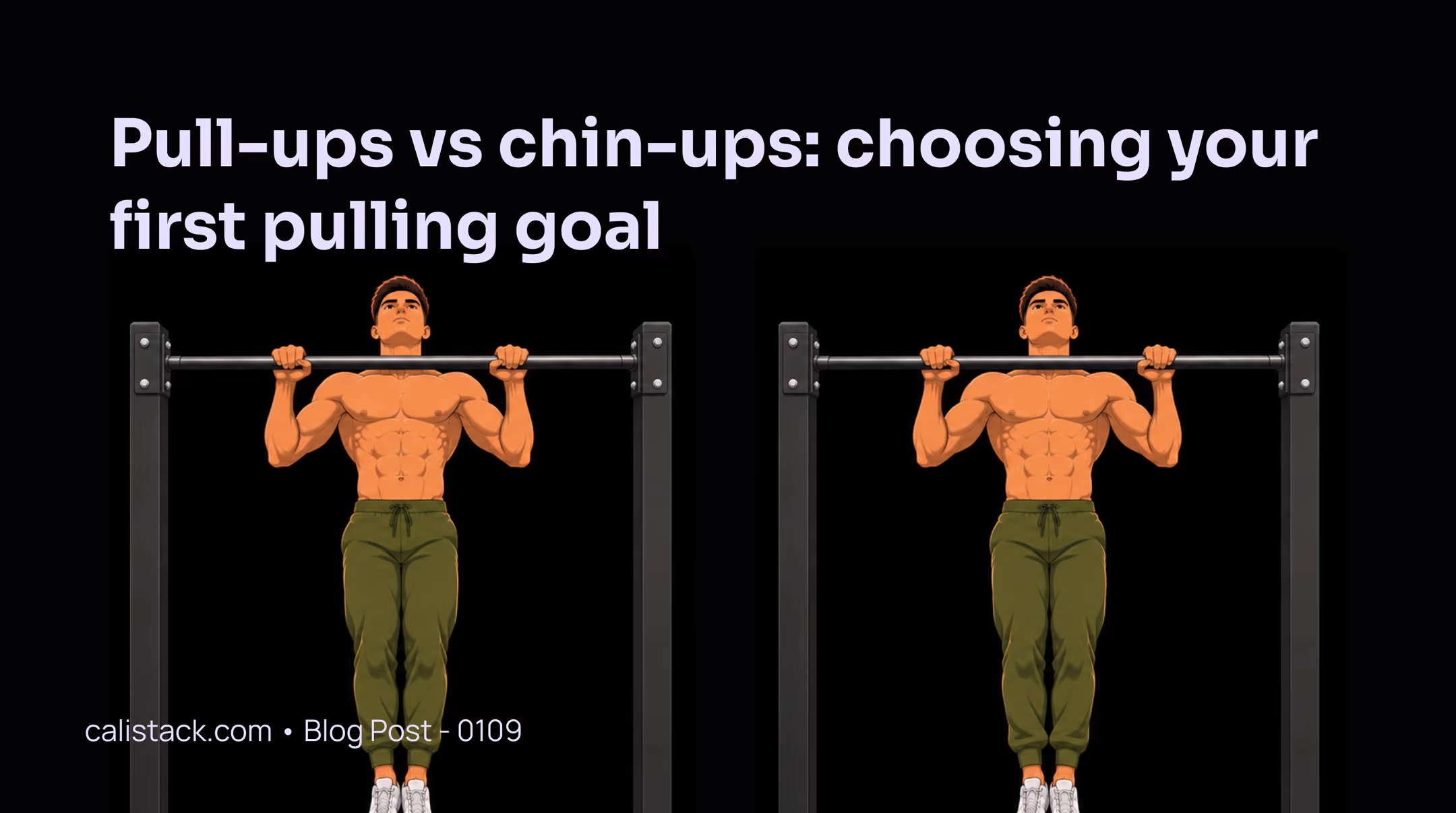
A chin-up uses an underhand grip, with palms turned toward you; a pull-up usually uses an overhand grip, with palms facing away. Both are vertical pulling exercises. The grip can change how the movement feels and how the arm and back muscles contribute, but that does not make one the best choice for everyone. If your goal is a chin-up, practice the underhand version when it is comfortable rather than assuming pull-up practice will automatically give you the same skill.
Youdas and colleagues (2010) measured muscle activity during pull-up and chin-up variations in a limited group of adults. Muscle-activity measurements describe what happened during those repetitions; they do not by themselves establish which grip builds more muscle or is safer for every person. Use grip preference, goal, equipment, and comfort to guide your choice, and ask a qualified coach to review a position that feels unfamiliar.
A simple example for two practice days
Here is an illustrative starting example for a generally healthy adult with access to a secure bar: practice on two nonconsecutive days in a week. After comfortable general movement and an easy supported grip check, choose one assistance method and try two or three sets of three to six controlled chin-ups. Use enough help to keep the ascent and descent smooth. Rest long enough that you can repeat your setup. These sets and repetitions are not a validated first-chin-up prescription or an app benchmark.
You might add a small amount of row practice if you have a secure horizontal setup and can recover from it. A top hold, a negative, or a jumping repetition can be an optional focus on another day, but you do not need all of them in one session. If a negative turns into a fall, return your feet to support and use assisted full repetitions. If a jump requires a risky launch or leaves you unable to get down safely, choose another option.
Keep the practice modest enough that the last set still resembles the first. End a set when your shoulders shrug uncontrollably, you swing, or the range becomes much shorter. The goal of this example is to make practice comparable and easy to review, not to maximize fatigue. Adjust the total work to your training history, other pulling work, and recovery.
Record progress and choose a change
Record the grip, bar, assistance method, band or machine setting if used, foot position, range, sets, repetitions, and rest. Add a short note about control and comfort. A note such as underhand grip, same machine setting, three sets of four, full chosen range, steady lowering makes a useful comparison. Do not compare a band-assisted set with a foot-assisted set as if the help were identical.
When the current assisted version is repeatable across sessions, you can reduce the help slightly or add a controlled repetition. Change one variable at a time. If the new version causes swinging, a shorter range, or a drop at the bottom, restore enough assistance to practice well. No single repetition count guarantees that an unassisted chin-up is ready. You can test one fresh attempt occasionally, after warming up, rather than turning every session into a max test.
Troubleshoot without forcing the range
If you cannot start the pull, increase assistance through the lower part or use a suitable row for now. If you reach the top but cannot lower, do not keep repeating uncontrolled negatives; return to foot support or assisted repetitions. If you swing, pause, reset your body, and use more help. If the prescribed grip feels uncomfortable, try a comfortable variation under coaching rather than forcing your hands into position.
First chin-up questions
Is a chin-up easier than a pull-up?
Some people find the underhand grip more comfortable or manageable, but that is not universal. The two grips describe different variations. Choose the one that fits your goal and feels appropriate.
Do I need to hold my chin over the bar before doing a chin-up?
No universal hold-time test is required. A top hold practices one position, while assisted repetitions let you work through more of the movement. Use a hold only if it fits your plan and you can enter and leave it safely.
Is a jumping chin-up the same as a negative?
Not necessarily. A jumping version uses some leg help to reach the top; a negative names the lowering phase. A coach or the app demonstration should clarify the exact version you plan to use.
What if I do not have a pull-up bar?
Do not improvise a hanging point from unstable furniture. A secure row setup can train horizontal pulling while you arrange access to appropriate equipment for vertical pulling.
Pick the next useful option
Choose a comfortable underhand grip, verify the bar, and select one practice option that you can repeat safely. If you use CaliStack, review the Chin-Up entry and each recommended movement’s current demonstration before treating a label as a precise technique instruction. Write down what you did, then decide whether to repeat it or make one modest change.
Sources and evidence limits
Source check: . Research context is separate from an individual technique assessment. Sample programs are editorial examples, not validated unlock tests.
Youdas and colleagues measured different muscle activation patterns during chin-ups and pull-ups. [2]
Acute EMG differences do not establish long-term muscle growth or which grip is safest for an individual.
ACSM’s 2026 guidance emphasizes regular resistance training and individualization. [6]
General healthy-adult guidance does not validate this article’s sample sets, skill order, or readiness tests.
- [2] Youdas JW and colleagues. Surface electromyographic activation patterns and elbow joint motion during a pull-up, chin-up, or rotational exercise (2010-12-01).
Abstract retrieved through Europe PMC; not a full-text assessment.
- [6] American College of Sports Medicine. ACSM Publishes Updated Resistance Training Guidelines (2026).
Publisher release excerpt retrieved through search; direct page access was blocked. Not a full review of the Position Stand.
Want a clear plan for your next skill?
We built Calistack to show you the exact steps from where you are right now to your first handstand, muscle-up, or lever.