By Calistack Team · Editorial standards: Calistack editorial team
Scapula Pull-Up: technique, recommended exercises and practice options
A scapula pull-up is a small movement of the shoulder blades while you hang with straight elbows. Use foot support if you cannot control the motion without swinging. Rows and supported hangs let you practise related pulling skills without assuming you must complete this drill before learning a full pull-up.
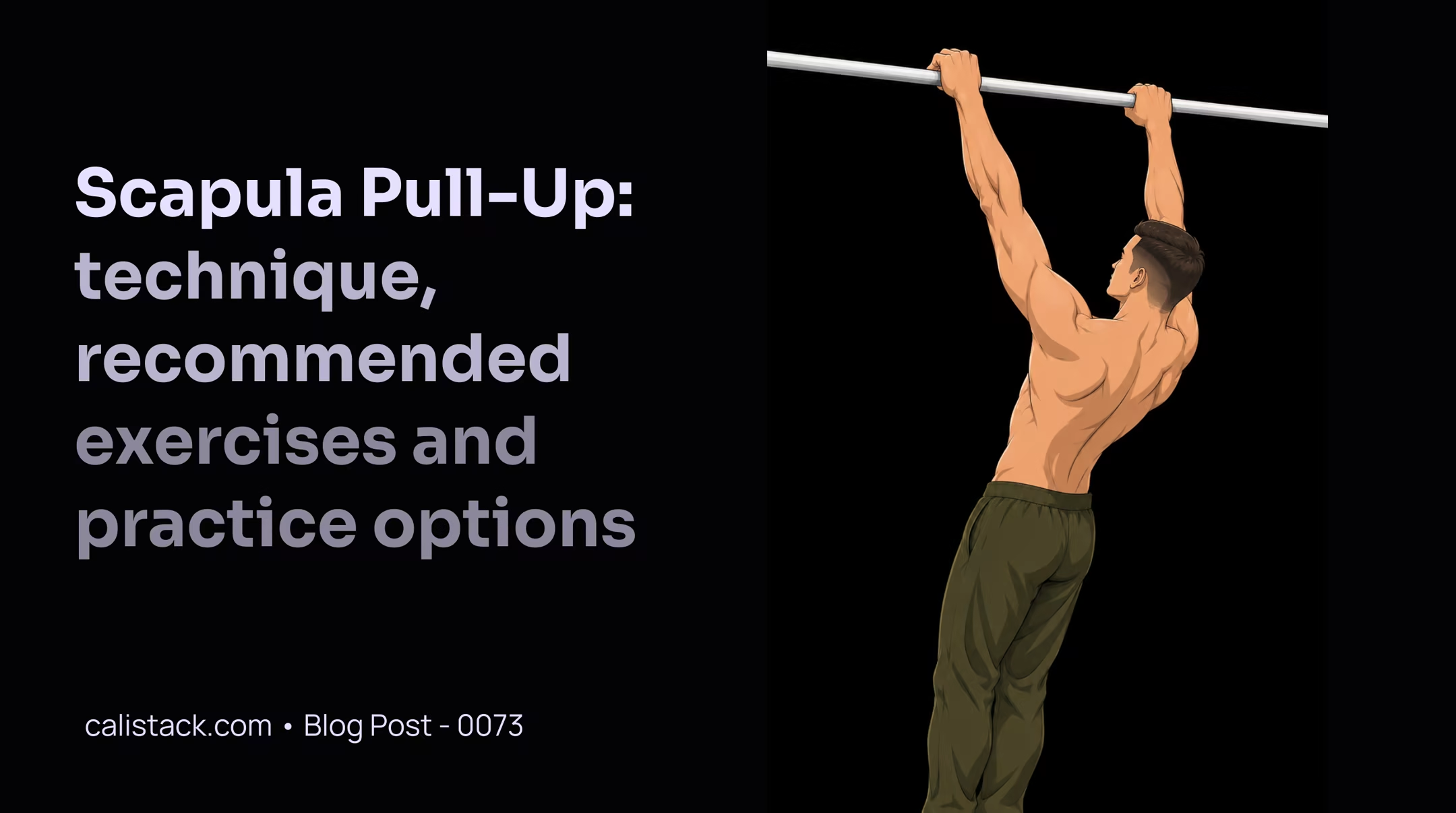
A scapula pull-up is a small movement from a hang: keep your elbows straight and move your shoulder blades so your body rises slightly, then return under control. It is not a short-range pull-up, and it does not prove that you are ready for a full pull-up. The useful question is whether you can choose a secure setup and repeat the shoulder-blade motion without swinging, bending your arms, or forcing a painful overhead position.
What a scapula pull-up is
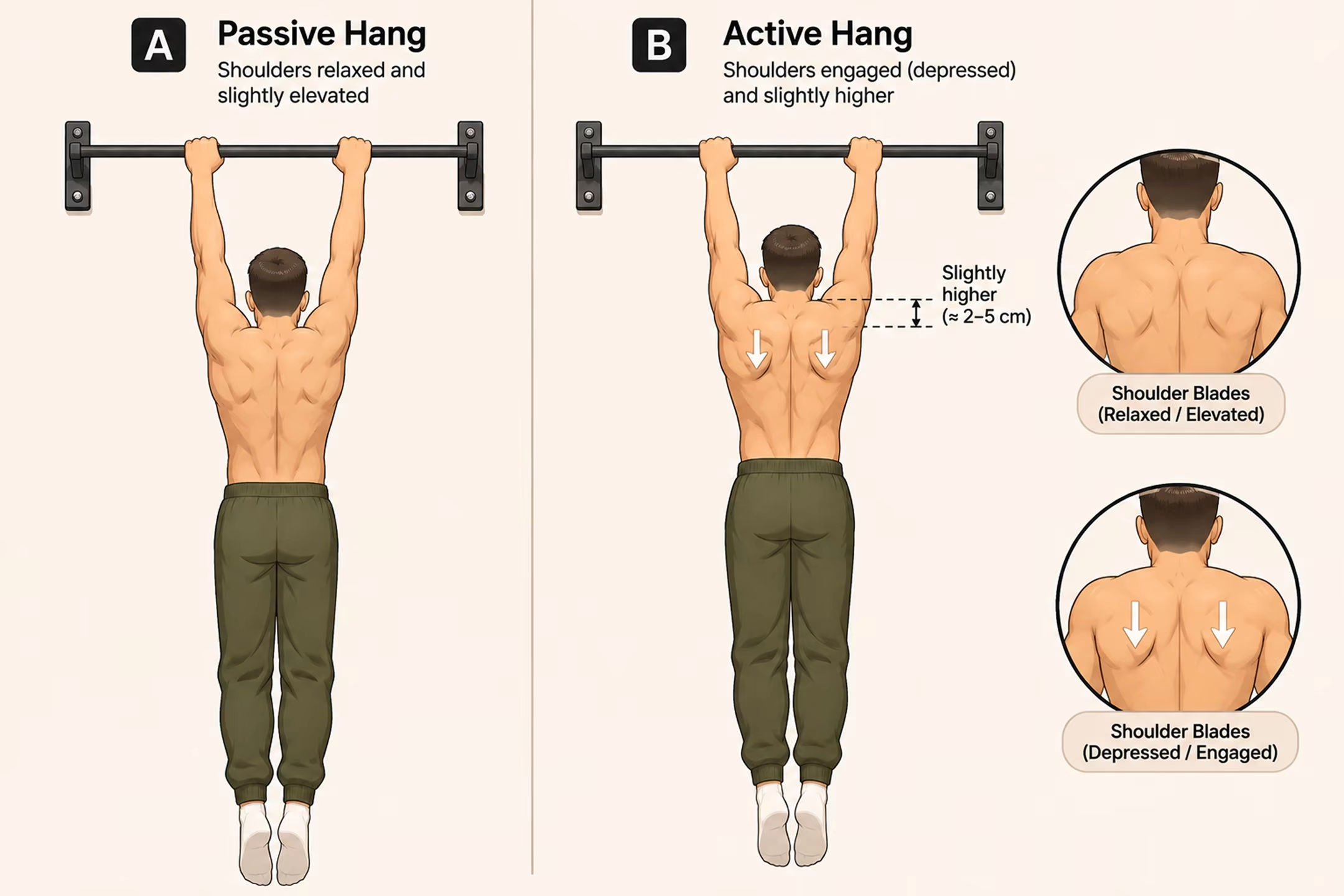
The shoulder blades, or scapulae, move across the rib cage as the arms and shoulders work. In the commonly taught bar variation, you hang with straight arms, allow the shoulders to elevate comfortably, then depress the shoulder blades so the torso rises a short distance. Return to the starting position without dropping. Catalyst Athletics describes the same basic pattern: a pronated bar hang, straight arms, shoulder blades down to lift the body, then a controlled return.
This guide uses that familiar bar version as its working definition. The exercise name alone does not identify the exact grip, range or assistance method shown in CaliStack. Compare the demonstration with these cues and ask a qualified trainer to confirm which version you are practicing. A different grip, a banded drill, or a row is not automatically the same exercise just because it trains the upper back.
A scapula pull-up is also different from a full pull-up. In the scapular version, the elbows remain straight and the body travels only a little. In a full pull-up, the elbows bend and the torso rises much farther. The shoulder blades still move during a pull-up, but the movement also involves elbow flexion and more muscles. NASM's pull-up guide describes a larger vertical pull ending with the chin above the bar; it is useful context, not a definition of this smaller drill.
Check your setup first
Use a bar installed for bodyweight training and follow its manufacturer's instructions. Check that the bar and floor are dry, the bar does not shift, and the landing area is clear. Step onto a stable platform to take hold of the bar and step back onto it before releasing your grip. Do not jump onto a bar you have not checked or stand on a rolling chair to reach one.
Choose a comfortable overhand grip around shoulder width for the sample version below. The grip is an editorial starting choice, not a universal joint position. If your shoulders do not tolerate a full unsupported hang, keep your feet on a stable support and use them to take some of your bodyweight. You can still practice a small shoulder-blade movement without turning the set into a test of how long you can hang.
Perform one controlled repetition
- Set a secure overhand grip. Begin with your feet supported if you need help getting into position.
- Keep your elbows comfortably straight and let your shoulders move upward into a relaxed hang. Do not force the shoulders into an uncomfortable end range.
- Without bending your elbows, draw the shoulder blades down. Let the torso rise a small amount; keep your legs quiet and avoid kicking or swinging.
- Pause briefly only if you can hold the position without shrugging, bending your arms, or straining your neck.
- Reverse the same small motion and return to the hang slowly. Put your feet back on the support before letting go.
A clean repetition is easy to underestimate because the visible range is short. The head and neck stay relaxed rather than reaching toward the bar. Your elbows do not start to bend, your ribs do not flare to fake extra height, and your legs do not swing to create momentum. There is no need to squeeze the shoulder blades together as hard as possible. Aim for a comfortable, repeatable motion, not a dramatic pose.
Choose a practice option that fits today
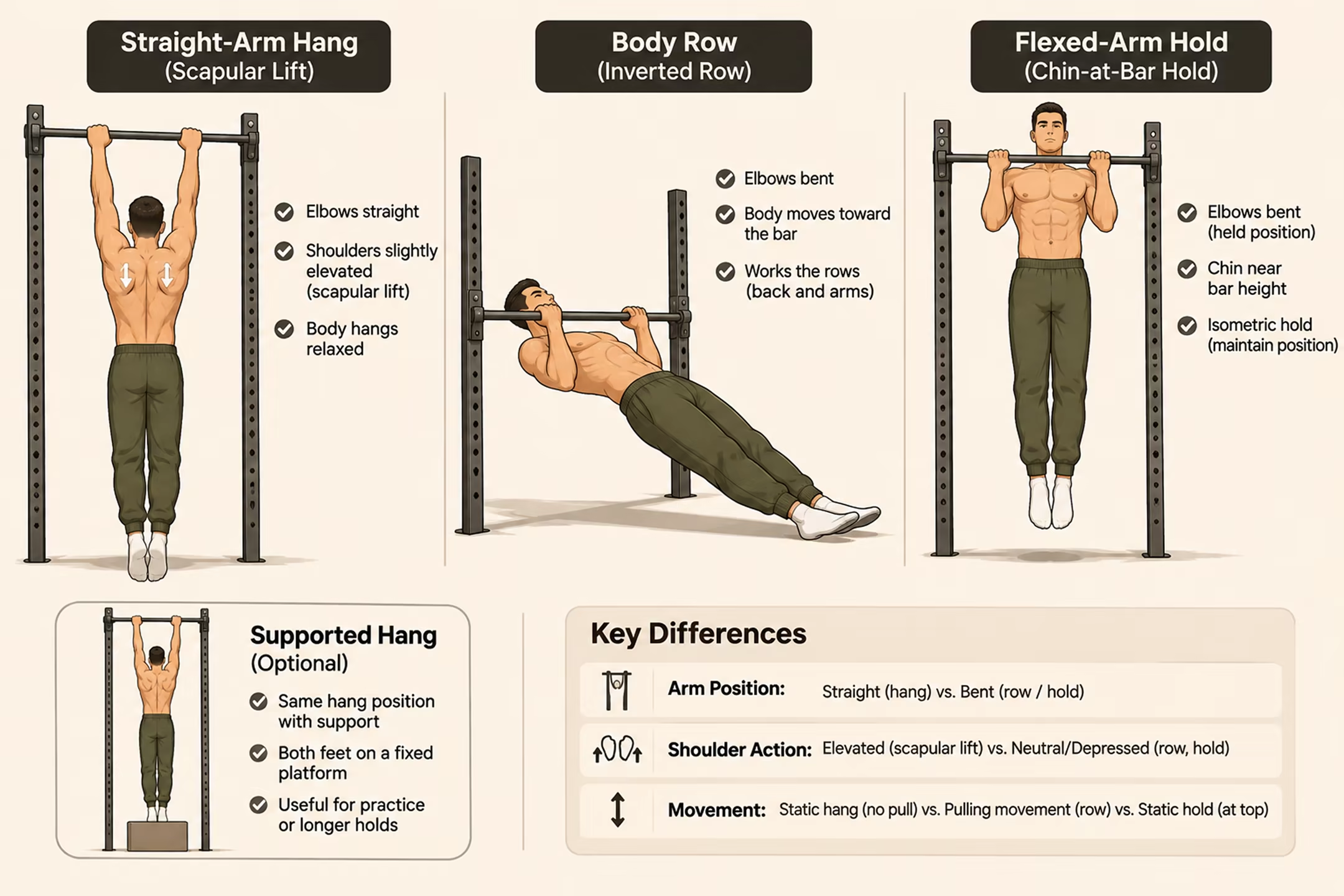
The database links four movements to Scapula Pull-Up. The export supplies names, not a reason, difficulty rating, dose, or required order. Treat them as related choices to discuss with a trainer. They are not a compulsory staircase, and there is no reason to perform all four in one session.
| Recommended movement | What it generally involves | How it may fit |
|---|---|---|
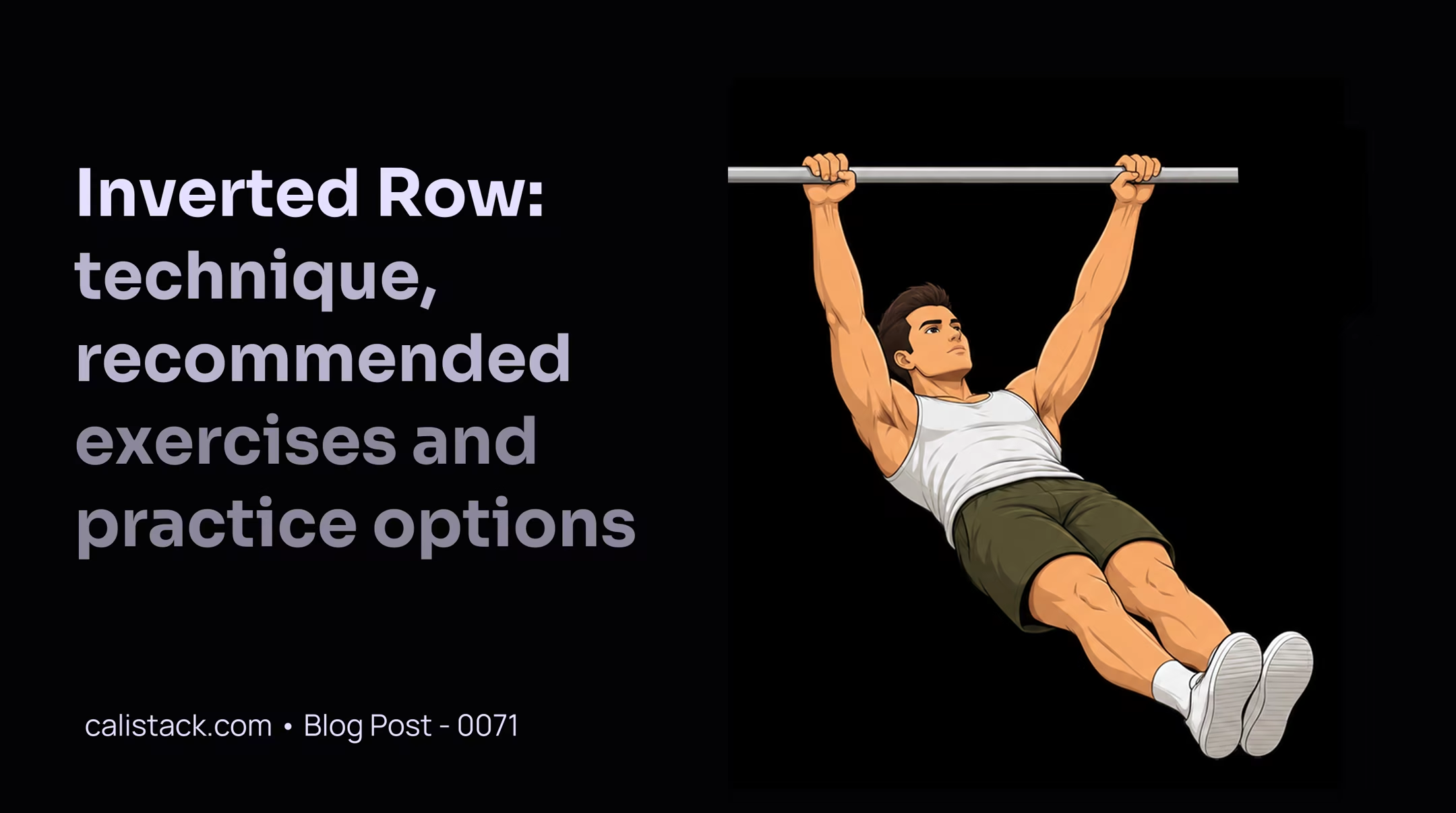
| Inverted Row | A horizontal pull: the body moves toward a fixed bar or rings while the elbows bend. | A related pulling exercise that can be scaled by changing body angle. It is not the same shoulder-blade-only movement. |
| Dead Hang | A supported overhead grip hold with the arms extended; the shoulders may relax into the hang. | A grip or hang-tolerance option only if the position is comfortable. It does not rehearse the active shoulder-blade lift by itself. |
| Flexed Arm Hang | An isometric hold with bent elbows near the top of a pull-up. | A different pulling task for someone who can reach and control that position. It is not an easier scapula pull-up by definition. |
| Active Hang | A straight-arm hang with the shoulders held more actively rather than fully relaxed. | A related position that can help a coach check whether a small shoulder-blade action is understandable. It is a hold, not necessarily a repetition. |
Catalyst Athletics describes the inverted row as horizontal pulling and notes that body angle changes its difficulty. That makes it a different direction of pull from a hanging scapula pull-up. Calixpert's Active Hang description also distinguishes an active shoulder position from a passive hang, but its added claims about injury prevention and universal pull-up transfer should not be treated as evidence for this article. Use the movement name and a verified demonstration; do not infer app-specific form from another publisher's page.
A sample practice block and what to record
If a trainer has confirmed the bar version and you can enter and leave the hang safely, try a small amount of practice while fresh. One conservative editorial example is one or two sets of four to six slow repetitions, with enough rest to repeat the same range. These numbers are not a research-validated dose, an app unlock benchmark, or a rule for every shoulder. If you need your feet on support, keep them there. If the elbows bend or the motion becomes a swing, stop the set or add support.
Write down the bar or setup, grip, whether your feet were supported, the number of controlled repetitions, and what changed between the bottom and top. A useful log entry might say: fixed low bar, overhand grip, both feet on platform, five small controlled reps, no swinging, comfortable range. That example is a format, not a real athlete's result. The next time, try to reproduce the same setup before deciding whether to reduce the help.
| What you notice | Reasonable next choice |
|---|---|
| You cannot hold the bar comfortably with feet unsupported. | Keep your feet supported or choose a different comfortable pulling exercise. |
| You can lower the shoulders slightly but your elbows start bending. | Use more foot support and make the range smaller. |
| The movement is controlled, but your legs swing. | Pause, reset, or add support so the legs can stay quiet. |
| A full hang or shoulder motion causes pain or a sharp pinch. | Stop that version and seek individual guidance before trying it again. |
Common form problems
- Bending the elbows: reduce the range or add foot support. If the elbow bend continues, the set has become a pull-up attempt.
- Swinging the legs: start from a settled position, use a smaller movement, and stop before momentum builds.
- Forcing the shoulders down: use only the range you can control comfortably. The goal is movement, not maximum depression at any cost.
- Turning every rep into a full pull-up: keep the body travel small and the arms long; train full pull-ups separately if that is your goal.
- Comparing unlike sets: note changes in grip, bar height, foot support, and range before interpreting a rep-count change.
What the research does and does not show
Research on ordinary pull-ups has measured shoulder-blade motion and muscle forces across different pull-up grips. Those studies do not test the isolated scapula pull-up as a stand-alone exercise, show that it prevents injury, or establish a universal progression into a full pull-up. Keep the evidence claim narrow: the shoulder blades participate in pulling, and technique variants can change movement and loading. A small controlled drill can be useful practice, but its effect for an individual depends on the person and the task.
Scapula pull-up questions
Should my elbows bend during a scapula pull-up?
No. In the bar version described here, keep them comfortably straight. If your elbows bend, reduce the movement or use more foot support.
Is an active hang the same exercise?
They are related but not automatically identical. An active hang is usually held in one shoulder position; a scapula pull-up moves between positions. Check the CaliStack demonstration before treating the names as interchangeable.
Do I need to hold a dead hang for a set time first?
No universal hang-time prerequisite is established here. Use foot support or another suitable exercise if an unsupported hang is not comfortable or controlled.
Will scapula pull-ups guarantee my first pull-up?
No. They practice a small part of pulling mechanics. Full pull-up strength also involves elbow bending and moving the body through a much larger range.
Your next session
Before your next pulling session, confirm the bar is secure and choose either a supported or unsupported version you can control. Keep the elbows straight, make the shoulder movement small, and record the assistance. Explore Scapula Pull-Up in CaliStack and compare its linked pulling options as separate movements. If an overhead hang is unfamiliar or uncomfortable, ask a qualified trainer to help choose an option.
Sources and evidence limits
Source check: . Research context is separate from an individual technique assessment. Sample programs are editorial examples, not validated unlock tests.
Prinold and Bull measured how the shoulder blade moved during three full pull-up techniques. [16]
The study did not test the isolated scapula pull-up or track injuries.
- [16] Prinold JAI and Bull AMJ. Scapula kinematics of pull-up techniques: Avoiding impingement risk with training changes (2016).
Full article retrieved via PubMed Central; kinematics study, not an injury trial.
Want a clear plan for your next skill?
We built Calistack to show you the exact steps from where you are right now to your first handstand, muscle-up, or lever.