By Calistack Team · Editorial standards: Calistack editorial team
Pull-ups vs chin-ups: choosing your first pulling goal
Choose a pull-up or chin-up by the grip that suits your goal and lets you practise comfortably. A pull-up usually uses an overhand grip; a chin-up usually uses an underhand grip. Keep the grip, range and amount of help consistent across sessions so your log shows progress on the same movement.
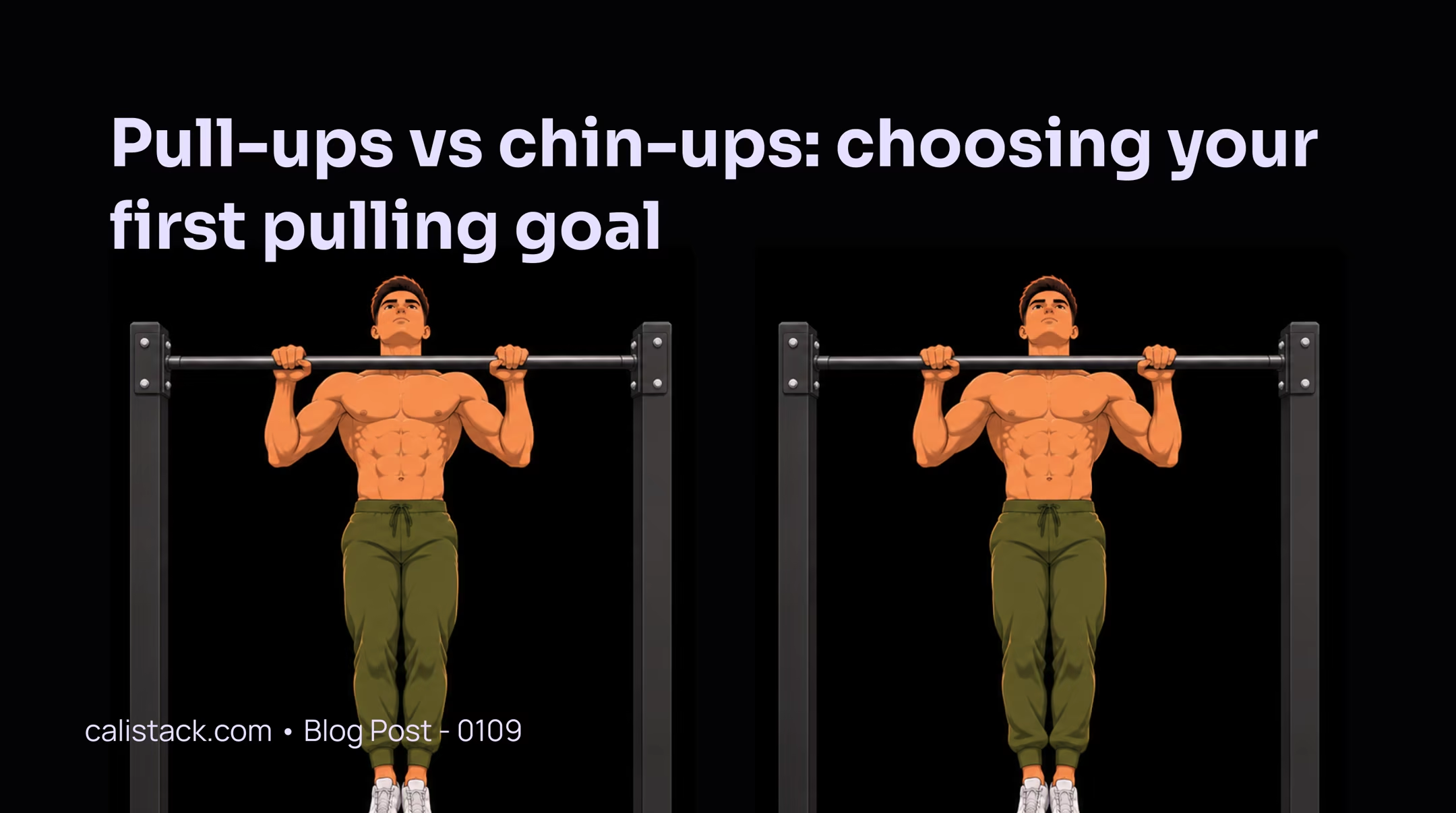
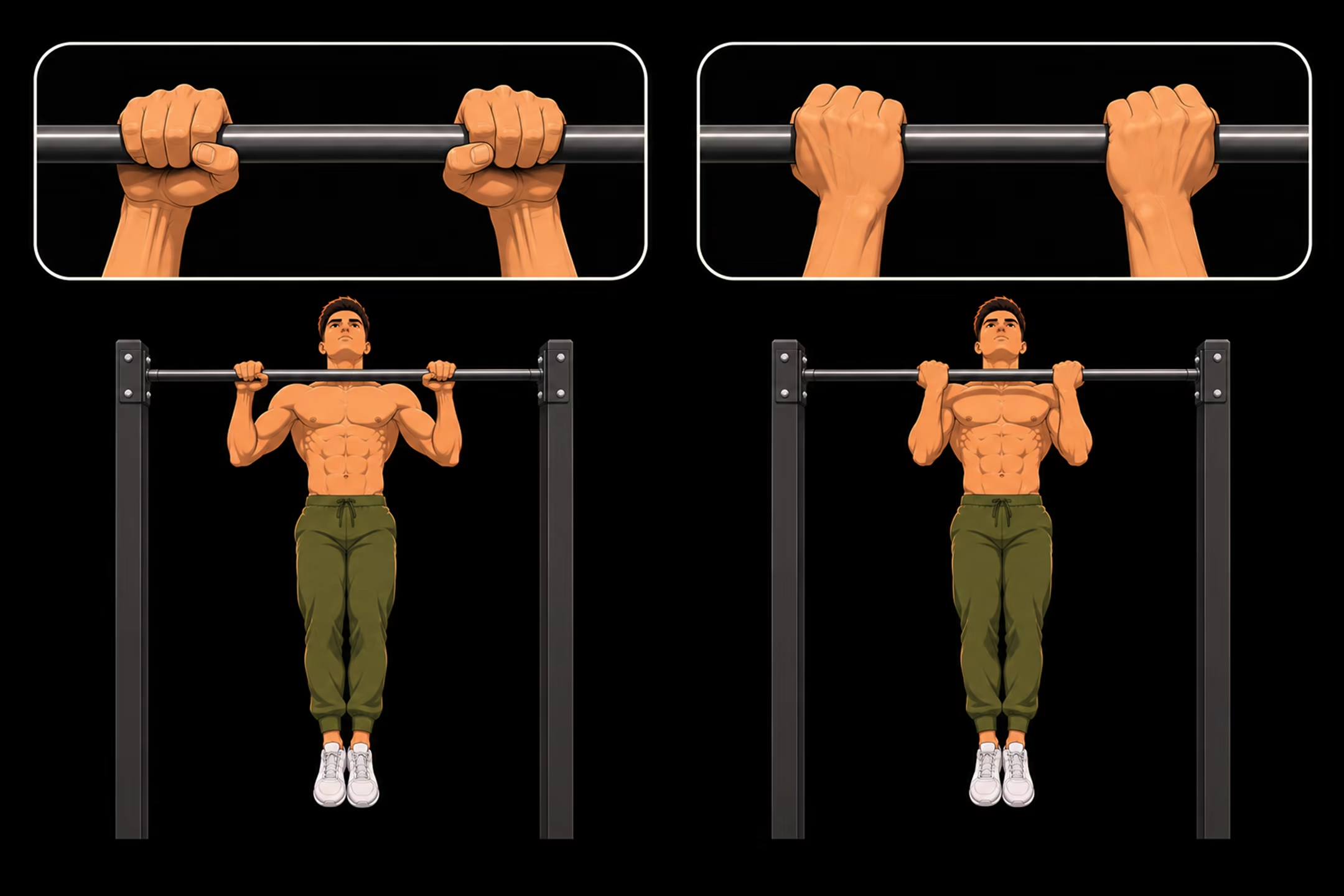
A pull-up and a chin-up are both vertical pulling exercises, but their most familiar versions use different grips. A pull-up usually uses an overhand grip, with the palms facing away; a chin-up usually uses an underhand grip, with the palms facing you. You do not have to decide that one is universally easier or better. Choose the grip that matches your goal, feels comfortable in a controlled practice, and is available in your setup.
Define the two grips before you compare them
For a useful comparison, keep the rest of the movement as similar as your body and equipment allow. Use a secure overhead bar, choose a comfortable hand width, and begin from a supported position with the elbows extended comfortably. Pull upward without kicking or swinging, then lower under control. For a consistent comparison, count a repetition only when the chin clears the bar without reaching the neck forward; use a comfortable range rather than forcing an uncomfortable overhead position.
That is a practical comparison standard, not a competition rule or a claim that every person's shoulders should begin in an identical hang. A coach may adjust the starting position or grip width to fit the person. If an overhead hang is uncomfortable or you cannot enter and leave the bar safely, choose a non-hanging option and get individual guidance before testing full repetitions.
| Feature | Pull-Up | Chin-Up | What to record |
|---|---|---|---|
| Common hand orientation | Overhand; palms face away. | Underhand; palms face toward you. | Grip and approximate hand width. |
| Movement path | Vertical pull from a secure bar. | Vertical pull from a secure bar. | Start and finish position, range, and whether you swung. |
| Muscle activity research | One small EMG comparison found some differences by grip. | The same study found higher biceps and pectoralis activity in its chin-up condition. | Do not treat muscle activity in a sample as a personal difficulty score. |
| Best first choice | Useful when an overhand pull-up is your chosen goal and the grip is comfortable. | Useful when a chin-up is your chosen goal and the grip is comfortable. | Which movement you can practice and repeat without pain or uncontrolled movement. |
A controlled study compared conventional pull-ups and chin-ups with a rotating-handle version and measured muscle electrical activity in 25 volunteers. It found higher biceps and pectoralis activity in the chin-up condition and higher lower-trapezius activity in the pull-up condition. Electromyography is one measure of muscle activity, not a test of which exercise every beginner will find easier, which grip is safer for a particular person, or which goal they should choose.
Choose a first goal you can practice safely
Start by checking access to a secure bar and a safe way to reach and leave it. If you have a goal tied to an overhand pull-up, practice the overhand pattern even if you also train chin-ups. If your preferred goal is a chin-up, use that underhand grip when you choose an assisted or partial version. You can train both, but keep separate notes so you do not mistake a grip change for a change in strength.
Assisted Pull-Up and Assisted Chin-Up
Both assisted names describe a vertical-pulling goal with help, but the name alone does not tell you how assistance is provided. Check the current demonstration for each movement before using or comparing it. Keep the target grip distinct: an Assisted Pull-Up should retain the overhand pull-up goal, while an Assisted Chin-Up should retain the underhand chin-up goal. Do not assume which aid the app shows.
Once the demonstrated method is clear, record the same aid and configuration from session to session. For an Assisted Pull-Up, note the overhand grip, hand width, assistance setting, range, and controlled repetitions. For an Assisted Chin-Up, record the underhand grip and the same setup details separately. A band-assisted repetition and a machine-assisted repetition are different tasks, and assisted chin-up reps do not substitute for pull-up reps when the goal is overhand strength.
Comfort is individual. A grip that feels fine for a few controlled seconds may not feel fine through a full repetition, and a grip that feels awkward today may improve with practice or coaching. Do not force a painful wrist, elbow, shoulder, or hand position. A neutral-grip handle, an inverted row, or another supported pulling exercise may be a better choice while you decide.
- Check the bar and surrounding floor; use a platform only if it is stable and lets you step down safely.
- Choose overhand or underhand grip based on your goal and a comfortable starting position.
- Use a version that lets you pull and return under control; do not turn each attempt into a jump or swing.
- Record grip, width, assistance, range, repetitions or hold time, and how controlled the movement felt.
- Repeat a comparable setup before you change the grip, aid, or range.
Use related pulling exercises as options
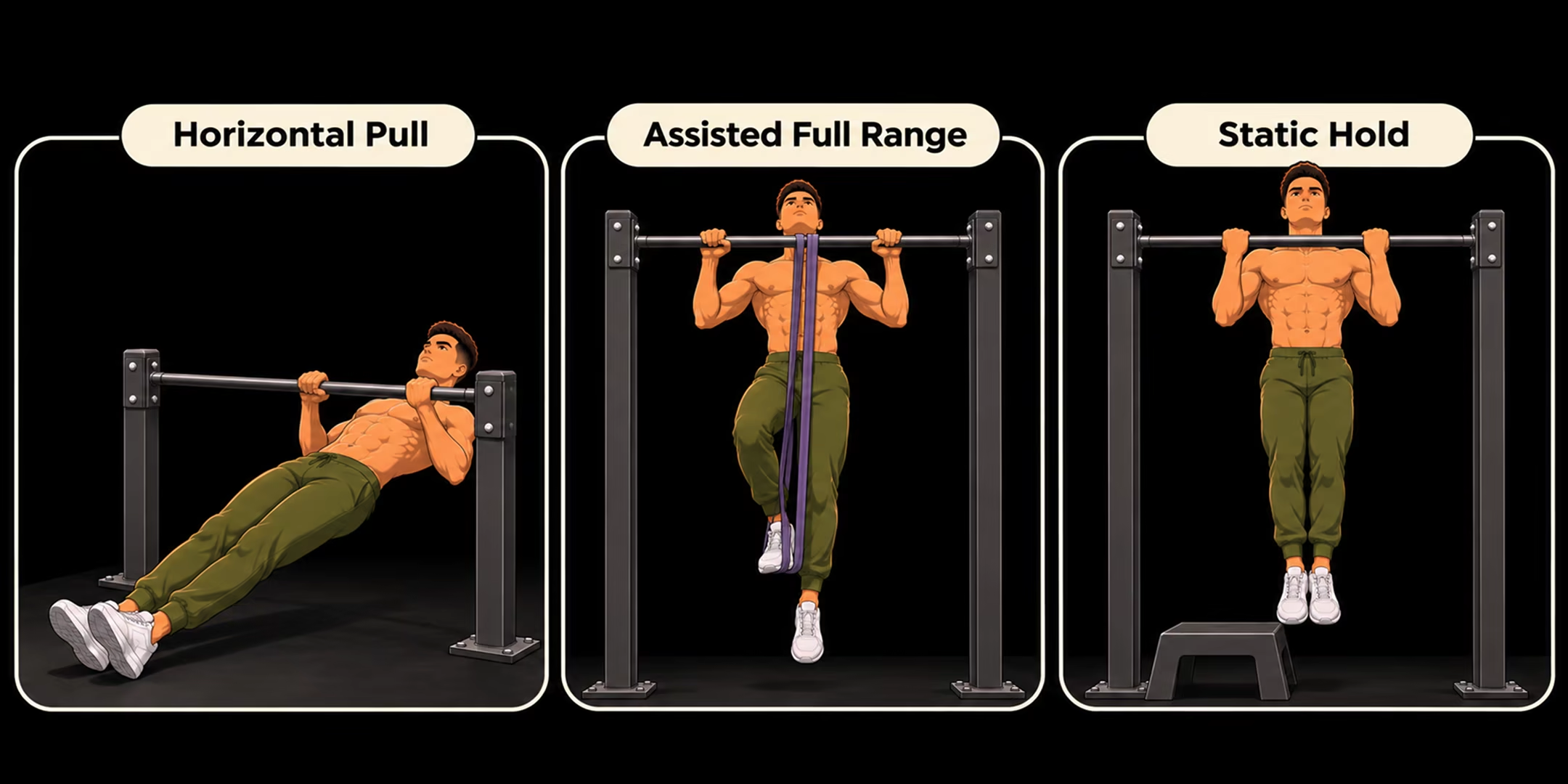
CaliStack’s exercise recommendations include several ways to practice parts of pulling. They are related choices, not required steps toward a pull-up or chin-up. Some are horizontal rows, some are hangs or holds, and some emphasize only the lowering phase. Pick the task that fits the equipment you have and the part of the movement you want to practice. You do not need to perform the whole list in one workout.
| Recommended movement | General task | Use it as |
|---|---|---|
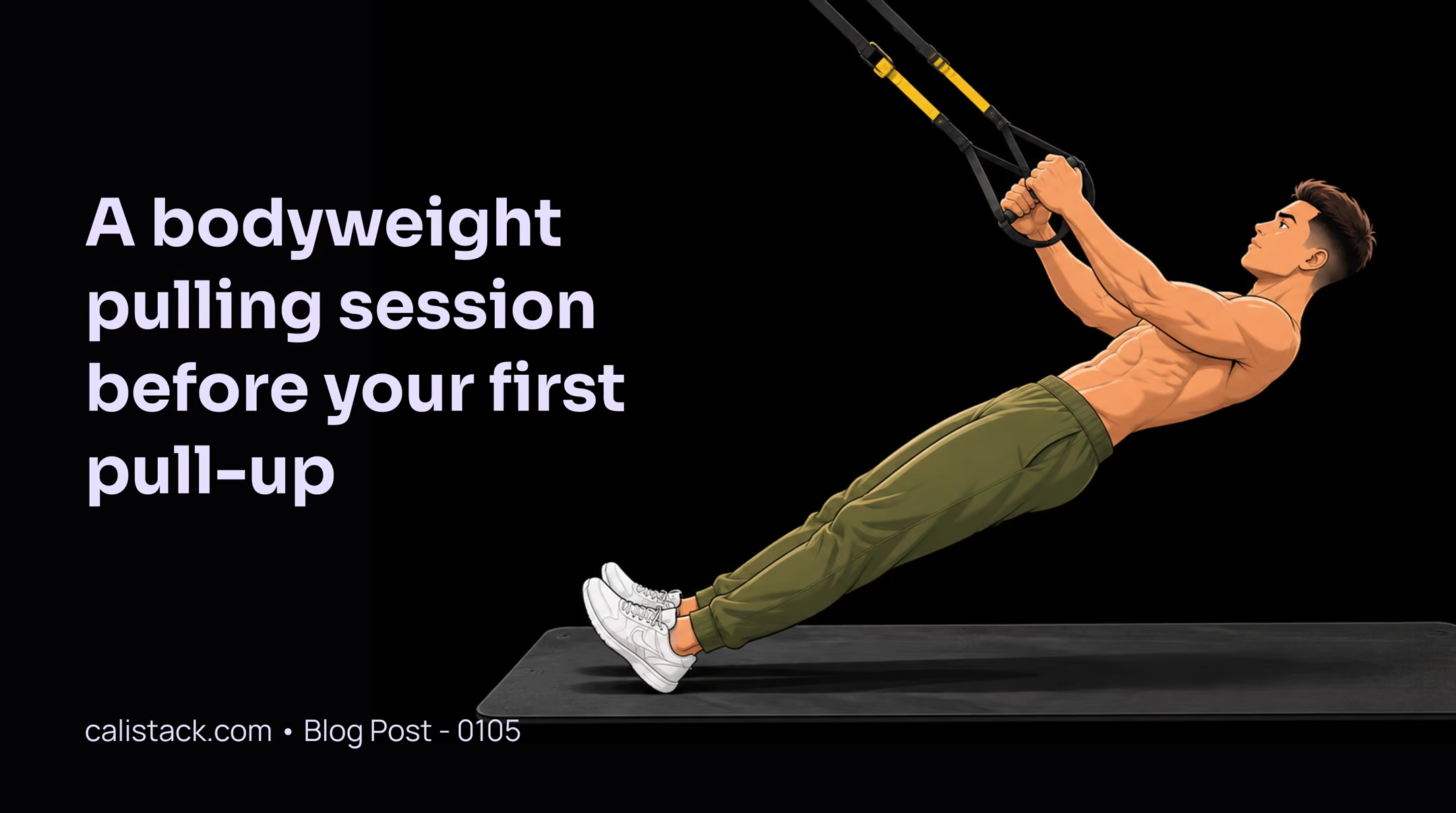
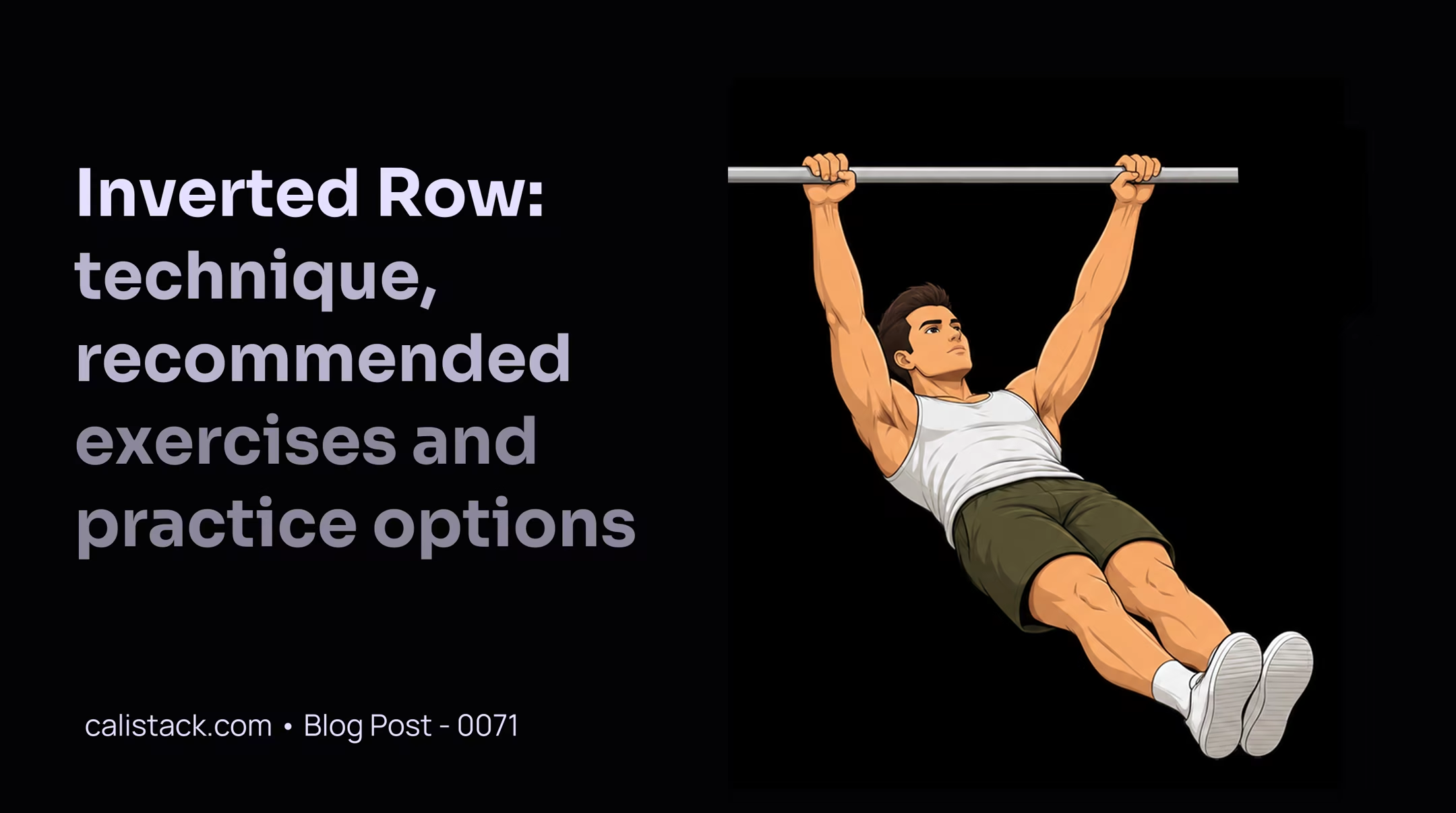
| Inverted Row | A horizontal pull toward a low fixed bar or suitable suspension handles. | A separate pulling angle; change body angle only with secure equipment. |
| Flexed Arm Hang | A static hold with bent elbows near the top of a pull-up. | A hold choice only if you can reach and leave the position safely. |
| Active Hang | A straight-arm hang with the shoulders held actively rather than fully relaxed. | A position to practice or assess; not a universal prerequisite. |
| Assisted Pull-Up | A pull-up pattern with a known aid reducing the load. | Practice both upward and downward movement; record the aid and setting. |
| Negative Pull-Up | The lowering phase of an overhand pull-up from a top position. | A demanding option only when you can reach the top and lower safely. |
| Negative Chin-Up | The lowering phase using the chin-up grip. | A grip-specific descent, not a full chin-up repetition. |
| Chin Over Bar Hold | A static hold near the top of a chin-up. | A hold option with a safe entry and exit; record the hold position. |
| Jumping Chin-Up | A chin-up pattern that uses a jump to assist the upward phase. | A different task from a strict chin-up; make the landing and descent controlled. |
| Australian Chin-Up | A horizontal row under a low bar using an underhand grip. | A rowing option, not a vertical chin-up; note body angle and bar height. |
| Dead Hang | A grip hold from a secure overhead bar with the arms extended comfortably. | A separate grip or hang practice only when the position is comfortable. |
The recommendations attached to Pull-Up are Inverted Row, Flexed Arm Hang, Active Hang, Assisted Pull-Up, and Negative Pull-Up. Chin-Up is linked to Negative Chin-Up, Chin Over Bar Hold, Jumping Chin-Up, and Australian Chin-Up. Assisted Pull-Up is linked to Inverted Row, Dead Hang, Active Hang, and Negative Pull-Up. Assisted Chin-Up is linked to Inverted Row, Dead Hang, and Active Hang. These links identify related movements; their order does not establish an instructional staircase.
The exercise names describe common tasks, but the exact CaliStack demonstration should define its own version before you rely on it. For example, an Assisted Pull-Up could use a different aid from the one you have at home. A Negative Pull-Up needs a way to reach the top without jumping into a grip or dropping from height. If you do not have a suitable bar, choose a secure inverted row setup or arrange access to proper equipment rather than improvising with furniture.
Make a practice record that means something
Write down the exercise and grip, then add the detail that changes the task. For a band-assisted repetition, record the band itself and how you attached it; band colors are not a universal resistance scale across manufacturers. For a machine, record the displayed assistance setting and check which direction means more help. For a foot-supported repetition, note the bar and foot position. For an inverted row, record the low bar height and body angle.
Also note the range, repetitions or hold time, approximate rest, and one quality observation. A useful note might say: overhand assisted pull-up, same machine setting, five smooth repetitions, full comfortable lower, no swing. That is a format example, not a user's result or a prescribed target. If the next session uses an underhand grip or a different assistance setting, log a new version rather than comparing the totals directly.
If you are practicing both grips, give each a separate line. One day you might work on a few controlled assisted pull-ups and another day use a chin-up grip. That is only one way to organize practice, not a universal schedule. Keep the total work manageable alongside your other training and recovery. A good log helps you see what you actually did, not pressure you to keep adding exercises.
How to tell whether a change helped
Compare like with like: same bar, grip, assistance, range, and intended control. If you reduce the assistance and the repetition count falls, that may simply reflect a harder task. If you gain repetitions by swinging or shortening the range, the result is not directly comparable. A smoother repetition at the same setting is worth noticing even if the total does not change.
One practical rule of thumb is to repeat a controlled version across multiple comparable sessions before making one small change. You might use slightly less assistance, adjust a row angle, or choose a different grip, but avoid changing all of those at once. This is a practical way to structure observations, not a research-validated readiness threshold. There is no fixed number of weeks in which everyone will earn a first pull-up or chin-up.
Pull-up and chin-up FAQs
Are chin-ups always easier than pull-ups?
No. Some coaching sources describe chin-ups as easier for many people, but that is not a guarantee for an individual. Grip comfort, strength, body position, and practice all matter. Choose a controlled version that fits your goal.
Should I train both grips?
You can, but you do not have to. If you train both, record each grip and its assistance separately. If your goal is a specific grip, include practice with that grip rather than assuming the other one transfers completely.
Do I need to finish every recommended exercise first?
No. These related-movement links are options, not a mandatory prerequisite order. Choose one or two movements that suit your current equipment and control.
What if I cannot hang from a bar comfortably?
Do not force an unsupported hang. A properly secured inverted row or a trainer-approved alternative may suit you better while you clarify the next step. Check the equipment and ask an appropriate professional if hanging is uncomfortable or uncertain.
Choose one goal for your next session
Before your next pulling session, decide whether your first goal is an overhand pull-up or an underhand chin-up. Check your bar, choose a controlled version, and write down grip and assistance. Add related exercises only when they serve a clear purpose. Use the current demonstrations to confirm each exact variation before following it. Explore the Pull-Up and Chin-Up recommendations in CaliStack.
Sources and evidence limits
Source check: . Research context is separate from an individual technique assessment. Sample programs are editorial examples, not validated unlock tests.
Youdas and colleagues found different muscle activation patterns for conventional pull-ups and chin-ups in 25 volunteers. [2]
EMG does not establish personal difficulty, injury risk, or the best first goal.
- [2] Youdas JW and colleagues. Surface electromyographic activation patterns and elbow joint motion during a pull-up, chin-up, or rotational exercise (2010-12-01).
Abstract retrieved through Europe PMC; not a full-text assessment.
Want a clear plan for your next skill?
We built Calistack to show you the exact steps from where you are right now to your first handstand, muscle-up, or lever.