By Calistack Team · Editorial standards: Calistack editorial team
Front Lever Tuck Hold: technique, recommended exercises and practice options
The tuck front lever is a straight-arm hold with your knees drawn in and your torso lifted under the bar. Use related pulling exercises to build control without treating them as mandatory steps. For advanced practice, ask a qualified coach to check the position and help you choose a manageable variation.
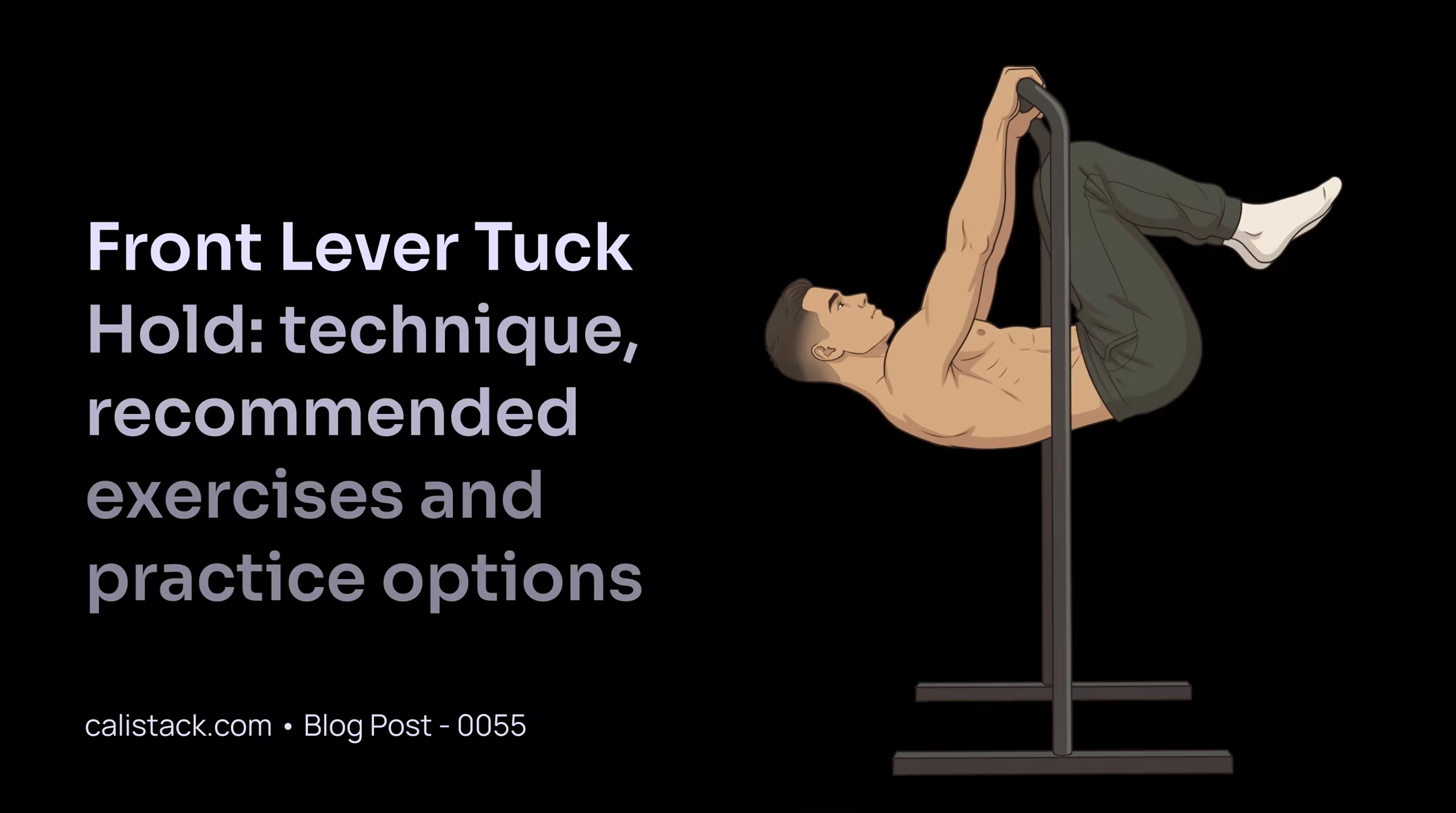
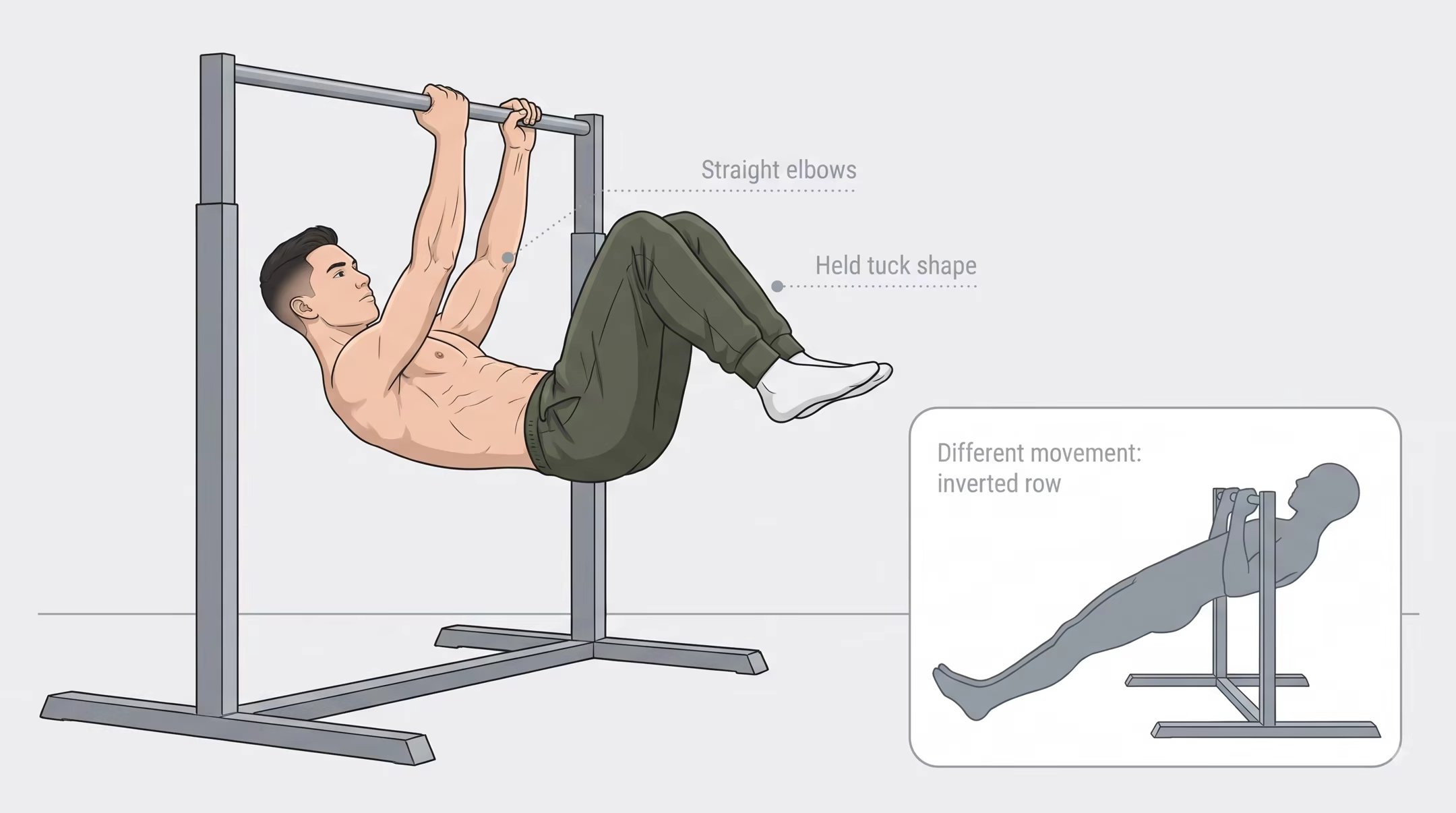
The Front Lever Tuck Hold is a demanding hanging strength position, not a pull-up, row or knee raise. In a common coaching definition, the athlete grips a fixed overhead bar, keeps the elbows straight, lifts the body toward horizontal and draws the knees in to shorten the lever. The exact shoulder and trunk cues differ across coaching systems, and the CaliStack demonstration may define the movement differently. Treat this as a working definition, not a replacement for a qualified coach's demonstration. Do not attempt the hold from written directions alone; first have a coach assess your grip, shoulder support, apparatus and ability to return to a hang under control.
A hold is different from a row, raise or pull
The word hold matters. A front lever tuck hold is an isometric attempt to keep a defined position for a short, controlled time. A front lever raise moves into or out of a position; a row bends the elbows; a pull-up repeatedly raises and lowers the torso; a hanging knee raise lifts the legs while the athlete hangs. Those movements can all appear in a broader pulling program, but they are not interchangeable measurements. If the elbows bend, the body swings, or the hips drop, the attempt has changed. End the recorded hold when the coach-approved shape is lost instead of adding seconds that came from a different movement.
A compact tuck changes the body's leverage compared with a longer-leg position. That makes it a useful way for coaches to scale the task, but it does not guarantee that the shoulders, elbows or grip are ready. The exact tuck can also differ: some demonstrations bring the knees close to the chest, while others keep the hips and trunk in a flatter line. Choose the standard shown in the app video after a coach reviews it. Do not combine the best-looking details from several videos and call that one consistent repetition. A recognizable, repeatable version is more useful for tracking than an improvised shape.
Check the setup before talking about progressions
The bar must be designed and installed for bodyweight training, checked for movement and used according to its instructions. Do not hang from a door frame, improvised pipe, loose playground fixture or furniture. A ring setup also needs secure anchors and a stable, appropriately clear space. A moving ring can change the balance and grip demands compared with a fixed bar. The equipment is part of the exercise, not a minor detail. If a coach cannot verify the setup, choose another activity that does not require suspending your full bodyweight.
Before any front-lever work, a coach can ask whether you can grip the chosen bar comfortably, support a hang, keep your elbows in the position required for the selected exercise and stop without dropping suddenly. These are coaching questions, not a universal readiness test. They do not certify that you are ready for a lever. Do not use a maximum hang time or a certain number of pull-ups as a shortcut to permission. If a medical professional has told you to avoid hanging or you have persistent shoulder, elbow, wrist or back symptoms, ask for individual advice before attempting loaded holds.
| Recommended exercise | How the task differs | What to record |
|---|---|---|
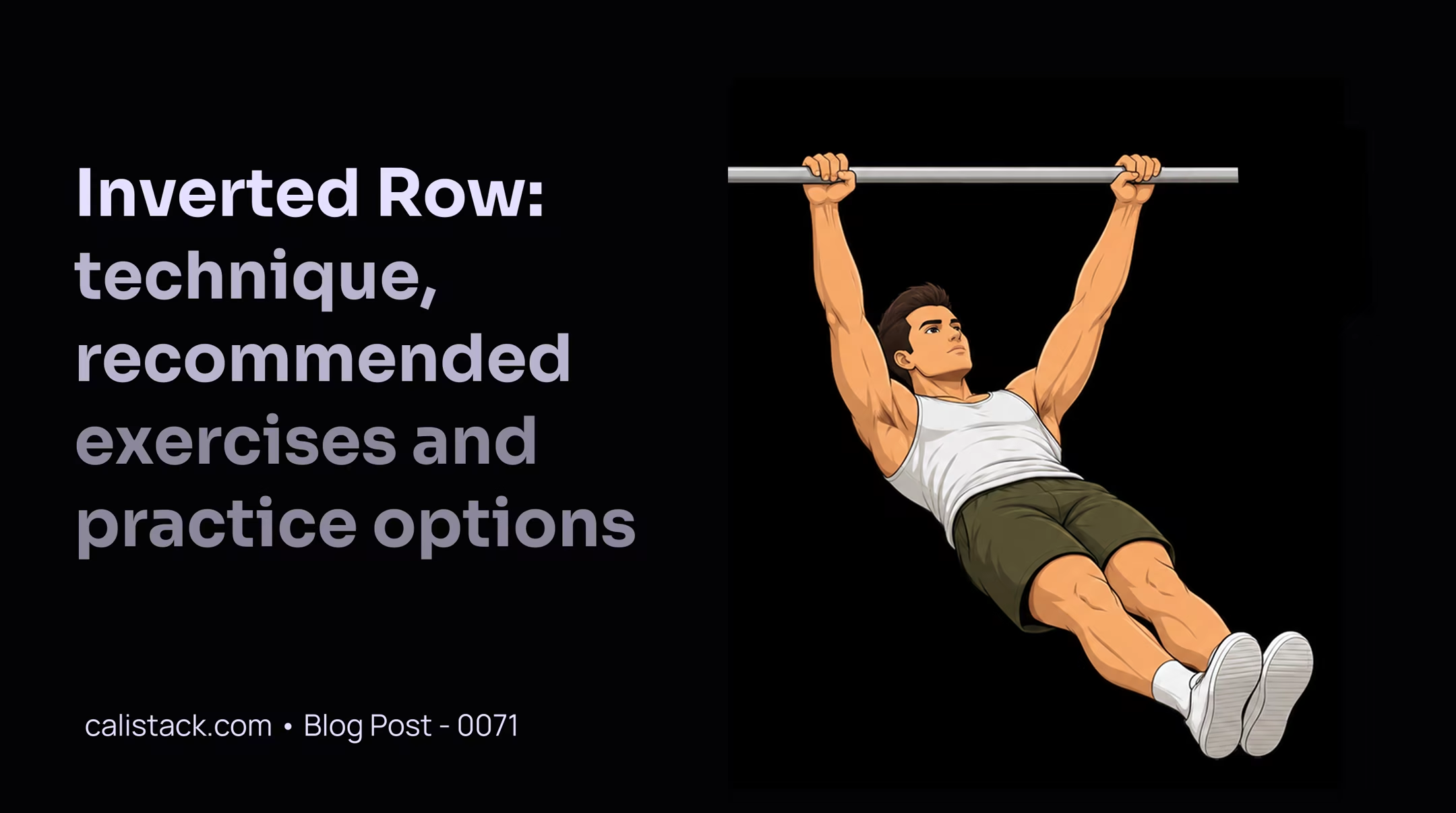
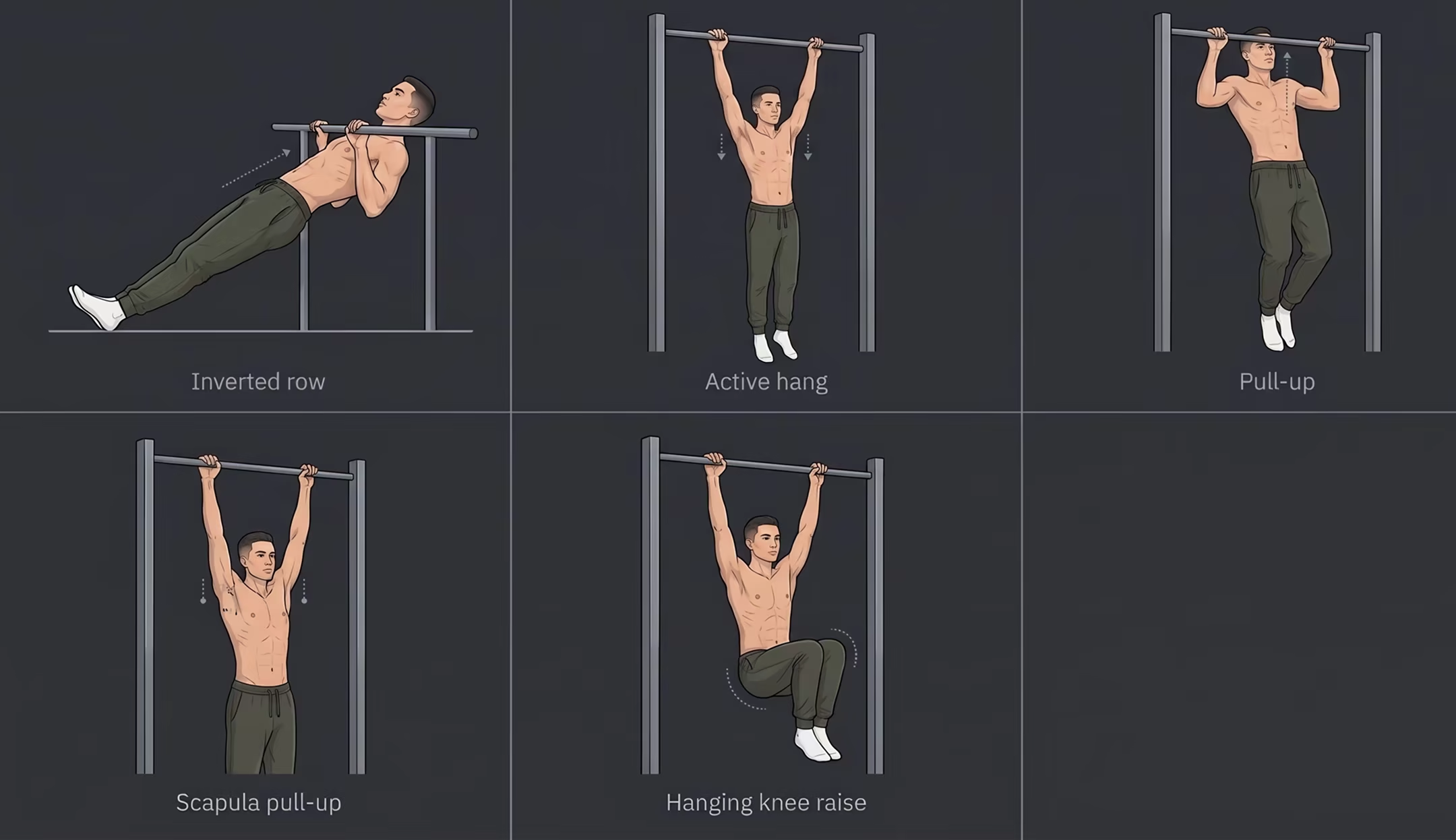
| Inverted Row | A horizontal, usually bent-arm pull with the feet supported; the body angle can change the challenge. | Record bar or handle height, body angle and the range you complete. It does not measure a straight-arm lever hold. |
| Active Hang | A supported overhead hang with an intentional shoulder position; the exact cue varies by coach and demonstration. | Confirm the app version and note the grip, support and whether the elbows stayed as intended. |
| Pull-Up | A dynamic vertical pull with elbow bending and straightening, unlike a straight-arm static hold. | Record grip and clean repetitions separately from lever work. |
| Scapula Pull-Up | A small shoulder-blade movement performed while hanging with the elbows generally straight; it is not a full pull-up. | Use only the range shown by a coach and stop before turning it into an elbow bend or swing. |
| Hanging Knee Raise | A dynamic leg-lifting task that bends at the hips and often the knees; it is not a front-lever hold. | Record the leg-raise version separately and use secure equipment with a controlled return. |
These movements can be relevant in different ways. Rows and pull-ups provide bent-arm pulling practice; active hangs and scapula pull-ups involve overhead support; knee raises train a dynamic leg action while hanging. None duplicates the tuck lever's combined straight-arm, horizontal holding task. The recommendation graph does not prove that you need to master each movement first, and a list order is not a training plan. A coach should choose which, if any, matches your current goal and equipment. Do not put all five movements into one session just because they appear together in the database.
Use a coach-approved practice block, not a max-hold contest
Research directly testing how recreational athletes should learn the Front Lever Tuck Hold is limited. Coaching pages describe tuck variations, but their set counts and time thresholds are not validated universal rules. A conservative example to take to a qualified coach is to choose one version they have demonstrated, make a few short submaximal attempts, rest fully, and stop each attempt before the shape changes. The coach can decide whether a small number of three-to-five-second attempts is appropriate after seeing your control. This is only a discussion example and must not be used as an unsupervised prescription.
A coach may instead choose an easier related movement such as a row or a supported hang. Keep that choice specific. Do not jump from a difficult lever attempt to a pull-up maximum test, or add negatives because a website says they are required. If rings make the task less stable, the coach may choose a fixed bar or another exercise. Rest long enough that grip and shoulder control return before the next attempt. Finish the skill portion while you can still use the return method you practised. Fatigue is not a reason to attempt a longer hold.
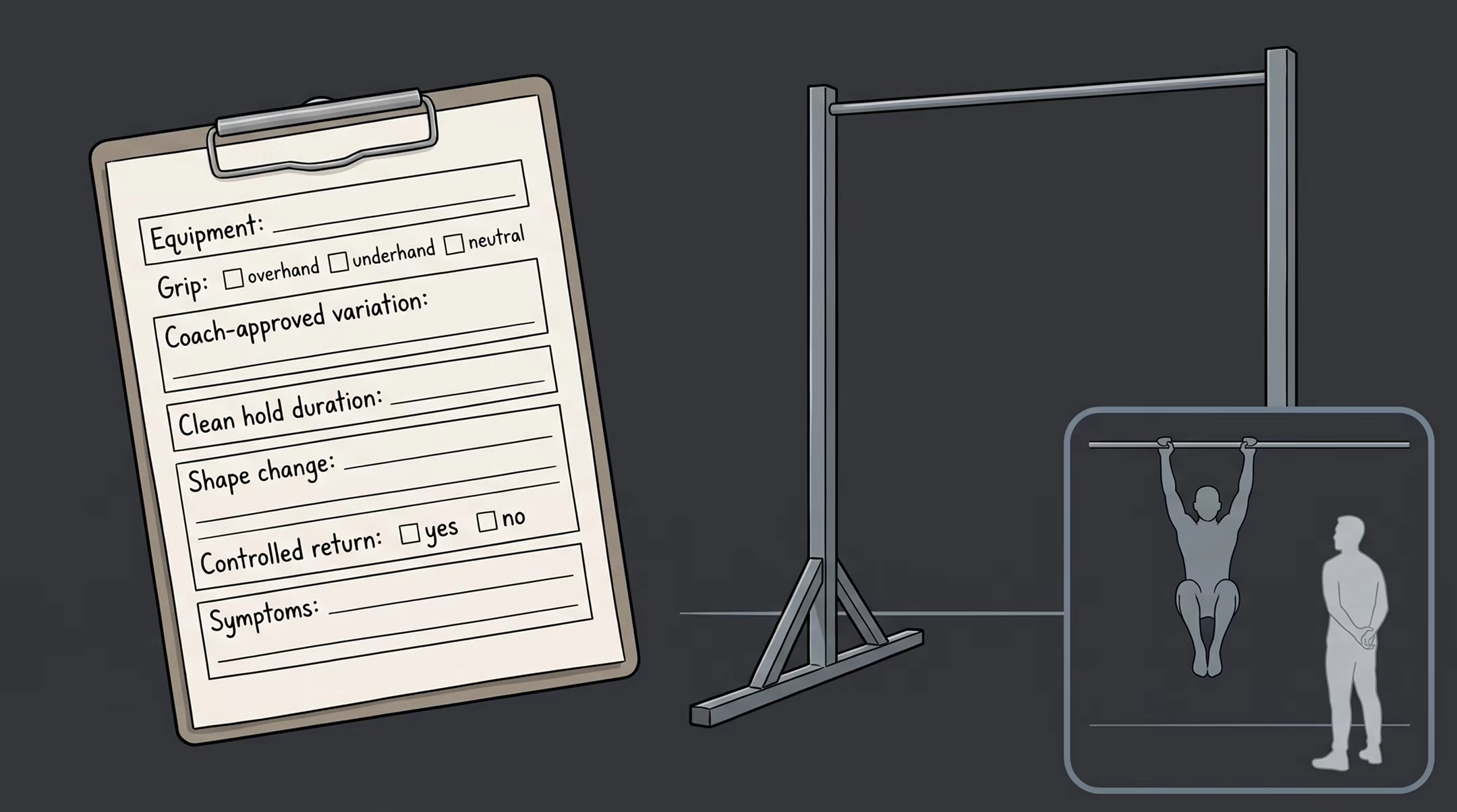
Write down the exact equipment and version, whether your elbows stayed in the coach-approved position, the time before the shape changed, and how you returned to support. Note grip, body shape and any symptoms. Compare sessions only when the apparatus and setup are similar. If you change the bar, grip, knee tuck and hold duration at once, a longer number may not mean the same thing. A coach can help decide whether to adjust one feature or stay with the same option. There is no fixed date by which a tuck hold should appear.
- Confirm a stable, rated bar or ring anchor and adequate clearance before loading it.
- Use only the version a qualified coach has demonstrated and approved for you.
- End the attempt when the agreed elbow, hip or body-shape standard changes.
- Record hold quality and the return to support, not only the longest time.
- Change one feature at a time after reviewing control and recovery with your coach.
Troubleshoot the lost shape by making the task easier
If your elbows bend, end the hold and ask whether an easier related exercise is a better choice. Do not forcefully lock the elbows against discomfort. If your hips fall or the knees drift away from the tuck, the selected leverage may be too demanding or your cue may not match the demonstration. Shorten the attempt rather than hanging on for a few more seconds. If you swing while trying to lift into position, do not repeat the entry from momentum; ask the coach to show an appropriate setup.
If your grip begins to slip, end the set while you still have a safe return. Check the bar, hands and surface, and do not continue on wet or damaged equipment. If the shoulder position feels uncomfortable, stop the hold and consult a qualified trainer before changing the cue or trying another angle. A front lever is not a place to test through joint pain. If the only way to keep the position is to swing, bend the elbows or change the tuck, record the shorter controlled time and use the result to guide the next coaching decision.
Frequently asked questions
Frequently Asked Questions
Is the tuck front lever a pull-up?
No. The tuck front lever is a held position with the elbows generally straight in the common coaching definition. A pull-up bends and straightens the elbows through a dynamic range.
Do I need a certain number of pull-ups first?
No universal number is established here. Pull-ups are a related exercise, but they do not by themselves prove that you can control a straight-arm lever or safely use the chosen apparatus.
Are rows and hanging knee raises prerequisites?
No. They are separate related movements that may suit a broader program. A coach can choose relevant options without turning the recommendation list into a mandatory sequence.
How long should I hold the tuck?
Use the standard and amount approved by a qualified coach. No research-validated universal hold time or app unlock threshold was found for this exact variation. End the attempt when your shape changes.
Can I practise it on rings instead of a bar?
Only if the equipment is securely installed and a coach has confirmed that the ring version suits your ability. Rings and fixed bars do not create identical support conditions.
Choose the next appropriate practice option
Before attempting a Front Lever Tuck Hold, get the actual CaliStack variation checked by a qualified coach and confirm the equipment, shape and return. Then decide whether a controlled row, hang or other listed movement is more suitable for the current session. Track the movement you performed rather than calling every pulling exercise a lever progression. CaliStack lists Inverted Row, Active Hang, Pull-Up, Scapula Pull-Up and Hanging Knee Raise as related options; none is automatically required before the hold. View the current app demonstrations for any movement you are considering, and ask a coach to clarify a variation if it is unclear.
Want a clear plan for your next skill?
We built Calistack to show you the exact steps from where you are right now to your first handstand, muscle-up, or lever.