By Calistack Team · Editorial standards: Calistack editorial team
How to learn a freestanding handstand: wall drills, balance and practice choices
A freestanding handstand combines arm support with balance adjustments; a long wall hold does not establish readiness to balance alone. Choose a coach-reviewed drill, learn a reliable exit, and keep wall-supported work distinct from brief balance attempts. Record the drill, setup and control rather than chasing a universal hold-time target.
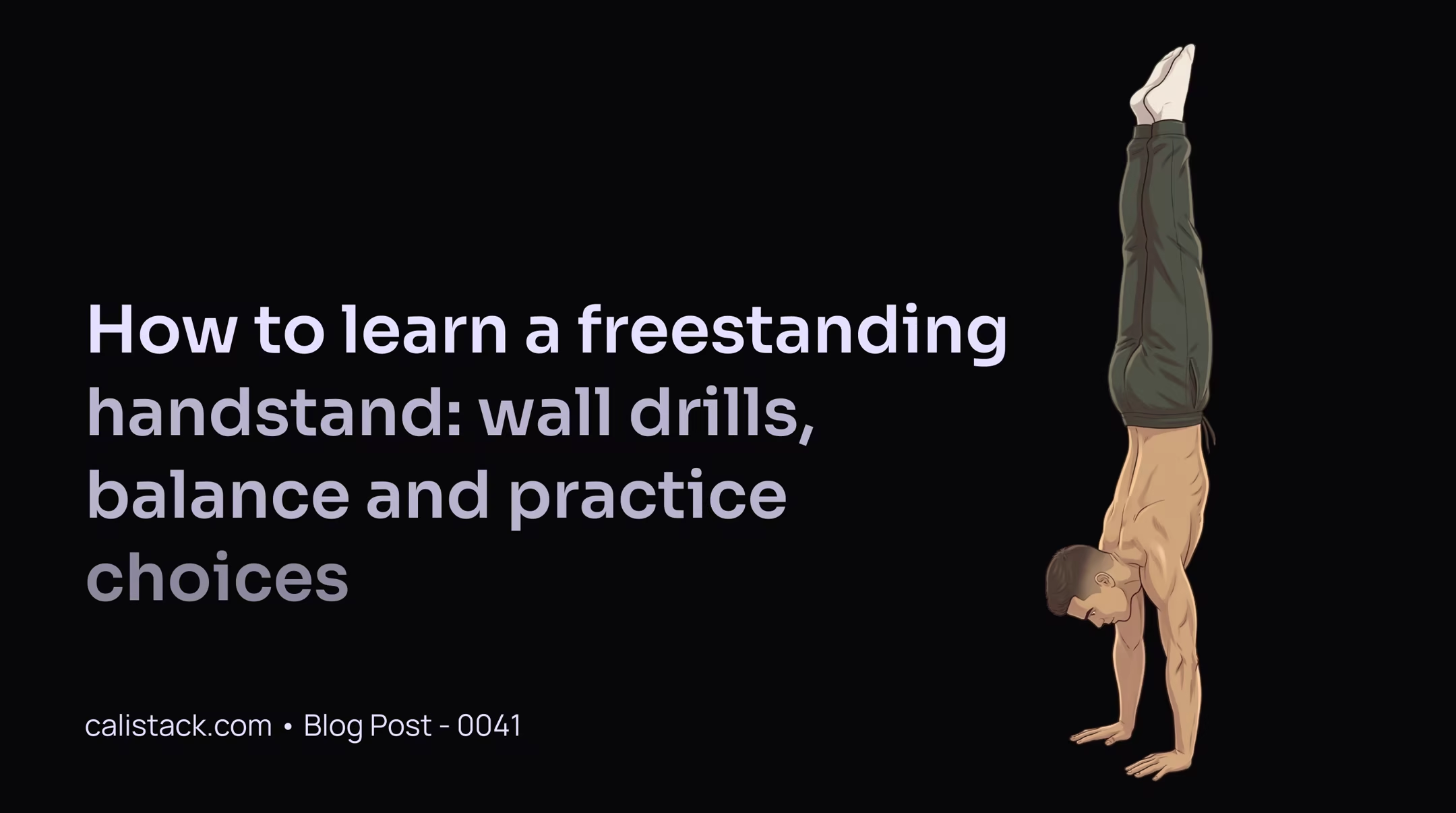
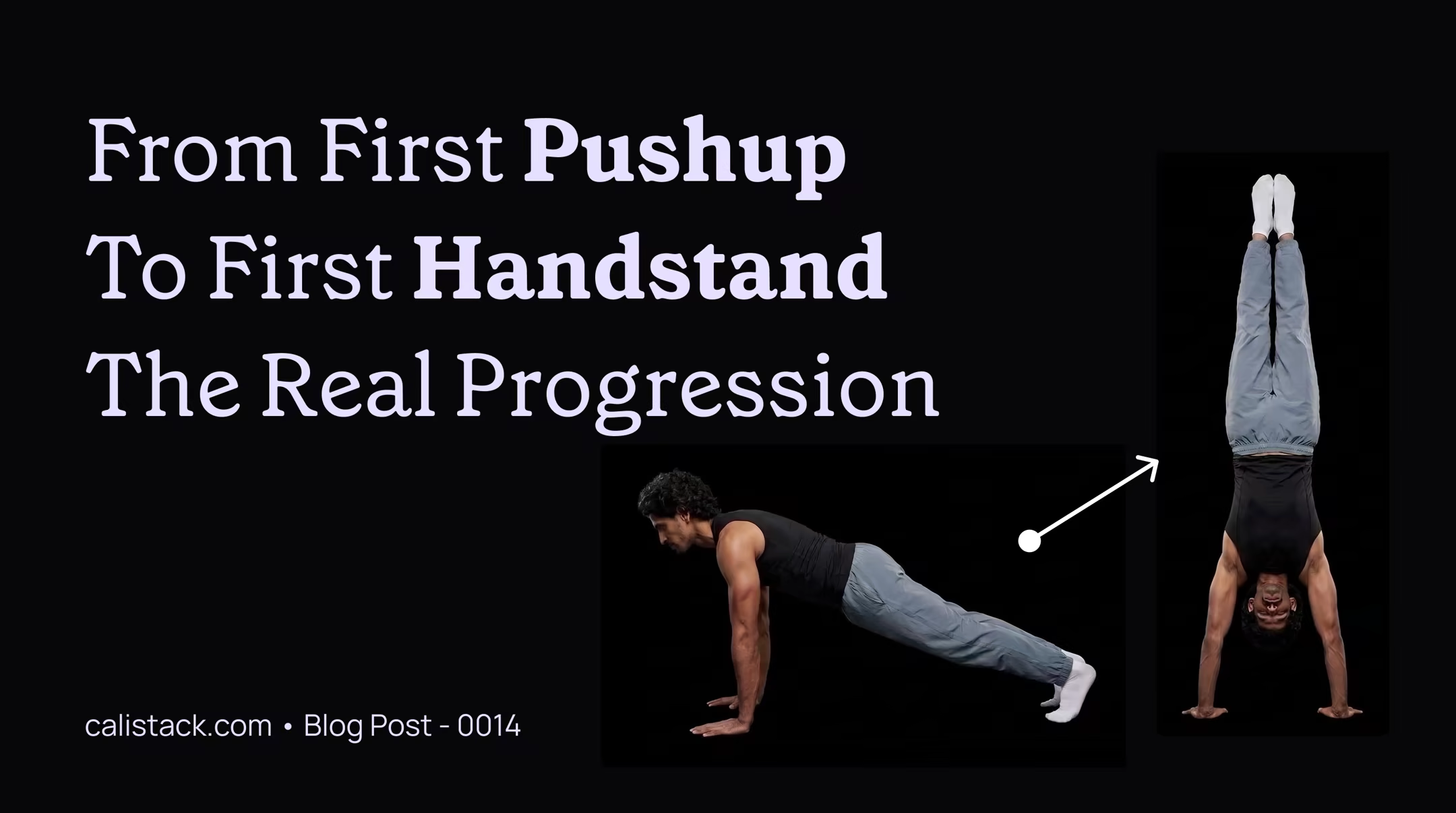
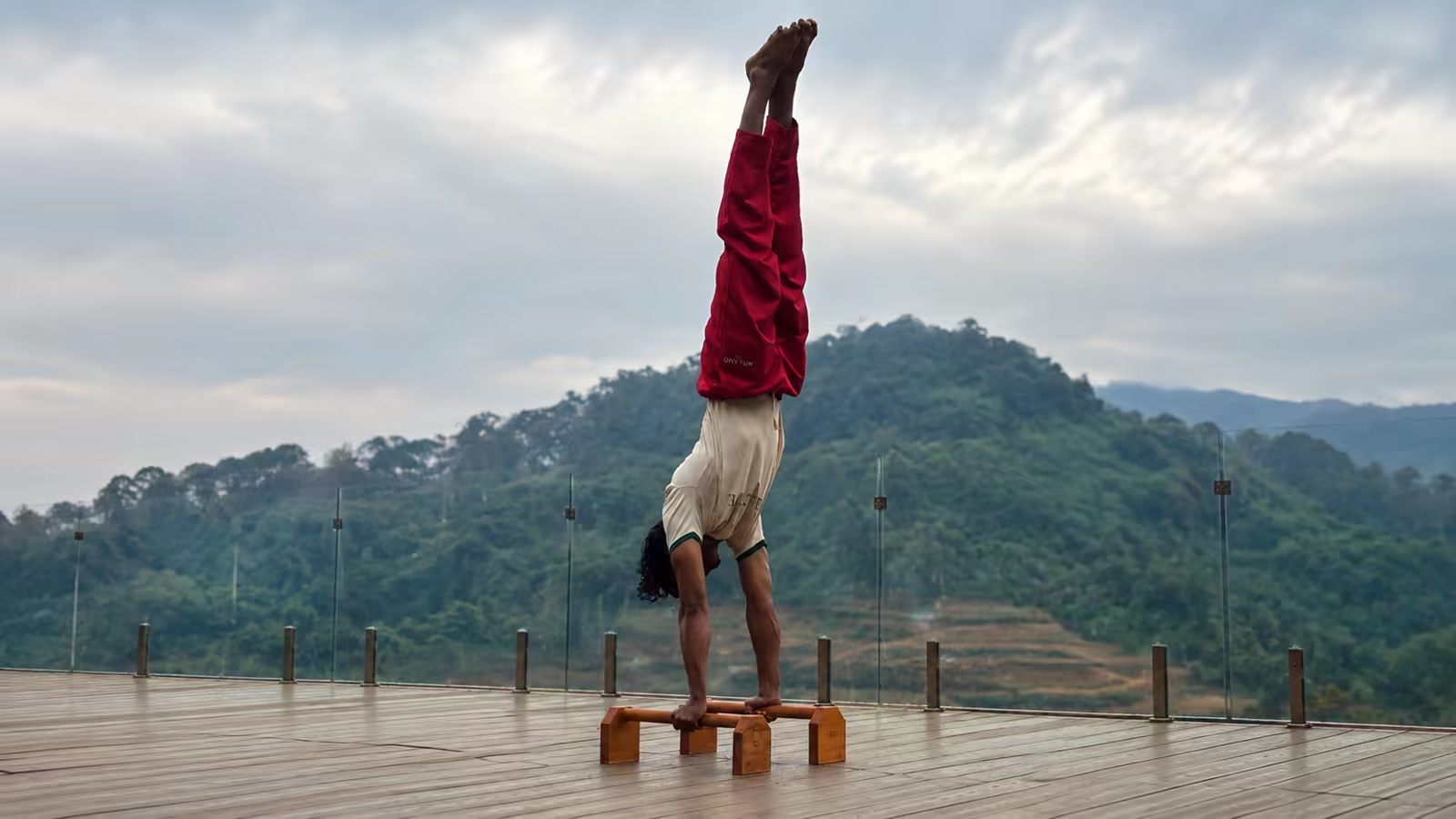
A freestanding handstand is a balance skill, not simply a long wall hold or a stronger push-up. You support your body on your hands without the wall, make small corrections to keep your center of mass over your base of support, and come down using an exit you have learned in person. A useful practice plan separates four tasks: comfortable hand support, a consistent body position, controlled entry and exit, and brief balance attempts. Work on only the task your coach has cleared for you. If you are not yet trained to enter and leave an inversion safely, stay with an appropriate floor-level support exercise and get instruction before trying to kick up.
What makes the freestanding handstand different
For this guide, a freestanding handstand means an inverted position supported by the hands with no wall contact. The goal here is a controlled attempt, not a competition judging standard or a particular hold time. People and apps can use different shape requirements, so compare your practice only with the movement definition shown by a qualified reviewer. In a common straight-body shape, wrists, shoulders, hips and ankles approach one vertical line. A slight change in the trunk or legs can shift balance, so a long hold with a large arch is not the same task as a stacked hold.
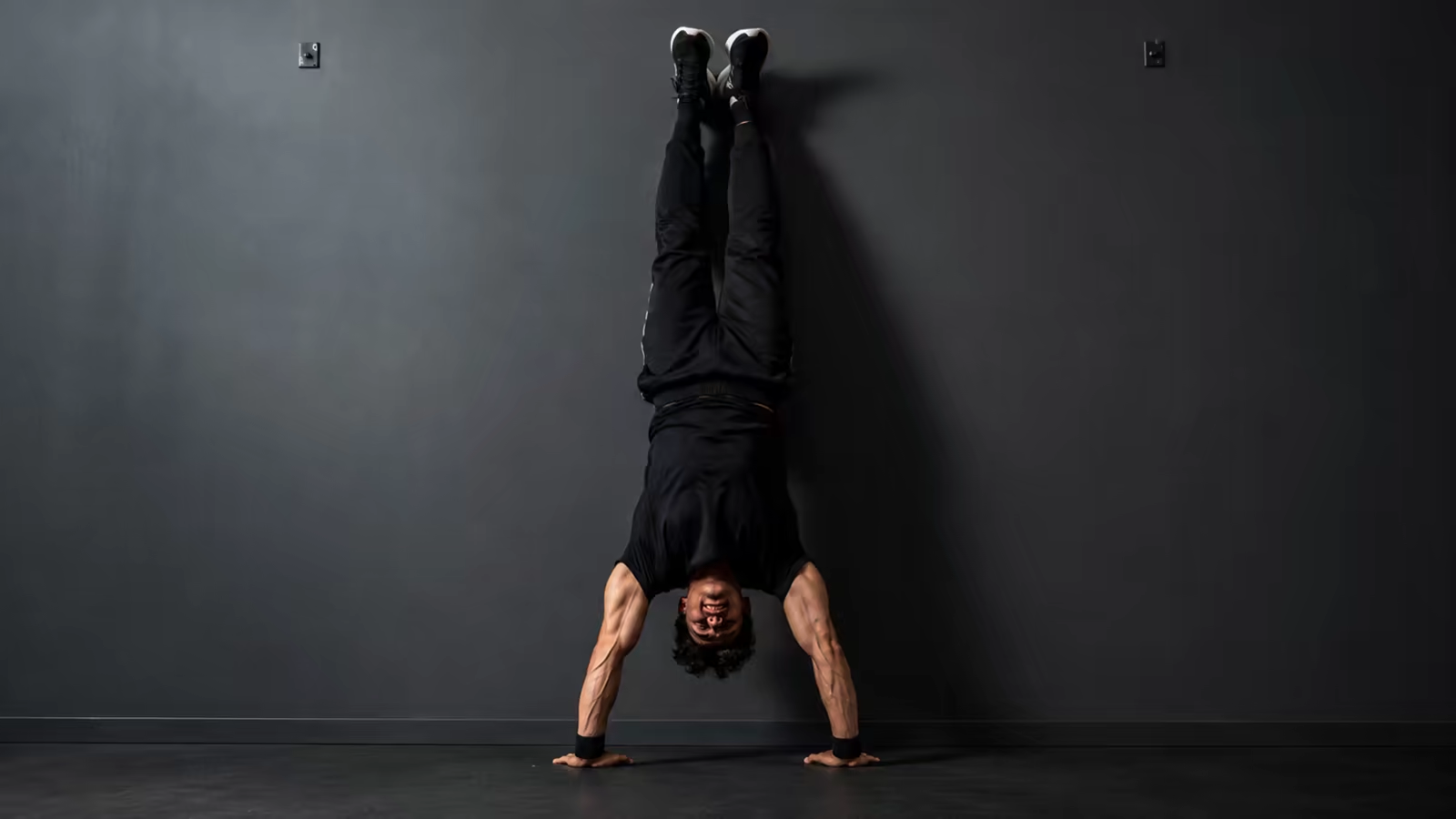
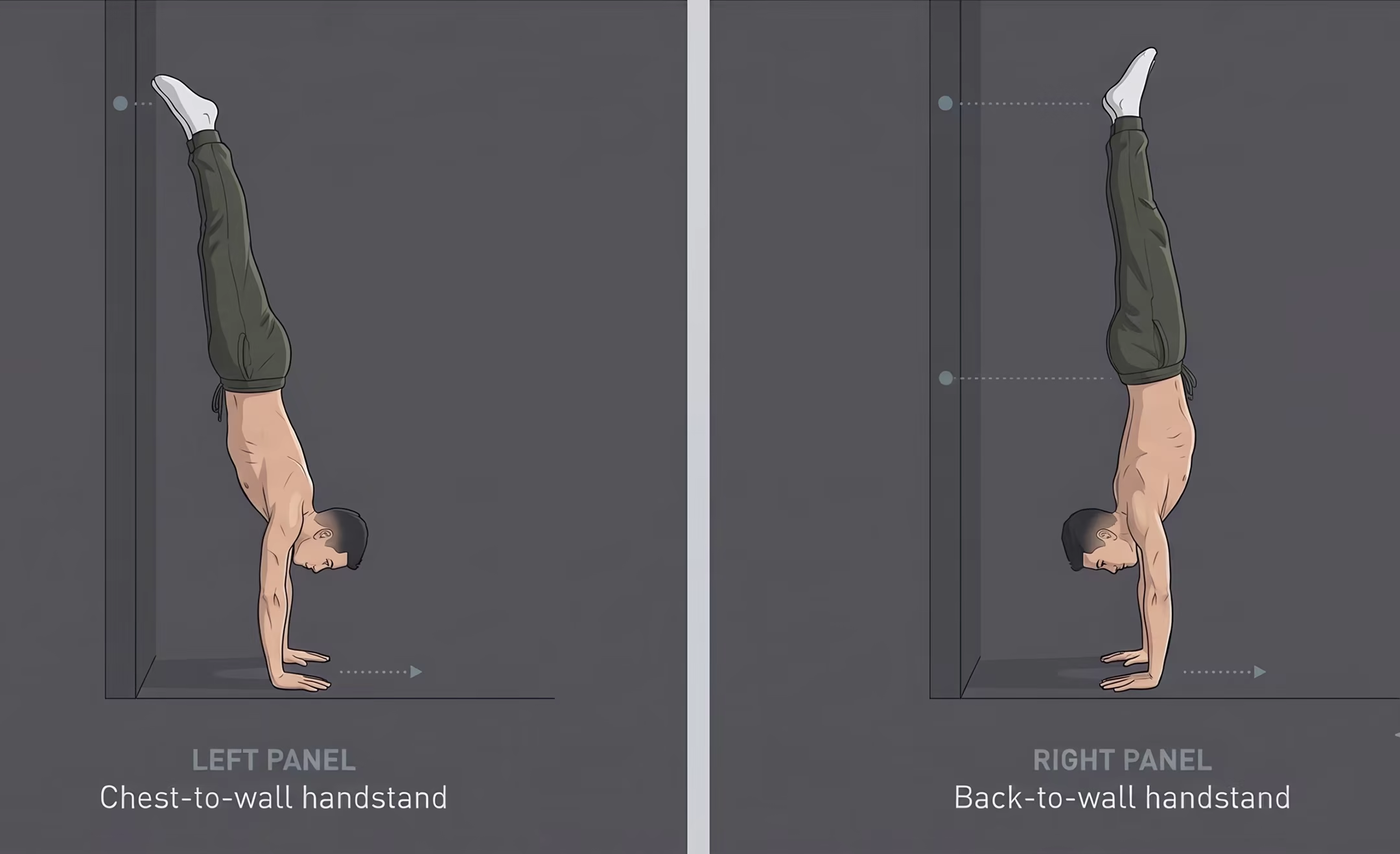
A wall-supported handstand reduces some of the balance problem, but it still asks you to support bodyweight overhead and manage being inverted. A chest-to-wall handstand is normally set with the athlete facing the wall and toes resting lightly against it; the wall can help the athlete notice body position. A back-to-wall position uses a different orientation and contact point. Do not swap the names of toe pulls and heel pulls: turning around changes which way the body can drift. Ask your coach or check the approved demonstration for the exact variation before applying a cue.
Choose a starting point by the task you can control
Start on the floor with a coach-approved assessment, not a maximum kick-up test. Can you put weight through your hands in a position that feels comfortable? Can you keep your elbows supportive, breathe, and return to the starting position without rushing? Are you comfortable with the shoulder position, and do you know what your next action is if you lose balance? These are questions for choosing a suitable drill, not a pass/fail screen and not a medical clearance. If a position hurts, feels disorienting, or leaves you unsure how to get down, do not make it harder to prove toughness.
A feet-on-floor pike support may let a coach introduce overhead loading while you remain partly supported by your legs. It is not a freestanding handstand and does not teach a safe entry. If the coach chooses it, use a stable floor, keep enough weight through the feet to stay in control, and finish by returning to a comfortable position. A supported chest-to-wall hold may be a later option for someone who already knows the entry and exit. The wall does not make a fall impossible, and being able to remain inverted briefly does not automatically mean balance work is appropriate.
Keep the practice space simple. The supporting floor should be firm and nonslip, the wall should be solid and free of shelves or projections, and the area around you should be clear. Put people, furniture, glass and loose objects outside the path your coach has chosen. Avoid soft or shifting surfaces under the hands. Check that your wrists and shoulders feel ready for the selected task, but remember that a warm-up does not make pain safe. Do not use a household door or movable furniture as a handstand support unless a qualified coach has checked the setup.
| CaliStack recommendation | What it may help you practise | What must be confirmed |
|---|---|---|
| Assisted Handstand | A supported inversion or reduced-balance version, depending on the demonstration. | The name alone does not identify the support method, spotting arrangement or entry. Ask for the approved video and a coach check. |
| Handstand Wall Walk | A wall-supported way to approach or leave an inverted position when taught appropriately. | Do not improvise the walk. Have a qualified coach choose the range and teach the return before using it. |
| Toe Pulls from Wall | A brief release from wall contact followed by a controlled return, if that matches the demonstration. | Confirm whether the app means chest-to-wall toe pulls or another orientation. Do not push off the wall or invent the release. |
| Chest to Wall Handstand | A supported position that can make body-line awareness the main task. | Confirm entry, exit, wall distance and acceptable body shape with a coach; it remains an inversion. |
| Wall Handstand Shoulder Tap | A lateral weight shift and temporary increase in load through one arm. | This is not an automatic beginner drill. Use it only if a coach has assessed the position and chosen the exercise. |
Balance is a separate practice target
In a supported hold, the wall can limit how far you drift. In a freestanding balance attempt, your hands and body make small adjustments while the wall is absent. Research on gymnasts describes balance control as more complex than simply squeezing harder or holding still: the wrists matter, and skilled performance uses adaptable corrections. That evidence helps explain why wall endurance and balance duration are different measures. It does not tell a beginner which exact drill to do, how many seconds to hold, or when to practise unsupervised. Treat any numbers in an online progression as that source's coaching choice, not as a universal test.
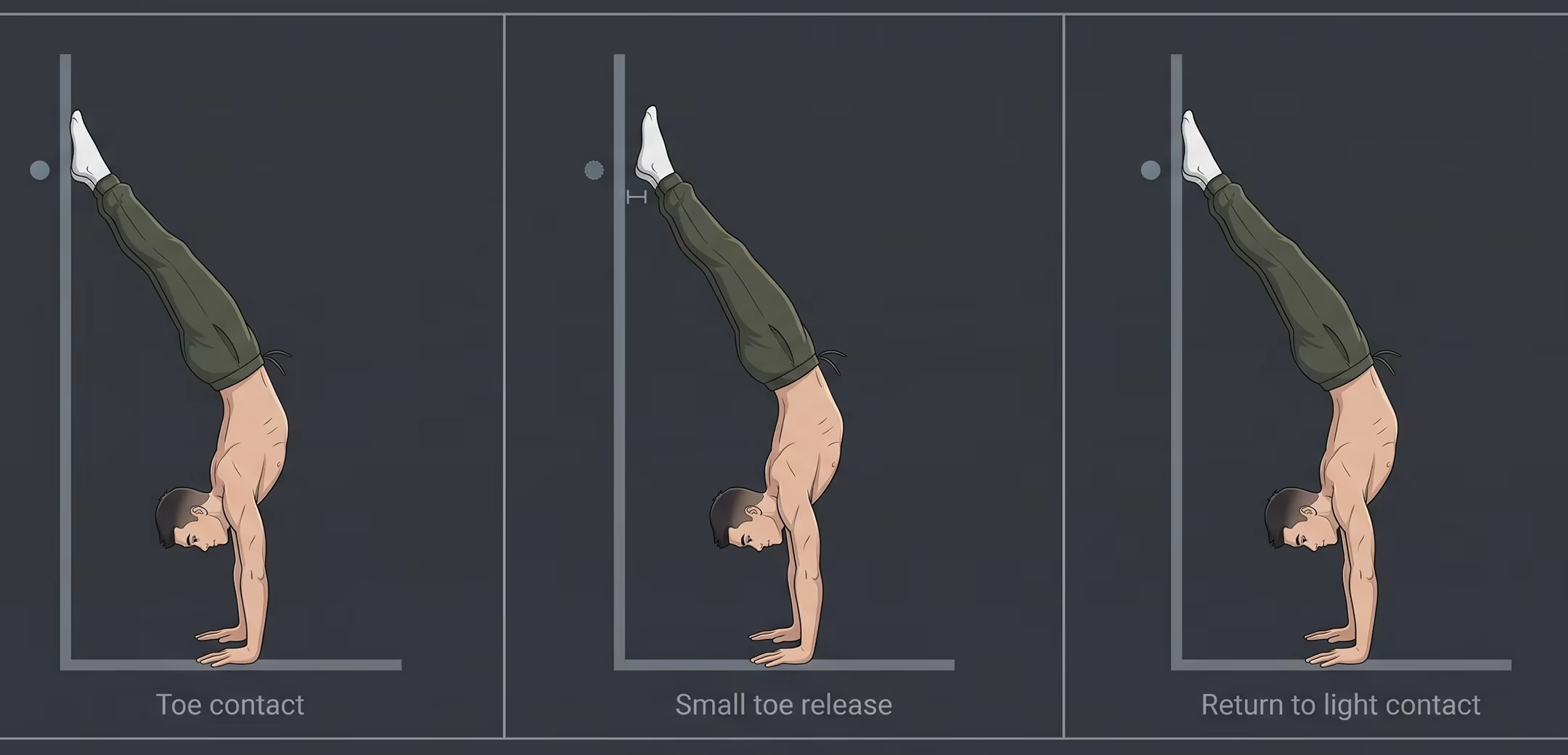
If your coach introduces toe pulls, the defining idea is a small, controlled change in wall contact, not a dramatic kick away from it. The wall-facing version described by some coaches begins from a chest-to-wall position, releases the toes briefly, then returns them gently. The app's movement label may use another definition, so do not assume the source's version matches it. A shoulder tap is a different exercise: one hand leaves the floor while the other supports more of the body. It adds a lateral shift and should not be substituted for a two-hand toe-release drill.
Use a short practice block and record what stayed controlled
Here is a sample to discuss with a coach, not a research-validated prescription or a CaliStack unlock rule. Choose one current drill, practise it while fresh, and stop before your position or exit becomes unreliable. If the coach approves a floor-level support, a short block might be two or three easy sets of a 5–10 second pike support with about a minute of rest. If the coach approves wall work, use the specific drill and amount they set instead. Do not add freestanding kick-ups just because the clock says the block is finished. The next session should be based on how you recovered and whether the same version remained controlled.
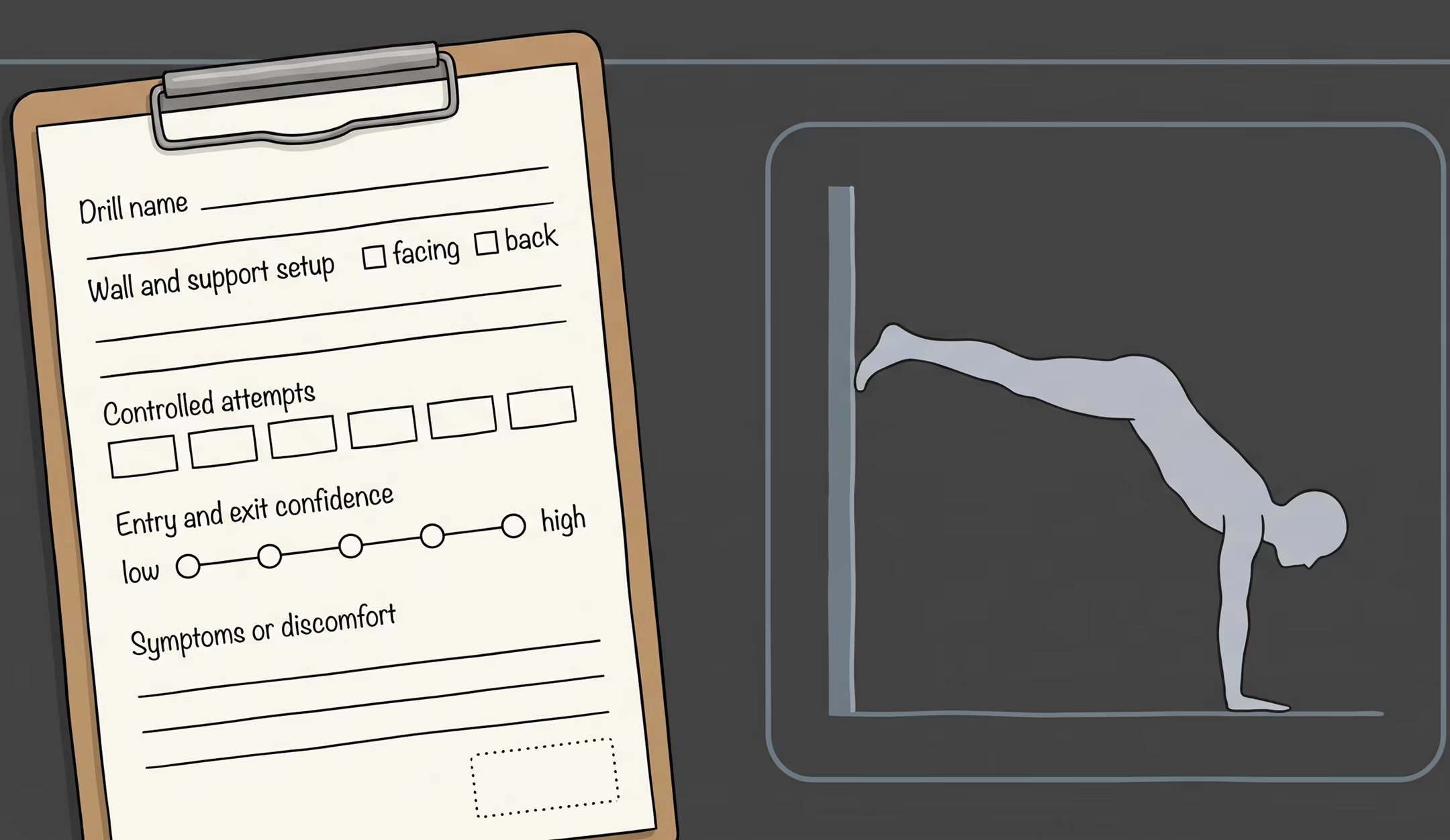
Write down the drill's exact name, wall orientation if applicable, support height or hand-to-wall distance, number of attempts, whether you breathed normally, and how you entered and finished under the coach's instruction. Note what changed from the last session. If the only improvement is that you stayed inverted longer by leaning harder on the wall, do not label that a balance gain. If the entry was inconsistent but the supported position felt steady, ask the coach to keep entry practice separate from balance work. A simple log helps you avoid changing the setup, duration and drill all at once.
A useful progression decision is to repeat the same version until it feels familiar, then ask the coach whether one small change makes sense. That could mean less wall contact, a different supported position, or a brief balance attempt, but it should not mean adding several challenges at once. Do not chase a fixed count such as 10 or 30 seconds. The research groups and coaching sources do not establish a universal readiness threshold for recreational beginners. A coach should decide based on your actual support, control, confidence and exit, not a number copied from another person's program.
- Record the exact exercise name and the approved demonstration you followed.
- Keep wall orientation, surface and support setup consistent when comparing sessions.
- Count an attempt as controlled only if the entry and return matched the coach's instruction.
- Change one variable at a time and write down what changed.
- Log pain, dizziness, unusual symptoms or loss of control and stop the relevant practice rather than pushing through.
Common problems and a safer next decision
If you can hold a wall position but cannot balance without it, that is not a failed handstand. It means supported alignment and unsupported balance are different tasks. Stay with the coach-approved wall drill, and ask whether a small release-and-return practice fits. If your body keeps arching, the image of a straight line may not be clear yet; a coach can adjust the support position or use a floor-level shape drill. Do not force the lower back into a position that causes discomfort. If the hands feel overwhelmed, return to a lower-load version rather than adding more inversion time.
If your feet keep striking the wall, the attempt may be too forceful or the chosen distance may not suit you. Do not solve that by kicking harder or moving closer without guidance. If you feel trapped at the wall, end the drill through the exit you practised with your coach; do not wait until fatigue leaves you with fewer options. If a shoulder tap turns into a hip twist or the supporting arm collapses, stop the set and ask for a less demanding exercise. Those are technique questions for a live assessment, not signs that you need to grit through another repetition.
Frequently asked questions
Frequently Asked Questions
Do I need a 30-second wall handstand before trying balance work?
No universal time threshold is established here. A coach should check your support position, entry, exit and readiness for the specific balance drill. A longer wall hold does not prove that you can balance or leave safely.
Are toe pulls and shoulder taps the same exercise?
No. A toe-pull variation generally changes wall contact while both hands remain planted; a shoulder tap lifts one hand and shifts more load to the other. Confirm the exact app demonstration because labels and orientations can vary.
Should beginners practise freestanding kick-ups every day?
This article does not recommend daily kick-ups. Start with a coach-selected amount that you can perform and recover from, and do not attempt entries or exits that have not been taught in person.
Can a strong push-up guarantee a handstand?
No. Pressing strength does not establish inversion comfort, balance control, or a safe entry and exit. Keep those observations separate in your practice notes.
How long will it take to balance without a wall?
There is no reliable deadline for everyone. Starting point, instruction, practice consistency and recovery differ, and a short controlled balance can be more useful than a longer attempt with lost shape or no planned exit.
Choose the next practice decision
Before your next session, choose one handstand task you can explain in plain language: supported overhead position, wall contact, entry-and-exit rehearsal, or balance. Ask a qualified coach to confirm the demonstration and decide whether the task suits you. Record the version you actually did rather than trying to impress a timer. CaliStack lists Freestanding Handstand alongside related movements; use that map to explore options, not as proof that every linked exercise is a required step. If an app demonstration is unclear or unavailable, ask a qualified coach to confirm the movement before choosing it.
Sources and evidence limits
Source check: . Research context is separate from an individual technique assessment. Sample programs are editorial examples, not validated unlock tests.
Kerwin and Trewartha analyzed six handstand balances and reported contributions from multiple joints to anterior-posterior balance. [3]
The abstract does not establish beginner drills, wall-to-freestanding transfer, readiness thresholds or a training dose. General balance findings are not individual clearance to practise unsupported.
- [3] Kerwin DG and Trewartha G. Strategies for maintaining a handstand in the anterior-posterior direction (2001-07-01).
Abstract retrieved through Europe PMC; not a full-text assessment.
Want a clear plan for your next skill?
We built Calistack to show you the exact steps from where you are right now to your first handstand, muscle-up, or lever.