By Calistack Team · Editorial standards: Calistack editorial team
A floor-only core session for calisthenics beginners
A floor-only core session can start with a dead bug or plank to practise keeping your trunk steady, plus a leg movement you can control. Choose two exercises rather than stacking every option. Shorten the lever or range if your position changes, and record the variation as well as the reps or hold time.
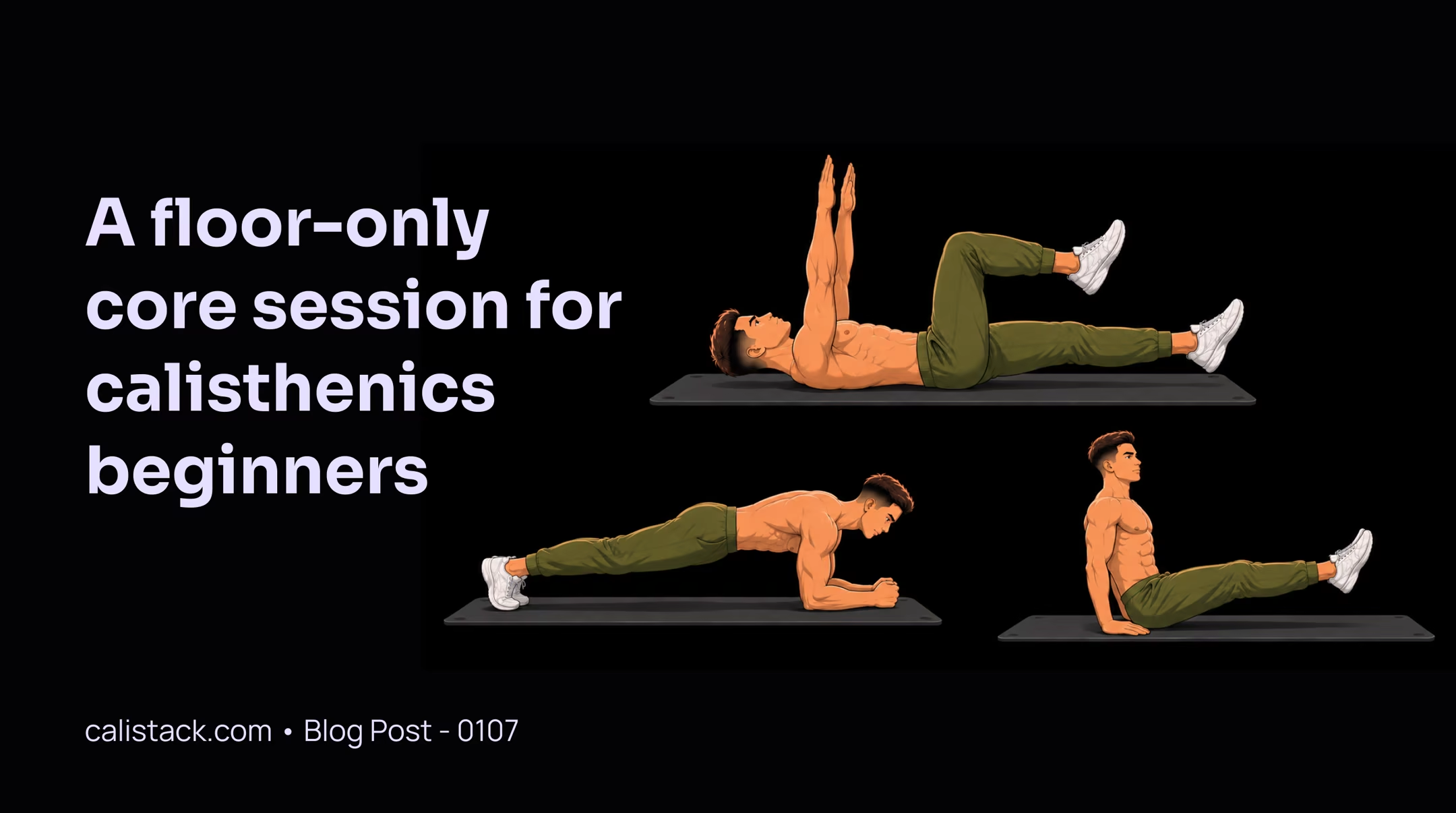
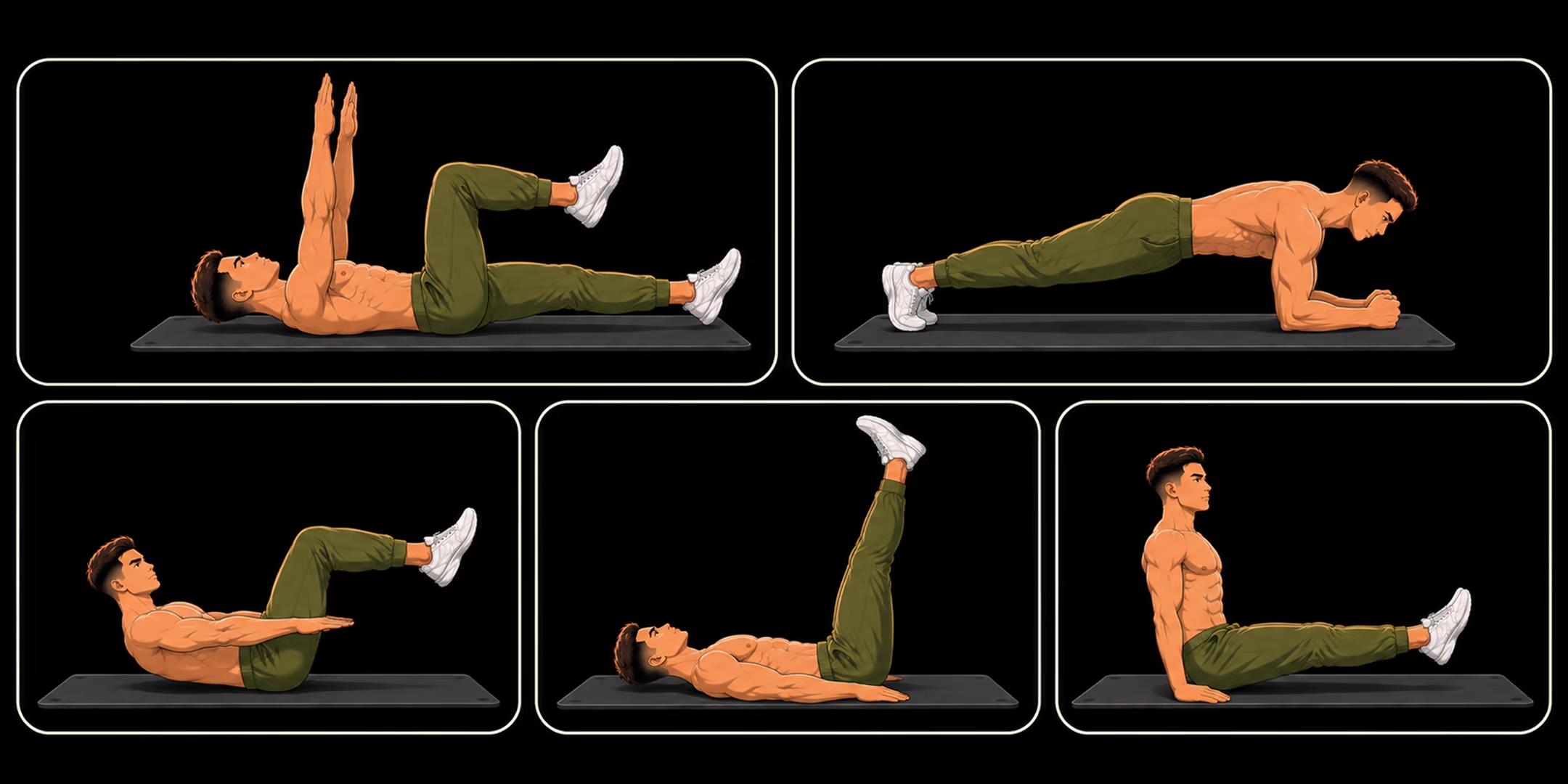
A floor-only core session can be short and useful without trying to fit every ab exercise into one workout. Start with a trunk-control movement you can breathe through, then choose one leg-raising or compression drill if it stays controlled. Dead Bug, Plank, Hollow Body Hold, Leg Raises, and Seated L-Sit Leg Raise are floor-based options in CaliStack’s exercise list. They are choices, not a five-step ladder.
What a floor-only core session can train
Here, floor-only means the session uses the floor and bodyweight, with no bar, chair, bench, band, or other training equipment. A mat is optional. The session can practice keeping the trunk steady while the arms or legs move, maintaining a chosen body position, or lifting the legs toward the torso. Those are related tasks, but they are not interchangeable measures of one thing called core strength.
A floor routine also has limits. A Seated L-Sit Leg Raise can train a seated leg-lift or compression action, but it is not the same as supporting your whole body in an L-sit. A floor Leg Raise is not a hanging knee raise. This article stays with the floor versions and does not ask you to hang from a bar. If your larger training plan includes pull-ups or hanging work, arrange a separate, secure setup for that practice.
Choose a version you can keep controlled
Start with a few easy repetitions or a brief hold to learn the position. The goal is not to hold your breath or brace as hard as possible. Keep breathing, move at a pace you can control, and stop the set when your position changes. If the full version is too demanding, shorten the lever by bending your knees, keep your feet closer to the floor, or reduce the movement range. Those changes make the practice easier to manage; they do not make the exercise a failure.
| Exercise | Floor-based task | A manageable adjustment |
|---|---|---|
| Dead Bug | Move one arm and the opposite leg while keeping the trunk steady. | Keep the foot down and slide one heel, or move only one limb at a time. |
| Plank | Hold a supported body position on forearms and toes or knees. | Use knees on the floor and keep the hold short enough to breathe normally. |
| Hollow Body Hold | Hold a rounded, supine body shape with the trunk engaged. | Bend the knees, keep arms by the sides, or raise the legs higher. |
| Leg Raises | Lift and lower the legs from a supine position. | Bend the knees and lower only as far as you can maintain your chosen back position. |
| Seated L-Sit Leg Raise | Lift one or both heels while seated with the legs in front. | Keep one heel down, lift one leg at a time, or use a smaller lift. |
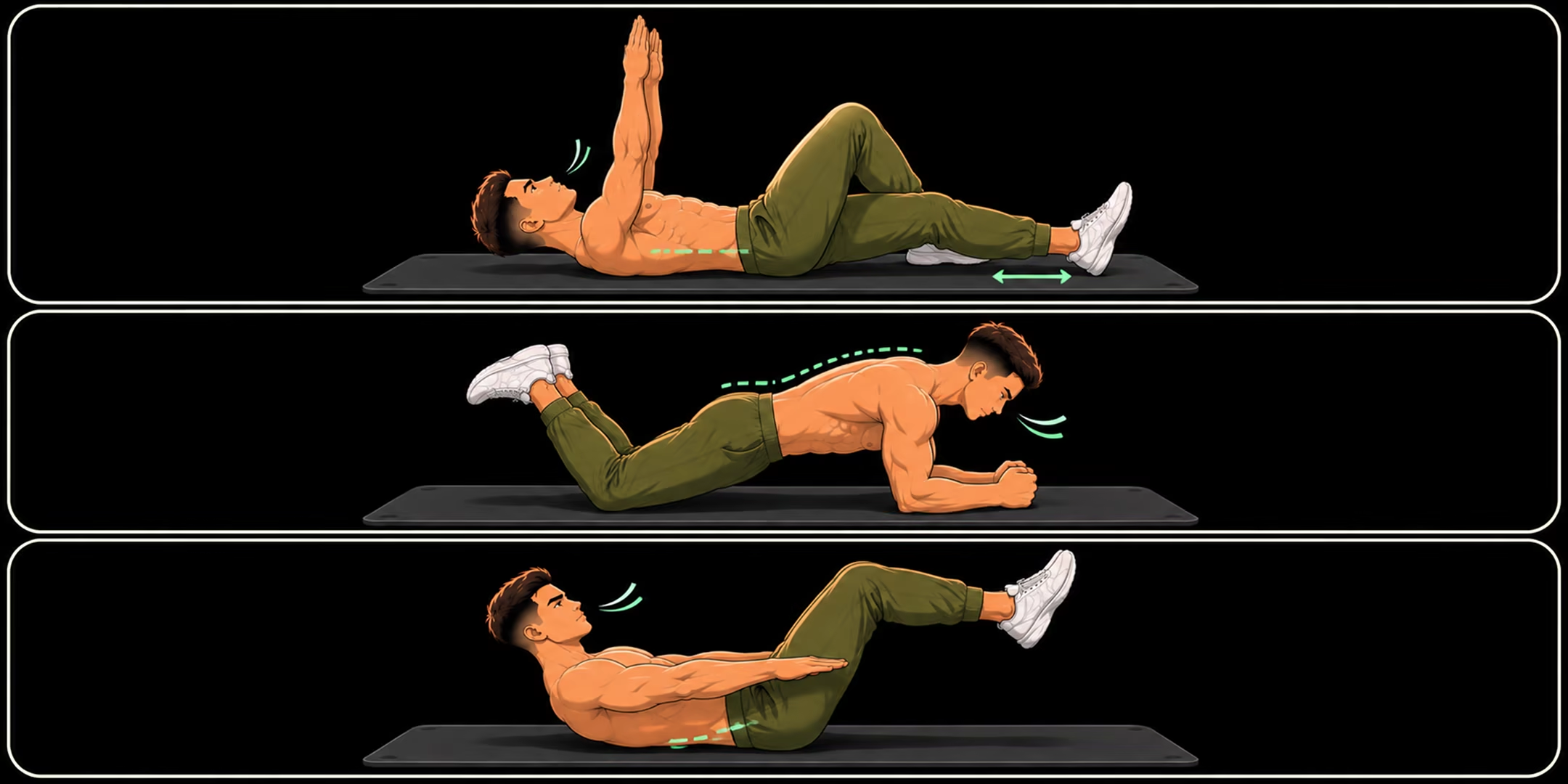
For a Dead Bug, lie on your back with knees bent and feet on the floor. Keep a comfortable trunk position as you slide one heel away or lift one foot a little, then return it. Add the opposite arm only if you can keep breathing and control the trunk. You do not need to press your back violently into the floor. If your ribs flare or the motion pulls you into an uncomfortable arch, make the reach smaller.
For a Plank, start on your forearms and knees or toes. Set the elbows beneath or near the shoulders, keep your head aligned with the trunk, and gently press the floor away. Avoid letting the hips sink or lifting them so high that the position changes into something else. A knee-supported plank is a way to change the load, not a lesser version you must graduate from on a deadline.
For a Hollow Body Hold, begin lying down with the knees bent. Lift the head and shoulders only if that feels comfortable, and keep the arms by your sides at first. The legs can stay bent or the feet can remain closer to the floor. Extend the legs or reach the arms overhead only when the position remains steady. Stop the hold when your back position changes, your neck strains, or you can no longer breathe normally.
For floor Leg Raises, begin with the knees bent if straight legs are too difficult. Lift the legs only through the range you can control, then lower slowly. The most important part to watch is the return: if the low back arches more as the legs descend, stop earlier or bend the knees. You can use a shorter range and still practice the movement. Do not chase a floor touch that your current control does not support.
One common floor-based Seated L-Sit Leg Raise starts with the legs in front and the palms on the floor beside the hips, if that position is comfortable for your wrists and shoulders. Try lifting one heel a small amount while sitting tall. The exercise name alone does not confirm the exact CaliStack setup, so compare these cues with the current demonstration before using them.
Build one sample session
Here is one adjustable example for a generally healthy beginner: choose Dead Bug as the trunk-control movement and Seated L-Sit Leg Raise as the leg-lifting drill. Try two sets of five to eight controlled heel slides per side, then two sets of five to eight small seated lifts per side. Rest long enough to reset and breathe. If you prefer holds, use a short Plank or bent-knee Hollow Body Hold instead of adding every option. These ranges are illustrative starting points, not validated doses.
You can make the sample simpler by using one exercise only. For example, a person who is learning to keep the trunk steady could practice a small Dead Bug heel slide and finish there. Someone whose seated position is comfortable might use a few Seated L-Sit Leg Raises without adding a plank and leg raises on top. The session should fit the rest of your training, not compete with it for fatigue.
- Clear a comfortable patch of floor and choose one trunk-control exercise.
- Rehearse the first few movements slowly and choose a range that lets you breathe.
- Add one leg-raising or compression drill only if you can keep its position controlled.
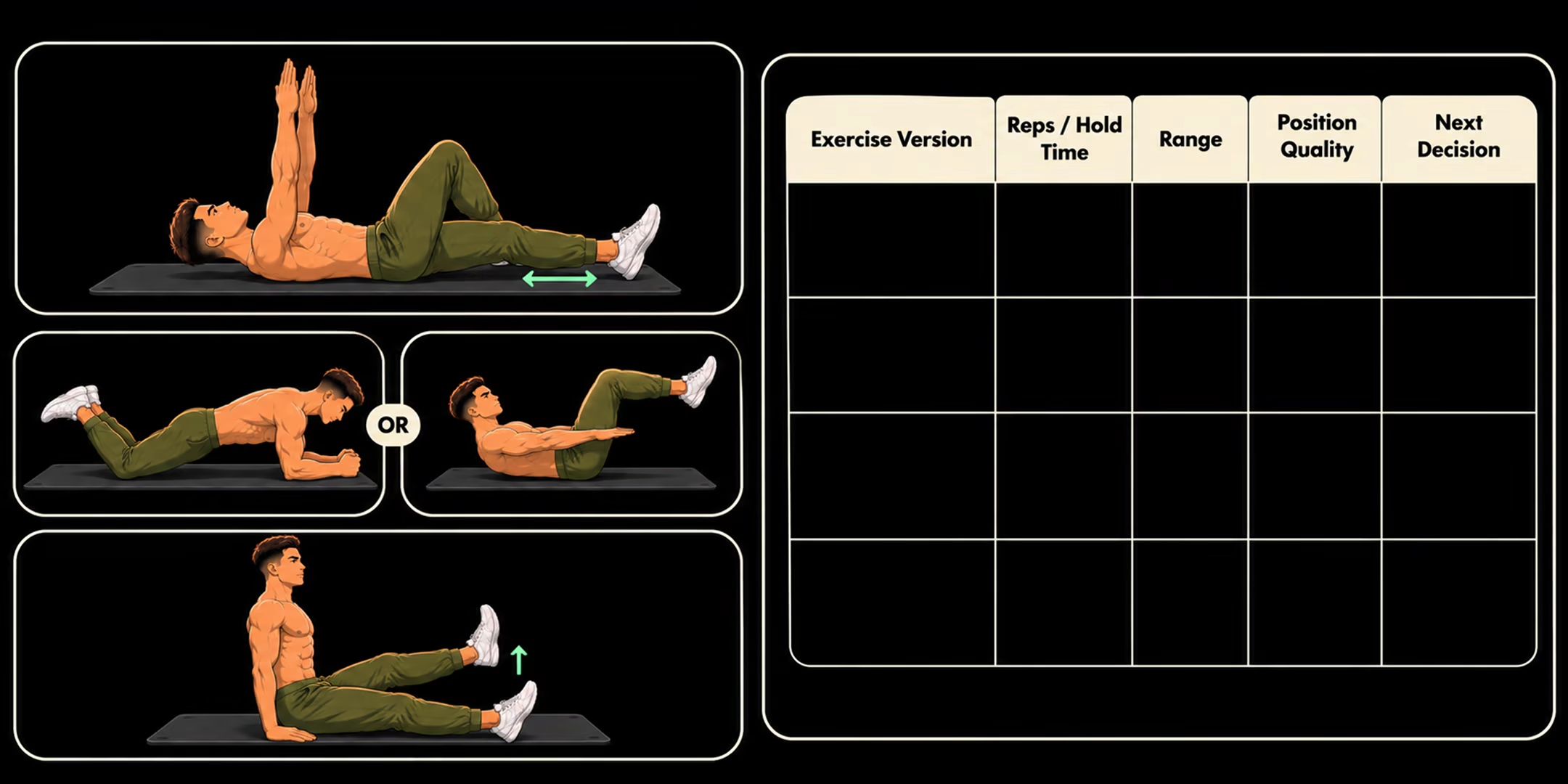
- Write down the variation, reps or hold time, range, and a short note about position quality.
- Repeat the same setup before you change the lever, range, or exercise choice.
If you already train legs, pull-ups, or sport on the same day, count that work when deciding how much extra trunk exercise makes sense. You do not need a separate core circuit every day. Start with a small amount and watch how you feel during the session and before your next one. A sample schedule is a way to organize practice, not a requirement for every beginner.
Record position quality, not only time or reps
A log helps when it captures what the repetition count leaves out. For a Dead Bug, note whether you used a heel slide or lifted the foot and whether your trunk stayed steady. For a Plank or Hollow Body Hold, record hold duration and the position you chose. For Leg Raises, write down whether your knees were bent and how far you lowered. For a seated leg lift, record one leg or both and whether you used hand support.
| Record | Example of the detail | Why it helps |
|---|---|---|
| Exercise and version | Dead Bug heel slide; bent-knee Hollow Hold | The name alone may not identify the lever or position. |
| Work completed | Repetitions per side or seconds held | Keeps movement counts separate from hold time. |
| Range and control | Heel stayed on floor; no loss of trunk position | Shows whether the counted work used the intended practice version. |
| Effort and comfort | Comfortable, tiring, stopped when breathing changed | Adds context without turning a log into a diagnosis. |
| Next decision | Repeat the same lever; reduce range if control changes | Makes the next session a practical choice rather than a test. |
Compare sessions only when the movement is reasonably similar. If you straighten both legs, increase the range, and add hold time in the same workout, a better or worse result does not tell you which change mattered. Try changing one major variable at a time. As a practical rule of thumb, you might repeat a controlled version across a couple of comparable sessions before making a small adjustment. That is a coaching example, not a scientific readiness threshold.
Use the movement recommendations as a menu
The exercise recommendations link Dead Bug with Plank and Hollow Body Hold; Hollow Body Hold with Plank; Leg Raises with Dead Bug, Seated L-Sit Leg Raise, and Hollow Body Hold; and Seated L-Sit Leg Raise with Dead Bug, Plank, Hollow Body Hold, and Leg Raises. Plank has no direct recommendations listed. These are related movement links, not a compulsory sequence or instructions to perform every linked exercise in one session.
Each option serves a different practice choice. Dead Bug is a low-to-the-floor limb-movement drill. Plank and Hollow Body Hold are holds in different body positions. Leg Raises involve lifting the legs from the floor. Seated L-Sit Leg Raise involves a seated leg lift. Choose the option that fits your goal and current control. If a movement is unfamiliar, compare its current demonstration with these general cues; ask a qualified coach if the setup is unclear.
Common questions about floor core work
Floor-only core session FAQs
Should I do all five exercises in the same workout?
No. Choose one trunk-control option and, if useful, one leg-raising drill. The recommendations are related movements, not a mandatory checklist.
Is a Plank required before a Hollow Body Hold?
There is no universal prerequisite. Choose either position in a version you can hold and breathe through. The listed connection is a related-movement link, not a required order.
What should I do if my back arches during Leg Raises?
Stop the lowering before the position changes, bend your knees, or choose a smaller range. If the movement still feels uncomfortable, stop and seek individual guidance.
Can a Seated L-Sit Leg Raise replace an L-sit?
It is a related seated leg-lifting drill, not automatically the same task as supporting your body in an L-sit. Check the exact exercise demonstration before treating the names as identical.
How should I progress?
Repeat a comparable version and record whether position and breathing remain controlled. If you choose to change it, alter one lever or range variable at a time. The example is a practical decision aid, not a fixed app benchmark.
Choose the next useful practice
For your next session, pick one floor-based trunk exercise and one leg-lifting option only if both suit your current control. Record the lever, range, repetitions or hold, and a short quality note. Repeat the same setup before making a small change. Check the current demonstration for any unfamiliar movement; a recommendation list is not a prescribed routine. Find your current core exercises in CaliStack.
Want a clear plan for your next skill?
We built Calistack to show you the exact steps from where you are right now to your first handstand, muscle-up, or lever.