By Calistack Team · Editorial standards: Calistack editorial team
A beginner calisthenics routine with a pull-up bar
Start a beginner pull-up-bar routine by checking the bar and planning how you will get on and off it. Choose one manageable drill, such as a supported hang or an assisted pull-up. Pair it with pushing, leg and trunk work rather than trying every bar exercise in the same session.
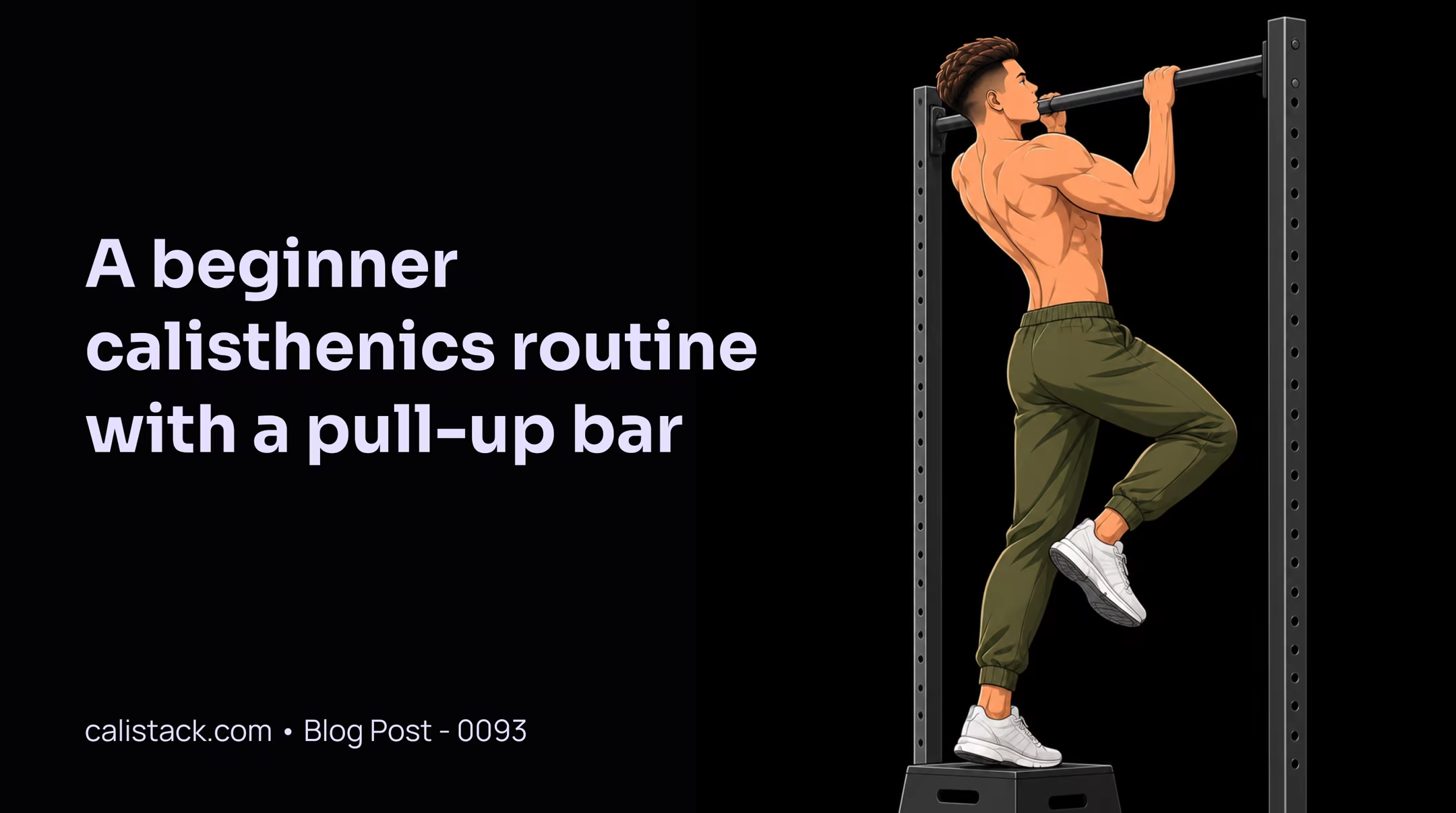
A pull-up bar adds useful pulling options to a beginner calisthenics routine, but owning a bar does not mean you should try every hang and pull-up variation in one workout. First confirm that the bar is installed and used as its manufacturer directs, that you have clear space, and that you can enter and leave the drill under control. Then pick one bar-based pulling exercise that suits you. Pair it with an easier push, a squat, and a core movement. The schedule below is one adaptable example, not a personal training plan or a timeline to your first pull-up.
Set up a place you can use consistently
Before training, check the bar itself, the surrounding floor, and how you will reach it. A doorway product, wall-mounted bar, and outdoor park bar each have different installation and inspection needs. Do not assume one type is secure because another type was. Read the instructions for the specific equipment and follow any limits the maker gives. If the setup is unfamiliar, ask a qualified trainer or installer to inspect it before you load it.
Leave enough room for your hands, head, feet, and the equipment you use to reach the bar. Remove nearby furniture and hard objects. A step or box must be stable for the intended use and positioned so you can step down, not leap down. Do not use a rolling chair. If you cannot reach a safe starting position or cannot exit without dropping, choose a floor exercise or train with a coach instead.
A bar is optional for calisthenics as a whole, but this guide uses one to discuss hanging and vertical pulling. If you do not yet feel comfortable hanging, you can still train push-ups, squats, and floor-based core work. An inverted row on properly installed low bars or suitable suspension equipment is another pulling option; it changes the angle and is not a prerequisite that every person must complete before touching a pull-up bar.
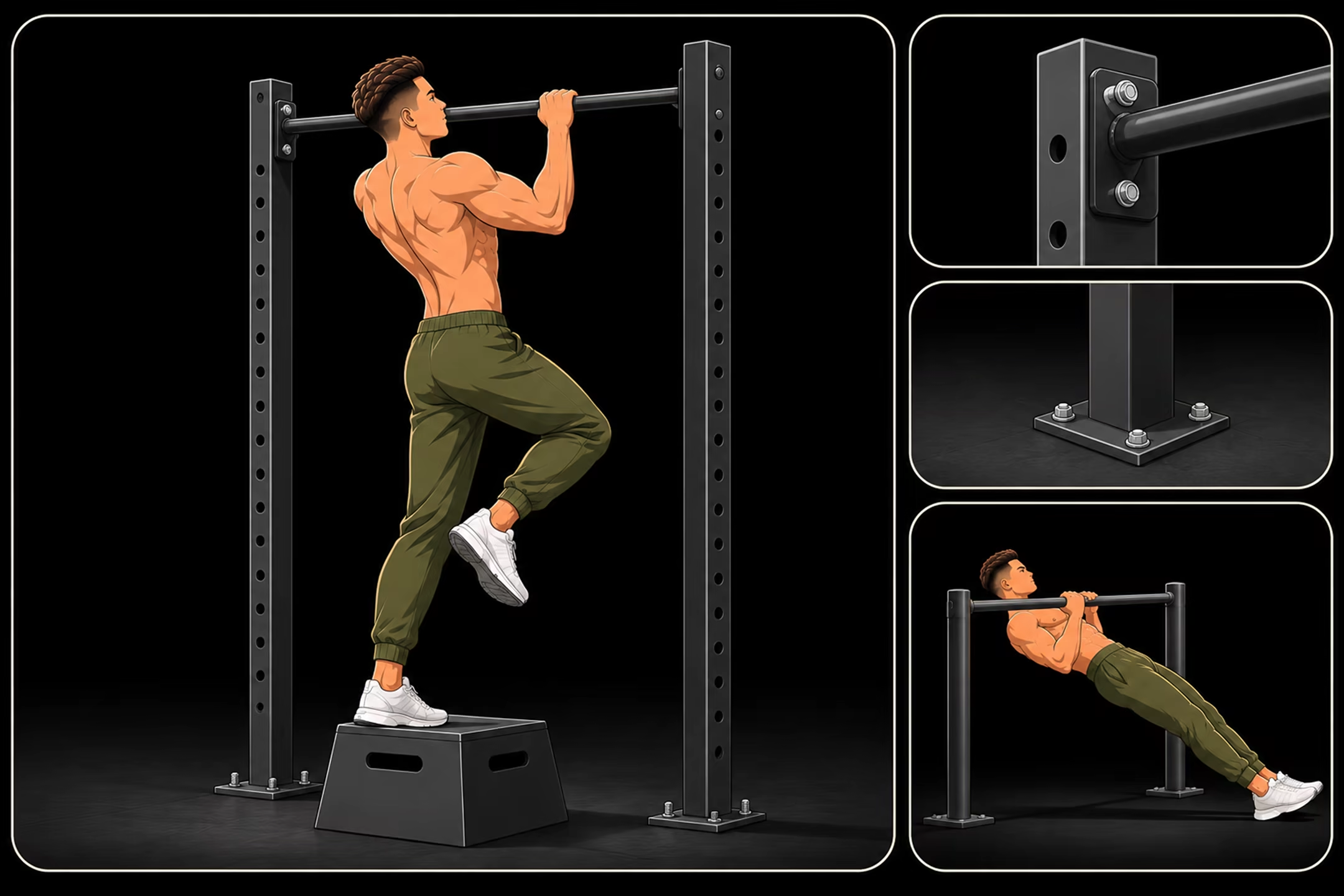
Choose one pulling drill
Dead Hang and Active Hang
A Dead Hang is a static grip from the bar with long arms. Start with both feet close enough to a safe support that you can take only as much bodyweight as you can manage, then step down deliberately. If you cannot grip securely, feel shoulder discomfort, or cannot control the entry and exit, do not hang. A dead hang is not a test of toughness, and holding longer is not automatically better.
An Active Hang adds a small shoulder movement while the elbows remain straight. From a comfortable hang, gently draw the shoulders away from the ears, then return without swinging. Keep the range small and the ribs quiet. If the movement becomes a bend-elbow pull-up or a large body swing, stop and make it easier. A recommendation connecting Active Hang with Dead Hang does not require every beginner to complete one before trying the other; both are bar skills with different demands.
Scapula Pull-Up and Assisted Pull-Up
A Scapula Pull-Up is a small vertical pull from a supported hang: keep the elbows straight, move the shoulders down, then release under control. Use only a range you can repeat without a kick or shrugging into pain. This can be a focused practice choice, but it is not a substitute for full-range pulling strength and does not need to appear in every session.
An Assisted Pull-Up lets you reduce the load you lift. Depending on your equipment and coaching, assistance may come from a stable foot support or a properly used resistance band made for exercise. Use an assistance method that cannot slip or change unexpectedly. Start from a position you can leave safely, pull only through a range you control, and return with help still available. Do not use a stack of loose household objects or jump into the top position.
Inverted Row, Flexed Arm Hang, and Negative Pull-Up
An Inverted Row is a horizontal pull on a low, secure bar or suitable suspension setup. Keep your body steady and pull your chest toward the support; a more upright position is easier than a more horizontal one. It can be the main pull for a day when vertical hanging is not comfortable. It does not have to be a mandatory first rung in a fixed ladder.
A Flexed Arm Hang is a static hold with the elbows bent, usually near the top of a pull-up. It requires a safe way to reach the position and a controlled way back down. If you cannot enter and exit the hold without jumping or dropping, skip it. A Negative Pull-Up emphasizes the lowering phase. It asks you to lower your bodyweight from a top position, so it is a demanding choice, not an automatic beginner exercise. Use a stable step or coach-assisted setup to reach the top, do only a small amount, and stop when you cannot lower smoothly.
Some online pull-up guides present rows, assisted pull-ups, hangs, and negatives as numbered levels with repetition thresholds. Those can be coaching structures for their own programs; they are not universal rules. Related-movement links in CaliStack are options to review, not a required staircase. Select by the task you can do with control and the equipment you have, not by a number in a chart.
Add core and full-body work without crowding the session
A Hanging Knee Raise uses the bar for trunk work. Begin with a stable supported hang, keep the movement small, and lift the knees only as far as you can avoid swinging. Lower smoothly. If your grip or shoulder position gives out first, use a floor-based core exercise instead and come back to hanging leg work another time.
The related Seated L-Sit Leg Raise, Mountain Climbers, and Leg Raises offer different ways to train the trunk or move the legs. A seated leg raise can reduce the grip demand; mountain climbers keep the hands on the floor and involve a faster alternating leg action; straight-leg raises are a more demanding choice than bent-knee raises for many people. Treat them as options, not a checklist. Pick one that lets you keep the torso steady and breathe.
For pushing, choose a Wall Push-Up or Incline Push-Up if a floor push-up is not controlled yet. A standard Push-Up is an option only if you can lower and press without sagging, twisting, or shortening every repetition. The exercise list also includes Assisted Push-Up as a related movement. The name alone does not identify its assistance method, so check the current CaliStack entry and demonstration before choosing it. Until the setup is clear, use the wall or a fixed incline.
For legs, a Bodyweight Squat through a comfortable range is enough for this sample. Keep the feet grounded, use a pace you can control, and avoid turning the movement into a test of depth. You do not need to add a difficult single-leg variation simply because a pull-up bar is available.
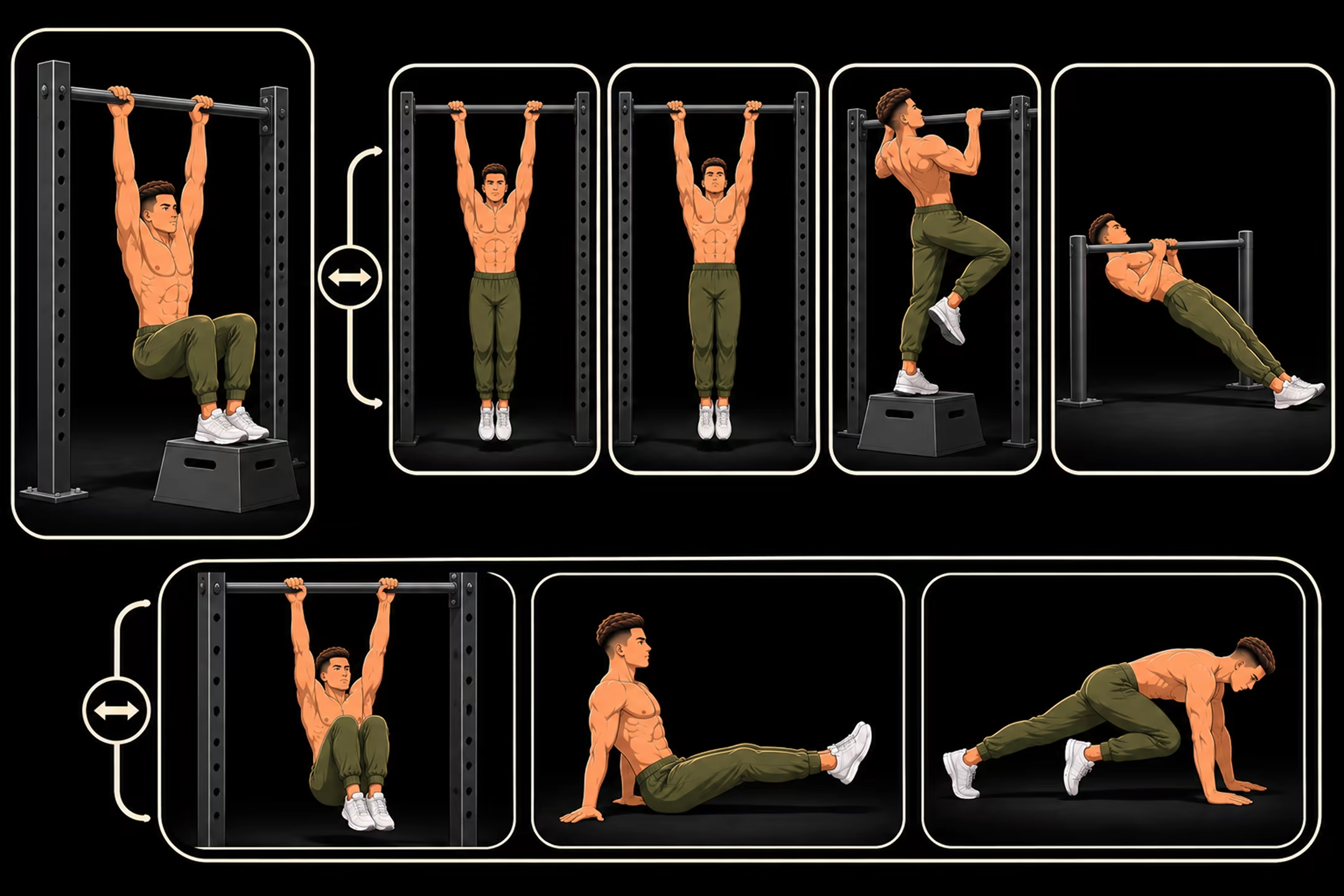
A sample two-day routine
Two nonconsecutive full-body sessions are a simple example for someone who can recover from them. The days could be Tuesday and Friday; choose days that fit your life. In each session, use one main pulling exercise. A short hang or scapular drill can be used as a brief preparation only if you can do it comfortably, but do not turn every bar variation into a separate work set.
| Slot | Choose one | Sample starting point |
|---|---|---|
| Pull | Assisted Pull-Up, Inverted Row, or one appropriate hang/scapular drill | 2 sets; use controlled repetitions or a short comfortable hold |
| Push | Wall Push-Up, Incline Push-Up, or Push-Up | 2 sets of 5–10 controlled repetitions |
| Legs | Bodyweight Squat | 2 sets of 6–12 controlled repetitions |
| Core | Hanging Knee Raise or a floor option | 2 short sets; stop before swinging or losing control |
Start with one pulling choice per session and keep its setup consistent. If you use an assisted pull-up, record the band or foot support and how much help you used. If you use a row, record bar height and foot position. If you choose a hang, record the grip and the brief duration only if it was comfortable. Rest enough to repeat the next set with control; the example ranges are adjustable and are not scientifically validated unlock requirements.
- Clear the area and check the bar, grips, and step or assistance setup.
- Select one pull and one version each for push, legs, and core.
- Use easy practice repetitions, then complete a modest amount without swinging or grinding.
- Write down the exact assistance and setup before changing anything next session.
Use the log to choose the next practice
For pulling, record the exercise name plus the detail that changes its difficulty. Examples include band type or color, whether a foot touched the step, bar height, body angle, grip, range, and whether you started from a dead or supported position. Record repetitions or hold time only when the movement stayed controlled. For a negative, note whether the lowering remained smooth and whether you reached the floor or step without dropping.
If an assisted repetition becomes easier across several comparable sessions, reduce a small amount of help or add a controlled repetition, not both at once. If you cannot keep the shoulder and body positions steady, add support or switch to a more upright row. These are coaching examples. A readiness decision depends on your movement, equipment, and recovery; no single number certifies that the next variation is safe.
Keep your other movements stable while you test a change. If you alter the band, range, speed, and number of sets in the same workout, the log cannot tell you which adjustment mattered. A first pull-up is a possible long-term goal, not a deadline or a requirement for a successful training session.
Beginner pull-up bar routine FAQs
Should I do Dead Hang, Active Hang, Scapula Pull-Up, and Assisted Pull-Up every workout?
No. They are separate choices with different demands. Choose one primary pulling drill for the session. A brief hang or scapular movement may be included only when it is comfortable and useful; it is not a mandatory sequence.
Can I do a pull-up negative if I cannot do a pull-up?
Possibly, but a negative still asks you to lower your bodyweight from the top position. You need a safe way to reach and leave the top, and you should stop if the descent is not controlled. A row or assisted pull-up may be a better choice for the day.
Is an Inverted Row required before using the bar?
No. It is a useful horizontal-pull option when the low bar or suspension setup is secure. It is not a universal prerequisite to a vertical-pull exercise.
What can replace Hanging Knee Raises?
Choose a floor-based option such as Dead Bug or Mountain Climbers, or a seated leg-raise variation if it suits you. Seated L-Sit Leg Raise and Leg Raises are related choices, not required stages. Use the version you can control.
What if the bar is a doorway model?
Follow the instructions and limits for that exact model. If the bar shifts, turns, or you are unsure how it is mounted, do not load it. This guide does not certify any particular product or installation.
Your next step
Check the setup before you choose the exercise. Pick one bar drill you can enter, perform, and exit under control, then add an easy push, squat, and core option. Record assistance and position, and change only one variable when you have a reason. Explore the pull-related exercise options in CaliStack, but treat related movements as options to review, not an automatic progression.
Want a clear plan for your next skill?
We built Calistack to show you the exact steps from where you are right now to your first handstand, muscle-up, or lever.